

Three miles in, the ache starts, a dull pounding in your heels and a hot spot under the ball of each foot that gets louder with every block. It usually isn’t the shoes. It’s the thin, worn factory insole inside them, flattened to the point where your feet feel every bit of the pavement.
The best insoles for walking fix that by doing one job well: absorbing the shock of each heel strike while flexing with your stride instead of fighting it. We compared the inserts walkers actually buy, on shock absorption, arch support, flexibility, price and honest owner feedback. Our top pick is the Liftly insole.
For this roundup we read owner reviews across Trustpilot and retailer listings, checked current prices and return terms, and separated real support from marketing. We didn’t walk a marathon in each pair, so every claim here traces to the makers or to real buyers.
The best insoles for walking at a glance
- Liftly: Best overall, shock-absorbing cushion with real support ($29.99)
- Akusoli: Best for a stimulating massage feel over the miles ($29.99)
- Soul Insole: Best slim pick that fits any shoe ($39.99)
- Dr. Scholl’s: Best budget gel cushion (about $15)
1. Liftly: the best walking insole overall
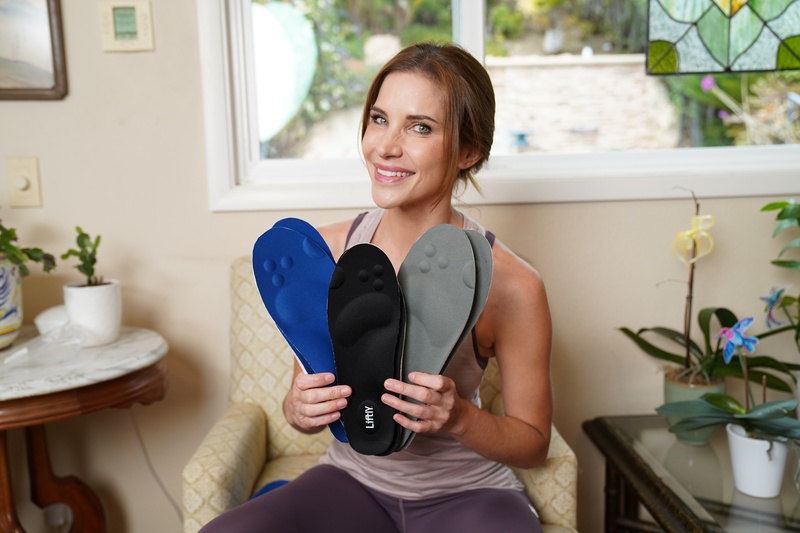
The Liftly insole wins for walking because it handles the thing walking does over and over: impact. Underneath its soft foam sits a white honeycomb base that compresses and springs back with each heel strike, soaking up shock so your joints don’t take it all. That’s the feature walkers notice by the end of a long route.
It isn’t stiff, either, which matters more for walking than standing. The 4D Cloud foam flexes with your stride rather than locking your foot into one shape, while a biomechanical arch fill and a deep heel cup keep the midfoot supported and the heel steady over the miles. Owners who log long daily walks say beaten-up shoes feel alive again.
Be clear-eyed on what it is. Liftly is a comfort insole, not a corrective orthotic, and the foam softens over about 12 months of regular use, so heavy walkers replace a little sooner. The independent review base is still young, which is why the 30-day money-back guarantee and 1-year warranty matter. At about $29.99 a pair, trim-to-fit for sneakers and walking shoes, it’s the cheapest upgrade that pays off from the first mile. Our Liftly inserts review covers the cushioning in full.
What we liked
- Honeycomb base absorbs heel-strike shock while the 4D foam flexes with your stride
- Real arch fill and a deep heel cup, more support than a plain gel insert
- Trim-to-fit sizing drops into sneakers and walking shoes in a minute
- About $29.99 a pair with a 30-day money-back guarantee and 1-year warranty
What we didn't
- Only available online
2. Akusoli: best for tired feet on long walks
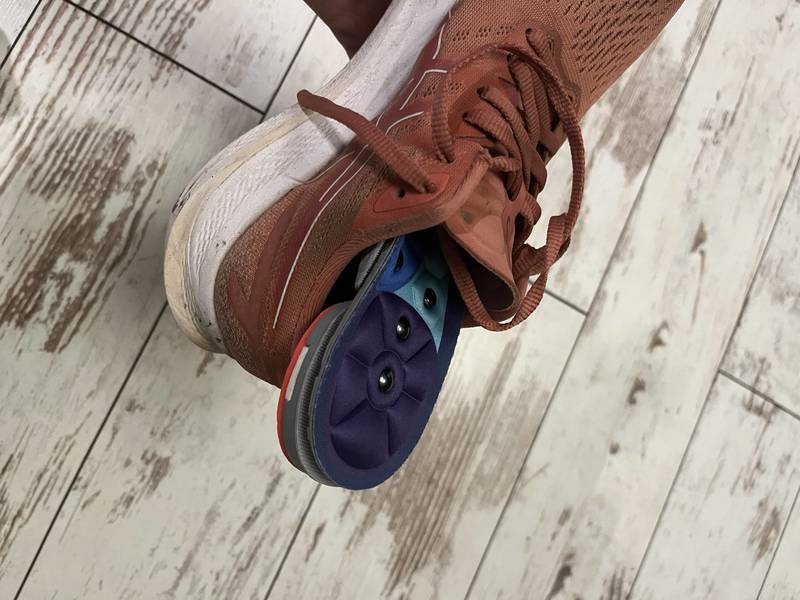
When a long walk leaves your feet feeling flat and dead, Akusoli answers with stimulation. It’s built around raised acupressure nodes and embedded magnets over a cushioned base, so each step presses back against the sole, the way a pebble massage mat does, while the cushion keeps that from getting harsh on pavement.
For walkers who like to feel their feet working, that’s the draw. Akusoli has earned a solid following, about 4.7 out of 5 across more than 1,200 retailer reviews, with 70 to 75 percent reporting real relief from fatigue and heel pain on long days. The trim-to-fit sizing drops it into most walking shoes and sneakers.
Two honest caveats. There’s a break-in week, the firm central node feels intense at first, so start with short walks and build up. And treat the magnets as marketing: the relief is the node pressure and cushioning, not magnetism. At about $29.99 with a money-back guarantee, it’s a low-risk way to see if that massage-underfoot feel suits your stride. We compare it directly with our winner in Liftly vs Akusoli.
What we liked
- Acupressure nodes and magnets over cushioning for a stimulating feel on long walks
- Strong owner feedback, about 4.7 stars across 1,200+ reviews
- Trim-to-fit for sneakers and walking shoes
- About $29.99 a pair with a money-back guarantee to test the sensation
What we didn't
- Only available online
3. Soul Insole: best slim pick for any shoe

Not every walking shoe has room for a thick insole, and that’s where the Soul Insole shines. It’s a small, self-sticking BPA-free medical-grade gel pod rather than a full-length insert, so it adds arch support and helps reduce pressure under the ball of your foot without changing how a snug shoe fits.
For walkers who rotate between sneakers, flats and even sandals, the appeal is portability. The pod sticks in place and transfers between shoes in seconds, so one pair of feet can keep the same support across a whole wardrobe. You rinse and hand-wash it to renew the grip, and it lasts roughly 8 to 12 months.
It’s also the best-rated of our picks, about 4.7 out of 5 across 390-plus Trustpilot reviews, with repeat buyers citing arch and heel relief. At $39.99 for one (less per unit in a multi-pack) with a 60-day guarantee, it’s a smart low-profile option. Just know it’s targeted support, not all-over plush cushioning, so pair it with a cushioned shoe if you want both.
What we liked
- Slim BPA-free gel pod adds arch and ball-of-foot support in shoes too tight for a full insole
- Transfers between any shoes, sandals included, in seconds
- Best verified rating here, about 4.7 stars across 390+ Trustpilot reviews
- Reusable for 8 to 12 months with a 60-day money-back guarantee
What we didn't
- Only available online
4. Dr. Scholl’s: the budget walking cushion

The pharmacy classic earns a spot for walkers on a budget. Dr. Scholl’s trim-to-fit gel insoles are the insert most people already know, and at around $15 a pair they’re the cheapest, most available option here, on a shelf near you today.
What they do well is cushion. The layered gel absorbs impact under the heel and forefoot, which softens pavement over a casual walk. What they lack is firm arch support, so a podiatrist quoted in a Fox News roundup noted gel like this won’t correct your mechanics, it just takes the edge off. That makes it a comfort cushion, not a support insole.
Pick it if you walk shorter distances, want cheap gel padding, and don’t need real arch control. For longer mileage or achy arches, Liftly’s honeycomb shock absorption and firmer fill are the better walking companions. It’s the honest budget cushion, nothing more.
See Dr. Scholl's gel insoles on Amazon →
Do walking insoles actually make a difference?
Yes, and the reason is simple physics. Every walking step is a heel strike that sends impact up through your foot, and you take thousands of them on a long walk. A good insole spreads and softens that load: cushioning absorbs the shock, an arch fill keeps the midfoot from collapsing, and a heel cup steadies each landing. Walkers feel it most in the last third of a route, when tired feet usually start to complain.
What an insole can’t do is rebuild your mechanics or cure a diagnosed problem. An over-the-counter insert isn’t a treatment for plantar fasciitis or a structural issue, those call for a professional. The benefit you’re buying is comfort and stamina: feet that can go further before they hurt.
So judge them on that. If a pair lets you add a mile before the ache sets in, it earned its $30. Just don’t expect medicine from a piece of foam.
How to choose insoles for walking
Lead with the thing that matters most for walking: shock absorption with flexibility. You want a bed that cushions each heel strike but still bends with your stride, which is why a plush, flexible insole like Liftly suits walking better than a stiff corrective board for most healthy feet.
If you log serious mileage, two specialist names come up often. Currex RunPro (about $55) is thin, flexible and built for walkers and runners who want guidance without changing the feel of the shoe, and PowerStep Pinnacle (about $50) adds a firmer arch shell for walkers who need more structure. Both sit above our picks on price and firmness, so they suit heavy mileage or flagged mechanics.
Then mind the fit. A thick full-length insole needs a walking shoe with depth to spare, while a slim pod like Soul Insole slides into tighter shoes and sandals. Match the insole’s bulk to the shoes you’ll actually rack up miles in.
Two last checks. Trim conservatively along the guide lines, since you can shave off more but can’t add it back. And if you have diabetes, neuropathy or reduced foot sensation, check with a doctor before firm pressure nodes. If you’re rethinking your whole walking setup, our Grounded Footwear vs Xero Shoes comparison weighs two barefoot-style shoes for a more natural stride.
The verdict
For nearly any walker who wants more miles before the ache, the Liftly insole is the best pick for 2026: a honeycomb base that absorbs heel-strike shock, a flexible 4D foam bed and a real arch fill, for about $29.99 with a money-back safety net.
Akusoli is the one for walkers who want a stimulating massage feel over the miles, and you can read how it stacks up in our Akusoli reviews. Soul Insole is the slim pick that fits any shoe, and Dr. Scholl’s is the cheap, everywhere gel cushion. If you stand as much as you walk, our best insoles for standing all day guide weighs the same picks for static shifts, and the rest of our foot-comfort coverage lives in the health and wellness hub.