

“Metabolism tracker” covers three very different gadgets, and buying the wrong type is the easy mistake to make. One reads your breath, one reads a drop of blood, and one lives on your arm for two weeks.
So we compared the best metabolism tracker devices for 2026 on the only things that matter: what each one actually measures, how accurate it is, and what it really costs to run. The Lumen breath tracker is the pick for most people, because it answers “what should I eat today?” without a single finger prick.
Here’s the honest frame before any pick. None of these is a magic fix, and each suits a different goal: fat-vs-carb burning, exact blood numbers, or around-the-clock glucose.
What each metabolism tracker measures
The fastest way to choose is to see what you’re actually paying for. This table is the thing most “best metabolism tracker” lists skip: a straight comparison across device types, not three versions of the same gadget.
| Device | What it measures | How | Starting price |
|---|---|---|---|
| Lumen | Fat vs carb burning | One breath (CO2), scored 1-5 | ~$349, first year of coaching included |
| Keto-Mojo GK+ | Blood glucose + ketones | Fingerstick, exact numbers | ~$50 kit, then strips |
| Abbott Lingo | Continuous glucose | 14-day arm sensor | ~$49 per 2-week sensor |
One more number worth knowing up front: over two years, Lumen runs about $498 total with nothing to replace, a blood meter adds up fast once you count strips, and a continuously worn CGM is the most expensive to keep running. More on that below.
The best metabolism tracker devices at a glance
- Lumen: Best overall, daily fat-vs-carb reading in one breath (~$349)
- Keto-Mojo GK+: Best for exact blood ketone and glucose numbers (~$50)
- Abbott Lingo: Best for continuous glucose data (~$49 per sensor)
1. Lumen: best overall
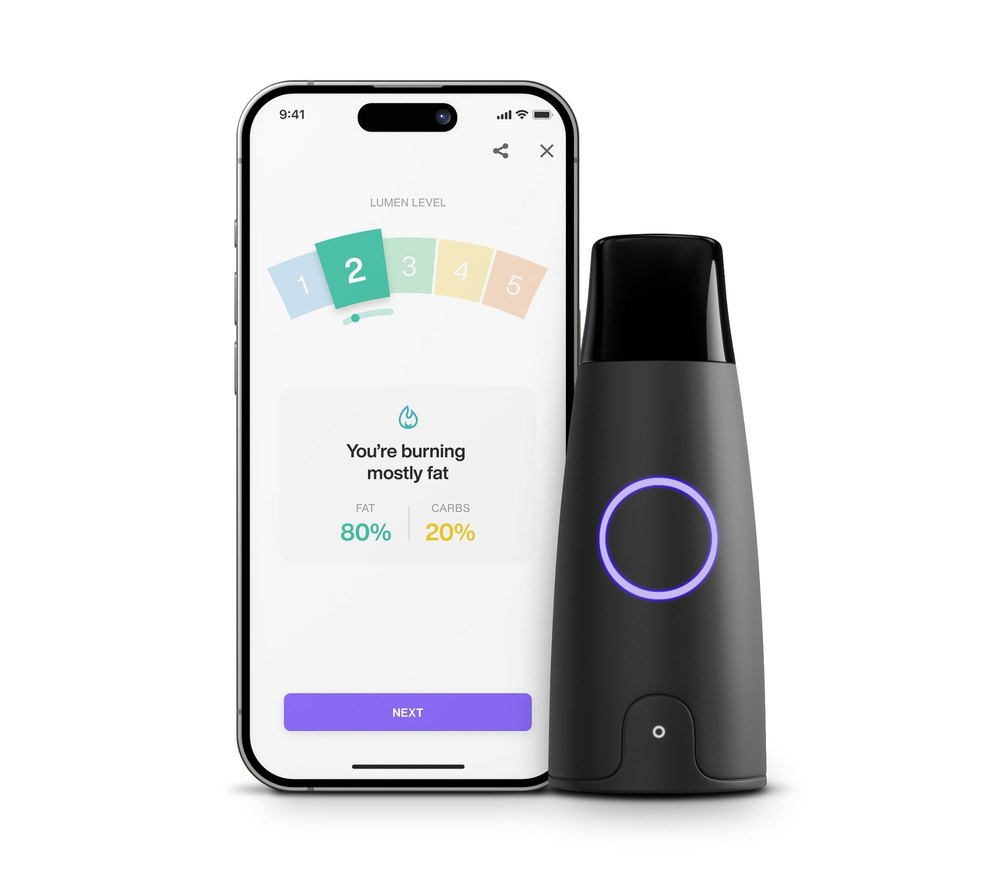
The Lumen is the pick for most people because it turns a vague question, “am I eating right for my body today?”, into a ten-second answer you take yourself.
It’s a handheld breath metabolism tracker. You breathe in through the mouthpiece, hold for a few seconds, then exhale, and it measures the carbon dioxide in that breath to infer whether you’re burning fat or carbs. The app scores it on a 1-to-5 Lumen Level, where lower means more fat-burning, then builds that day’s nutrition plan around the reading.
The reason it earns the top slot is that the science is real and the habit is easy. The breath method is clinically validated against the respiratory exchange ratio measured by a lab metabolic cart, so the direction it gives you is trustworthy. On Trustpilot the brand sits at 4.3 out of 5 across 4,646 reviews. And because it’s just a breath, there’s nothing to prick and nothing to wear.
Beyond the brochure, the detail worth knowing is the pricing shape. The device is about $349 (often shown down from $448), and the first year of app membership is included, then renews around $149 a year. It’s HSA and FSA eligible, which quietly takes a chunk off for a lot of buyers, and it ships with a 30-day money-back guarantee. Over two years that’s roughly $498 with no consumables, which undercuts a continuously worn glucose monitor by a wide margin.
The honest catch is the one that applies to every device here: it only works if you take the reading most mornings. Do that, and it’s the easiest of the three to live with. For the full breakdown, see our Lumen review, and for how it stacks up against a blood meter, our Lumen vs Keto-Mojo comparison.

What we liked
- One painless breath reads fat-vs-carb burning, no needles, strips, or wearable
- The app turns each reading into a personalized daily nutrition plan
- First year of coaching included, HSA and FSA eligible, 30-day money-back guarantee
- Clinically validated against lab metabolic-cart readings, 4.3/5 across 4,646 Trustpilot reviews
What we didn't
- Only available online
2. Keto-Mojo GK+: best for exact numbers
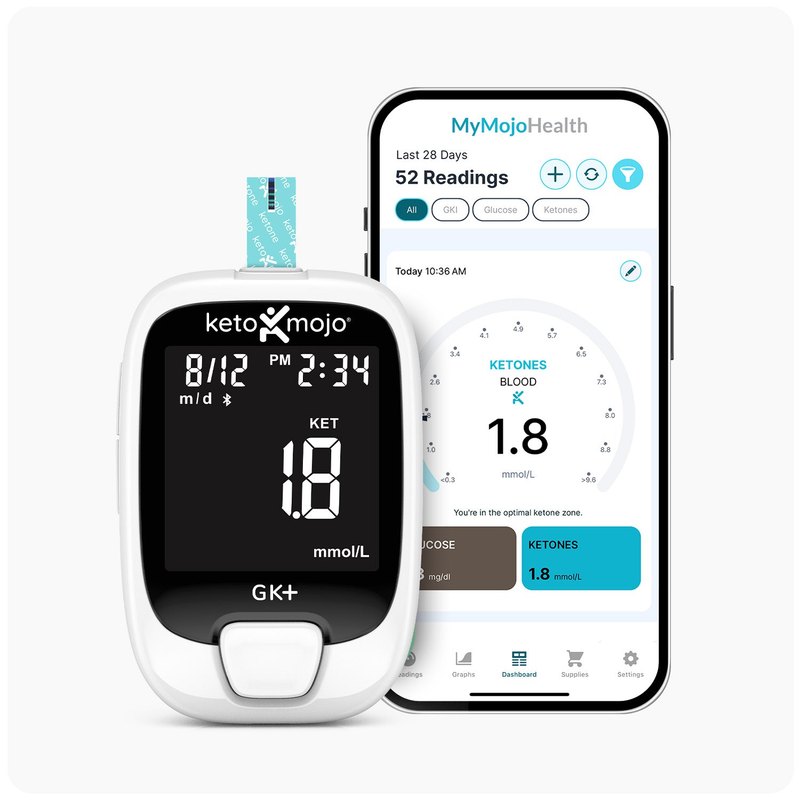
If you want hard numbers instead of a direction, the Keto-Mojo GK+ is the one to get. It’s a Bluetooth blood glucose and ketone meter: a fingerstick drop gives you an exact blood glucose reading in mg/dL and an exact blood ketone (BHB) reading in mmol/L, synced to the free MyMojoHealth app.
Where Lumen infers your fuel source, the GK+ measures the biomarkers directly. Its glucose side is FDA 510(k)-cleared, and it carries roughly 4.4 out of 5 on third-party review sites. For anyone running a strict keto protocol or managing glucose closely, that precision is the whole point.
The trade-offs are real and worth saying plainly. You draw blood every test, and you keep buying strips, so the cheap ~$50 entry price climbs the more often you test. It also won’t tell you fat-vs-carb burning the way Lumen’s breath score does. It’s the tool for a number, not a daily plan.
See the Keto-Mojo GK+ on Amazon →
3. Abbott Lingo: best for continuous glucose
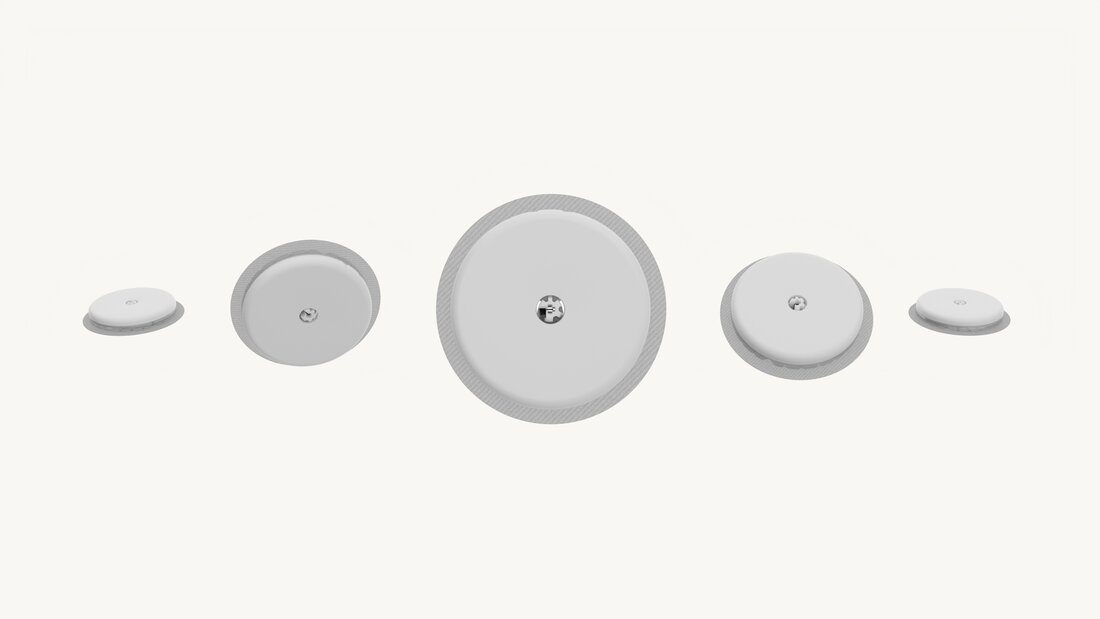
For a continuous picture rather than snapshots, Abbott Lingo is the mainstream pick. It’s an over-the-counter continuous glucose monitor: a small biosensor you wear on your upper arm for up to 14 days, streaming your glucose to an app so you see every meal’s spike and dip. No prescription, for adults 18 and over who aren’t on insulin.
Its edge is coverage. Where Lumen gives you one morning reading and the GK+ gives you single test moments, Lingo tracks glucose around the clock, which is genuinely useful if your goal is learning how specific foods move your blood sugar. It’s sold through hellolingo.com, Amazon, and thousands of Walmart stores.
The honest downside is cost and commitment. At roughly $49 per two-week sensor, continuous wear is by far the most expensive of the three to keep running, and you’re wearing a replaced skin sensor the whole time. It’s also a pure glucose signal, so it won’t speak to fat-vs-carb burning. You can learn more at the manufacturer’s site, hellolingo.com.
How to choose a metabolism tracker
Start with the goal, because it picks the device for you. If you want to eat to your own metabolism day to day, you want fuel-source data, and that’s Lumen. If you want precise ketone or glucose figures for a strict protocol, you want a blood meter. If you want to watch your glucose respond to every meal, you want a CGM.
Then weigh the running cost honestly, not just the sticker price. A breath device is a near one-time cost: Lumen is about $498 over two years with nothing to replace. A blood meter looks cheapest at ~$50, but daily testing on strips can push it past $700 across two years. A continuously worn CGM at ~$49 every two weeks runs well over $1,000 a year. The cheapest box isn’t always the cheapest tool.
Finally, be honest about the habit. Every one of these rewards consistency and punishes neglect. The best metabolism tracker device is the one whose routine you’ll actually keep: a ten-second morning breath, a quick fingerstick, or a sensor you top up every two weeks. If you like data and a plan, Lumen makes that habit the easiest to hold.
The bottom line
Lumen is the one we’d start with: a handheld breath tracker that reads fat-vs-carb burning in a single exhale and hands back a daily nutrition plan, with the first year of coaching included, HSA and FSA eligibility, and a 30-day money-back guarantee that makes the first streak easy to start.
Step across to the Keto-Mojo GK+ if you need exact blood ketone and glucose numbers, or Abbott Lingo if you want continuous glucose data and don’t mind the running cost. All three work only if you use them, so pick the routine you’ll keep. For more everyday health picks, see our best joint supplements, best mushroom coffee, and the full health hub.
Check the current Lumen deal