

The short answer is yes: a trained drug dog can usually still smell the contents of a vacuum sealed bag. Vacuum sealing cuts down the odor that escapes, sometimes dramatically, but it doesn’t create the airtight, scent-proof vault people imagine, and a detection dog’s nose is sensitive enough to work with what little leaks out.
That’s the honest version the top search results dance around, with half of them promising vacuum bags beat dogs and the other half insisting they don’t. Here’s what’s actually going on, grounded in how canine smell and plastic packaging really work, plus what vacuum bags genuinely are good for.
If your real goal is the legitimate one, keeping your laundry or toiletries from stinking up a suitcase and fitting more into it, that’s exactly what a travel compression bag like the Aerless is built to do, and we cover it in full in our Aerless travel compression bag review.
See the Aerless travel compression bagHow good is a dog’s sense of smell, really?
Good enough that small amounts matter. A detection dog’s nose operates at a scale human intuition can’t picture: in one peer-reviewed study, researchers measured canine detection thresholds down to parts per trillion (Concha et al., Frontiers in Veterinary Science, 2018), with sensitivity ranging from roughly 40 parts per billion to 1.5 parts per trillion depending on the compound.
To put 1.5 parts per trillion in perspective, that’s a sensitivity so fine that a barely-detectable trace is still a loud, clear signal to a trained dog. So the question isn’t really whether a vacuum bag stops all odor. It’s whether it can stop every last molecule, and that’s a much harder bar.
Why sealed plastic still leaks odor
Two things defeat the airtight-vault idea, and understanding both is the whole answer.
First, plastic is slightly permeable. Common films like polyethylene aren’t a perfect wall. Volatile odor molecules are tiny, and over time a small number pass straight through the plastic. A fresh seal leaks less; time, heat, and handling increase it.
Second, and usually the bigger issue, is contamination. When you pack something with a strong smell, residue ends up on your hands, the work surface, and the outside of the bag itself. A dog doesn’t have to smell through the plastic at all if the odor is sitting right on the exterior. That’s why even a genuinely airtight container can trigger an alert: the dog smells the outside, not the inside.
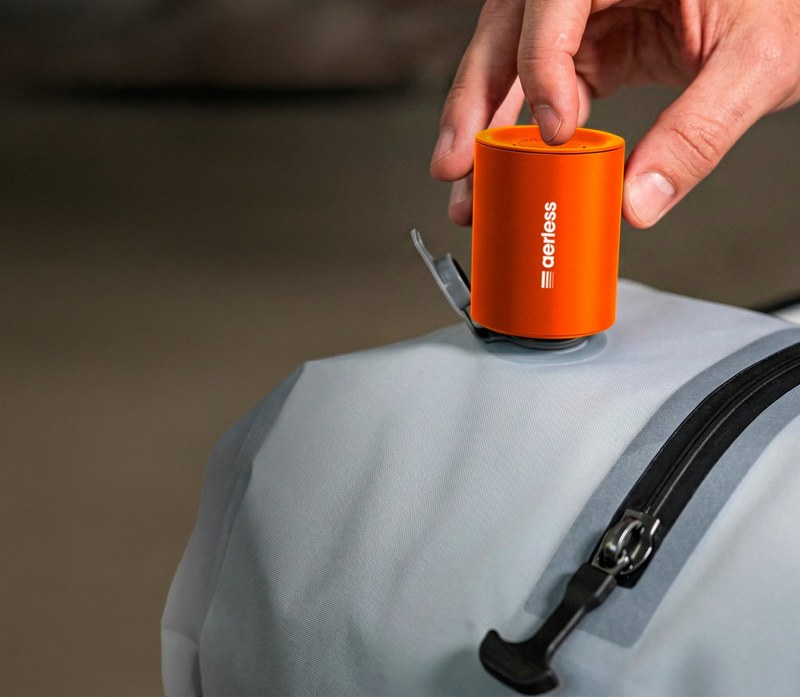
Add it up and the picture is consistent. Vacuum sealing reduces odor, often by a lot, but between slow permeation and surface residue, it doesn’t reliably beat a well-trained detection dog. “Less smell” is real; “no smell” is a myth.
So what are vacuum sealed bags actually for?
This is where the honest use case is genuinely useful. Vacuum and compression bags are built to do two things well, and neither involves fooling a dog.
They save a huge amount of space. Squeeze the air out of a week’s clothes and a carry-on suddenly holds what used to need a checked bag. For travelers, that’s the real draw.
They contain everyday smells. Sealing sweaty gym kit, hiking socks, or strong toiletries keeps them from scenting the rest of your suitcase. That’s ordinary odor control, the kind that makes packing pleasant, and it works precisely because human noses aren’t parts-per-trillion detectors.
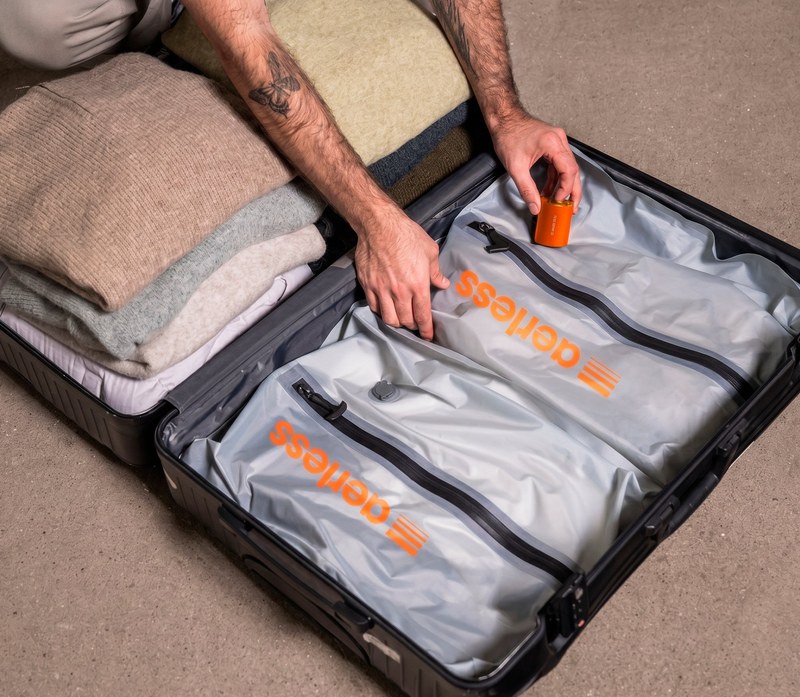
A travel compression system like the Aerless leans into exactly that: a pump and reusable bags that flatten your packing and keep the funk sealed away from your clean clothes. It’s a packing tool, honestly described, not a way to outsmart a detection dog. Our Aerless review covers how well it compresses and holds a seal, and our best travel vacuum bags roundup lines up the wider field.
The bottom line
Can a drug dog smell through a vacuum sealed bag? In almost every realistic case, yes. The combination of a dog’s parts-per-trillion sensitivity, the slight permeability of plastic, and residue on the bag’s exterior means vacuum sealing lowers odor without reliably eliminating it.
What vacuum sealing is great at is the everyday stuff: packing more into less space and keeping strong smells out of the rest of your bag. If that’s what you’re after, a purpose-built travel compression bag is the right tool. For the full rundown, see our Aerless travel compression bag review, and if you’re wondering whether the brand itself is trustworthy, our is Aerless legit guide walks through it.
Check today's Aerless price