
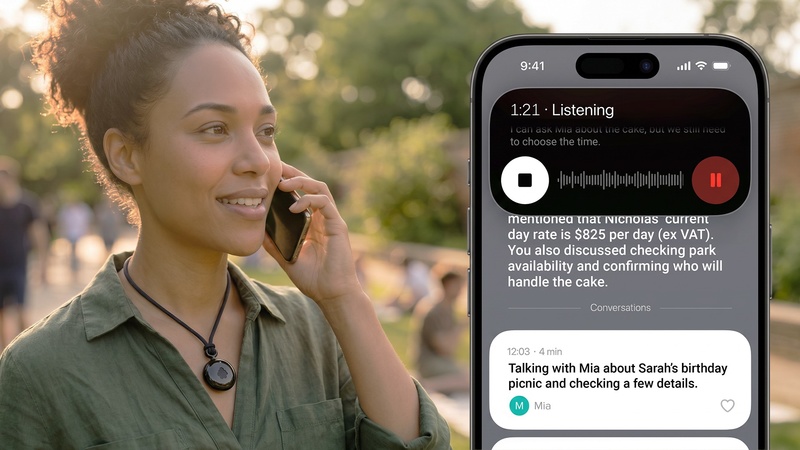
Most of what you need to remember from a day happens in conversations you’re too busy having to write down. A hallway decision, a doctor’s instruction, the three things your boss wants by Friday. The Fieldy AI wearable assistant is built to catch exactly those, and this review digs into what it records, what it costs over a year, and whether it earns a spot around your neck.
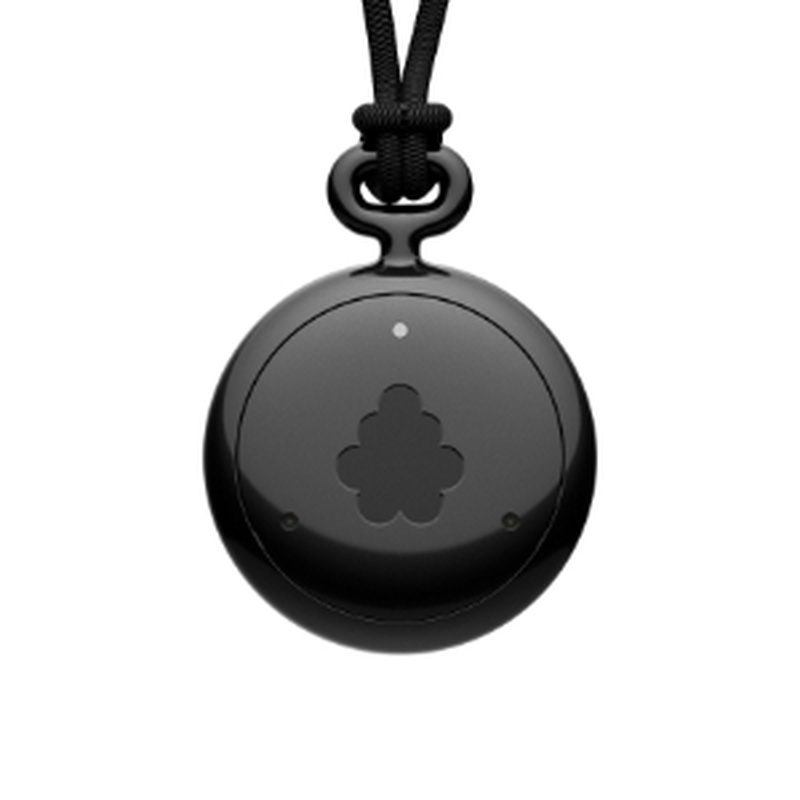
Fieldy is a 17-gram pendant (or watch, if you swap the accessory) that listens when you tell it to, then turns the conversation into a transcript, a summary, and follow-up tasks in over 100 languages. It’s made by Field Labs and sold direct for $129.
For this review we read Fieldy’s own spec and privacy pages, compared its pricing against rival wearables, and weighed what buyers and hands-on reviewers report. We didn’t wear a unit for a month ourselves, so every number and claim below traces to the maker or to real user feedback.
What a year of Fieldy actually costs
Start with the money, because the sticker price isn’t the whole story and the subscription is where most buyers get surprised.
The device is $129 one time. Every Fieldy ships with 150 free transcription minutes a month, which covers roughly two or three meetings a week before you hit the ceiling. Stay under that and your only cost is the hardware.
Go over it and you’ll want the Unlimited membership at $15.99 a month billed yearly, or $19.99 month to month. Run the math and a heavy first year lands near $320 all in, while a light user pays the flat $129 and nothing more. That split matters: this is one of the few wearables in the category that’s genuinely useful without a subscription, and it’s the first thing to weigh before you buy.
What Fieldy actually is

The Fieldy AI is a wearable AI assistant, not just a voice recorder. It’s a small polycarbonate capsule, 29 by 29 by 11 millimeters and 17 grams, that you wear as a pendant on a cord or twist-lock onto a wristband. It records only when you start a session, and a solid white light shows while it’s listening.
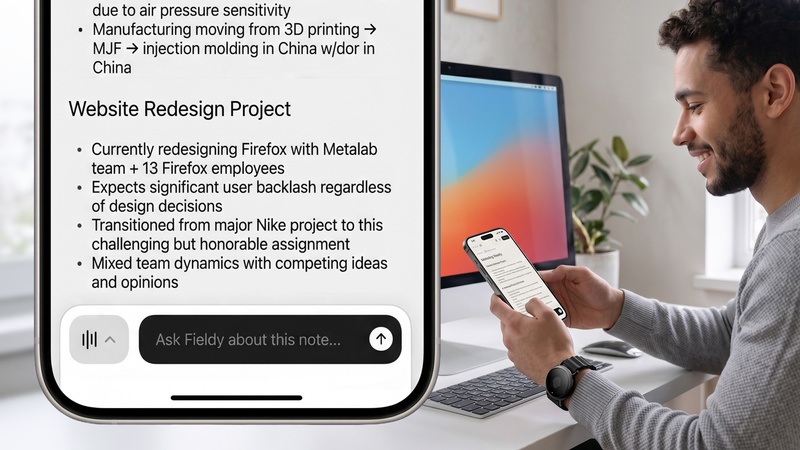
The real work happens after. Fieldy turns each conversation into a clean transcript with speaker labels, a short summary, and a list of action items, and it does that in over 100 languages. A high-performance MEMS microphone with background-noise filtering handles the capture, and sessions run up to three hours at a stretch.
Here’s the part the product page underplays: there’s an AI chat built on top of your own history, so you can ask “what did Sarah want me to send her?” weeks later and get the answer pulled from the actual transcript. That’s the difference between a recorder and an assistant.

The twist-lock accessory is the detail that makes it stick. Clip the capsule onto a wristband and it’s a watch for a day of meetings, drop it back on the cord and it’s a pendant for an evening out, all from the same 17-gram device.
Battery, apps, and the day-to-day
Battery is a genuine strong point. Fieldy is rated for up to 7 days on a single charge in typical use, so it lives on your collar for a week rather than demanding a nightly top-up like most of its rivals.
It pairs over Bluetooth to companion apps on iOS and Android, and there’s a desktop app for macOS and Windows that captures online meetings. The wearable covers the in-person half of your day; the desktop app covers the Zoom half. One login spans both.
The hardware carries IP65 splash resistance, so a rain shower or a sweaty commute won’t kill it, though it isn’t built to be dunked. Fieldy doesn’t claim all-day phone support or any always-on human help desk, so treat it as a self-serve device you set up and run yourself.
Privacy, and the consent question nobody skips

A device that records conversations lives or dies on trust, so it’s worth reading Fieldy’s own rules closely.
Per its page, Fieldy records only when you start a session, audio is kept briefly for processing and then deleted, and only the text and speaker labels are stored. Your data is encrypted in transit and at rest. There’s no quiet always-listening mode, which is the reassuring design choice here.
The honest caveat isn’t about the hardware, it’s about the law. Recording rules vary by state and country, and Fieldy’s own guidance is to tell people when you’re recording. Use it like a notebook you’ve asked permission to open, not a hidden wire, and the consent question takes care of itself.
Who Fieldy is for

Fieldy fits the person whose job is mostly conversations: managers in back-to-back meetings, founders, consultants, researchers, students in lectures, and anyone who leaves a doctor’s appointment having forgotten half of it.
If you take fewer than a couple of hours of notable conversations a week, the free 150 minutes may be all you ever need, and the Fieldy pays for itself once at $129. If you live in meetings, budget for the membership and treat it as the cost of never scrambling to remember who-said-what again.
Pros and cons
What we liked
- Genuinely usable free tier: 150 transcription minutes a month with no subscription required
- Transcripts, summaries, and action items in over 100 languages, plus an AI chat across your own history
- Up to 7 days of battery and a 17-gram pendant-or-watch design that disappears into your day
- Records only on command with a visible light, audio deleted after processing, encrypted at rest
What we didn't
- Only available online
Fieldy AI review verdict
Fieldy earns a 9.4. Judged as what it is, a wearable AI assistant that quietly turns your real conversations into searchable notes, it delivers: a featherweight pendant, a week of battery, 100-plus languages, and an AI chat that actually recalls what was said.
What tips it over the line is the pricing. A usable free tier plus a one-time $129 device means you can live with Fieldy before you ever pay a subscription, and the 14-day return window makes trying it close to risk-free. Clip it on before your next run of meetings and let it do the remembering.
Check today's Fieldy priceFor the wider field, see our best AI note-taking wearables roundup and our head-to-head on Fieldy vs Plaud. The tech hub rounds up the rest of our gadget picks, including the best translation earbuds for another pocket-sized AI tool.