
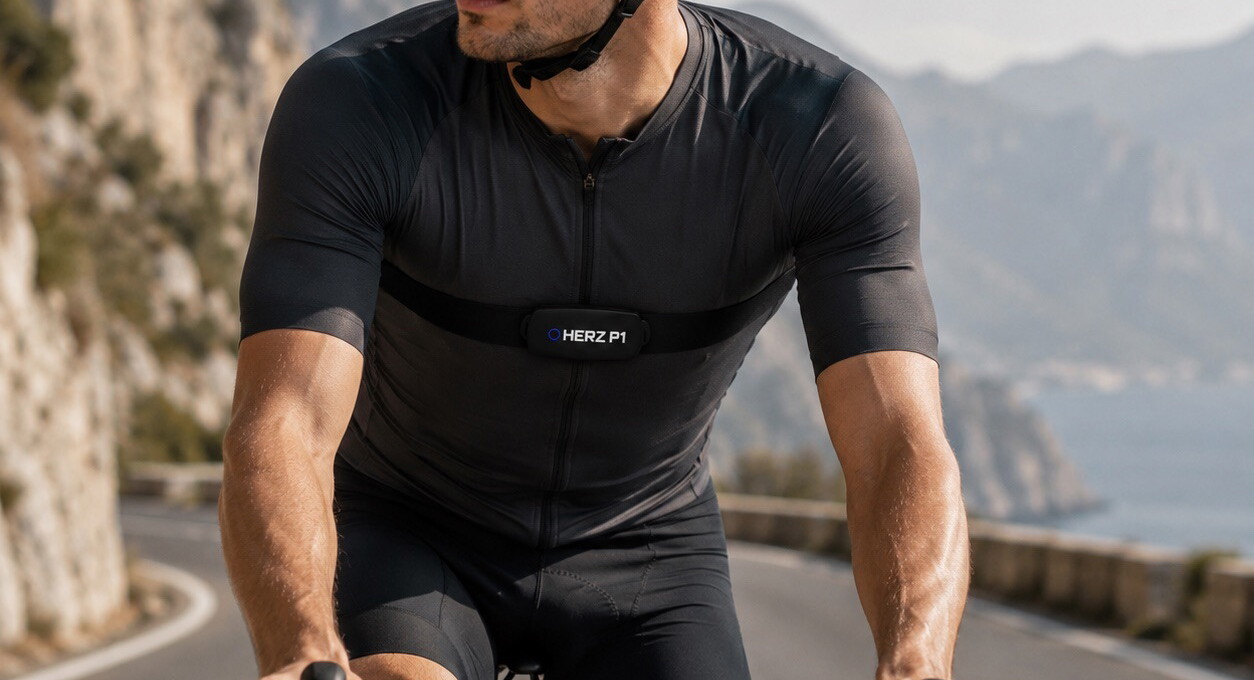
The Herz P1 HR chest strap is a $75 ECG monitor that reads heart rate to within 1 bpm, stores 48 hours of data without a phone, and pairs over Bluetooth and ANT+ at once.
Anyone who trains seriously learns to distrust the wrist. The watch reads your heart rate fine on a steady jog, then flatlines or spikes the second you start intervals or grab a barbell.
That’s not a bug you can fix. Optical sensors struggle with motion and sweat, and the one moment you most want accurate data, mid-sprint, is the moment they fail. A chest strap reads the heart’s electrical signal directly instead.
For this Herz P1 review we researched its sensor and specs, the 82,000-plus customer reviews on the brand’s site, and how it measures up to the Polar H10 that owns this category. Here’s what you get for $75, and where it genuinely out-features the benchmark.
What the Herz P1 is
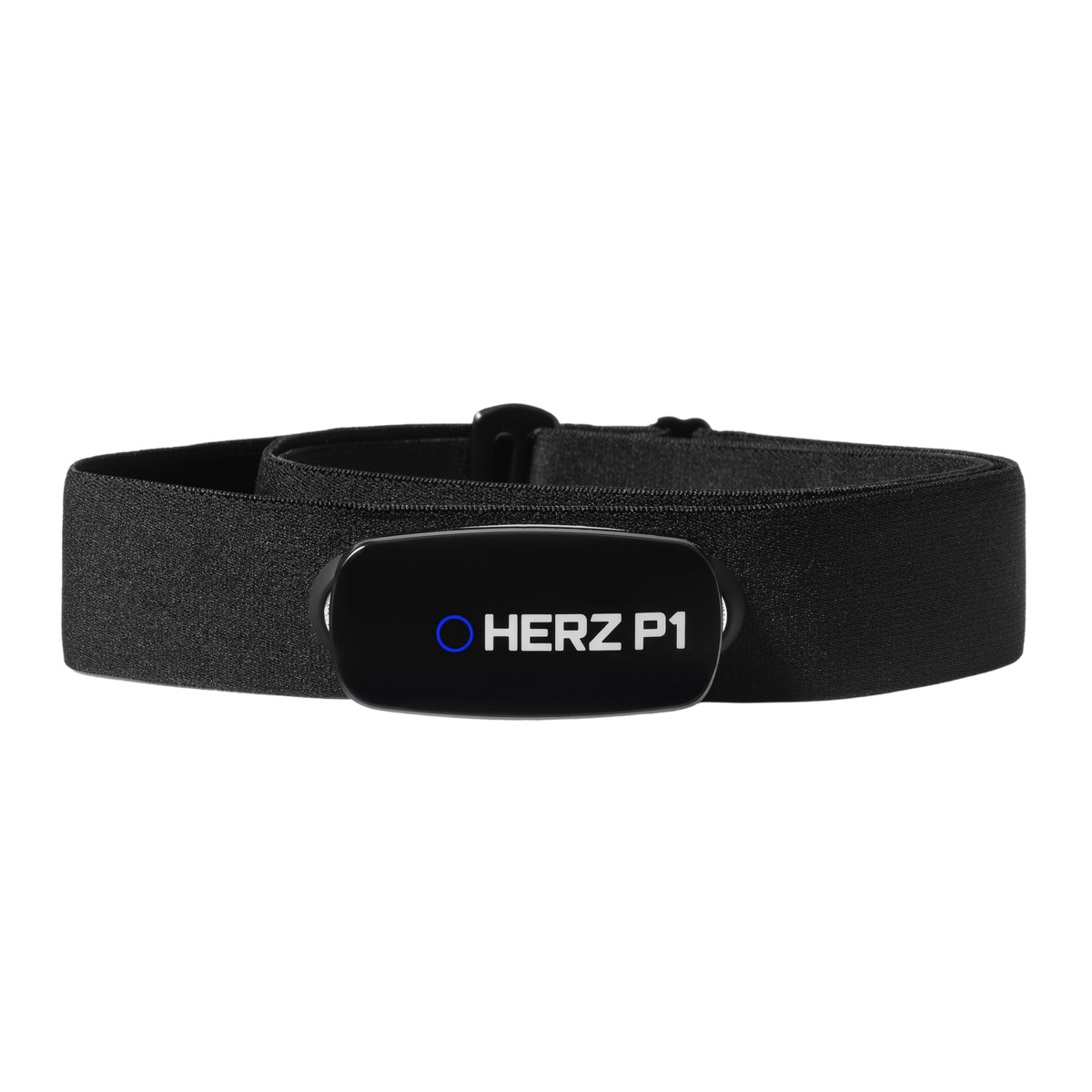
The Herz P1 is a clip-on sensor module on an adjustable chest band. It reads heart rate from the electrical signal across your chest, the ECG method, rather than the optical guesswork a wrist device uses.
That’s rated to within 1 bpm across a 30-to-240 bpm range, so it stays honest during the efforts that matter: the sprint, the heavy set, the all-out finish.
It broadcasts over Bluetooth 5.0 and ANT+ simultaneously, pairs to your phone, watch, or bike computer, and quietly logs up to 48 hours of data even when your phone is nowhere nearby.
Clip on, pair once, go. It’s a training tool for people who want their heart-rate number to be right, not approximate.
The real test: Herz P1 vs Polar H10

The Polar H10 is the strap everyone benchmarks against, so we read both spec sheets side by side.
| Herz P1 | Polar H10 | |
|---|---|---|
| Price | $75 | ~$90 to $105 |
| Sensing | ECG, ±1 bpm | ECG, proven standard |
| Onboard memory | 48 hours | One workout |
| Connectivity | Bluetooth 5.0 + ANT+ | Bluetooth + ANT+ |
| Water rating | IP67 | 30m |
| Guarantee | 90-day money-back | Standard warranty |
Credit where it’s due: the Polar H10 has years of validation behind it and a replaceable coin-cell battery rated around 400 hours, which is a real strength if long battery runtime is your priority.
Where the Herz P1 pulls ahead is two things buyers actually feel: it costs less, and it stores 48 hours of phone-free data against the Polar’s single on-sensor workout. Leave your phone in the locker, train for a week, and sync when you get home. The 90-day money-back guarantee makes trying it a low-risk call.
Key specs
| Spec | Detail |
|---|---|
| Type | ECG chest-strap heart rate monitor |
| Price | $75 |
| Accuracy | Within 1 bpm, 30 to 240 bpm range |
| Connectivity | Simultaneous Bluetooth 5.0 and ANT+ |
| Memory | 48 hours of phone-free recording |
| Water rating | IP67 (sweat and rain) |
| Guarantee | 90-day money-back guarantee |
| Main rival | Polar H10 (~$90 to $105) |
What the evidence shows
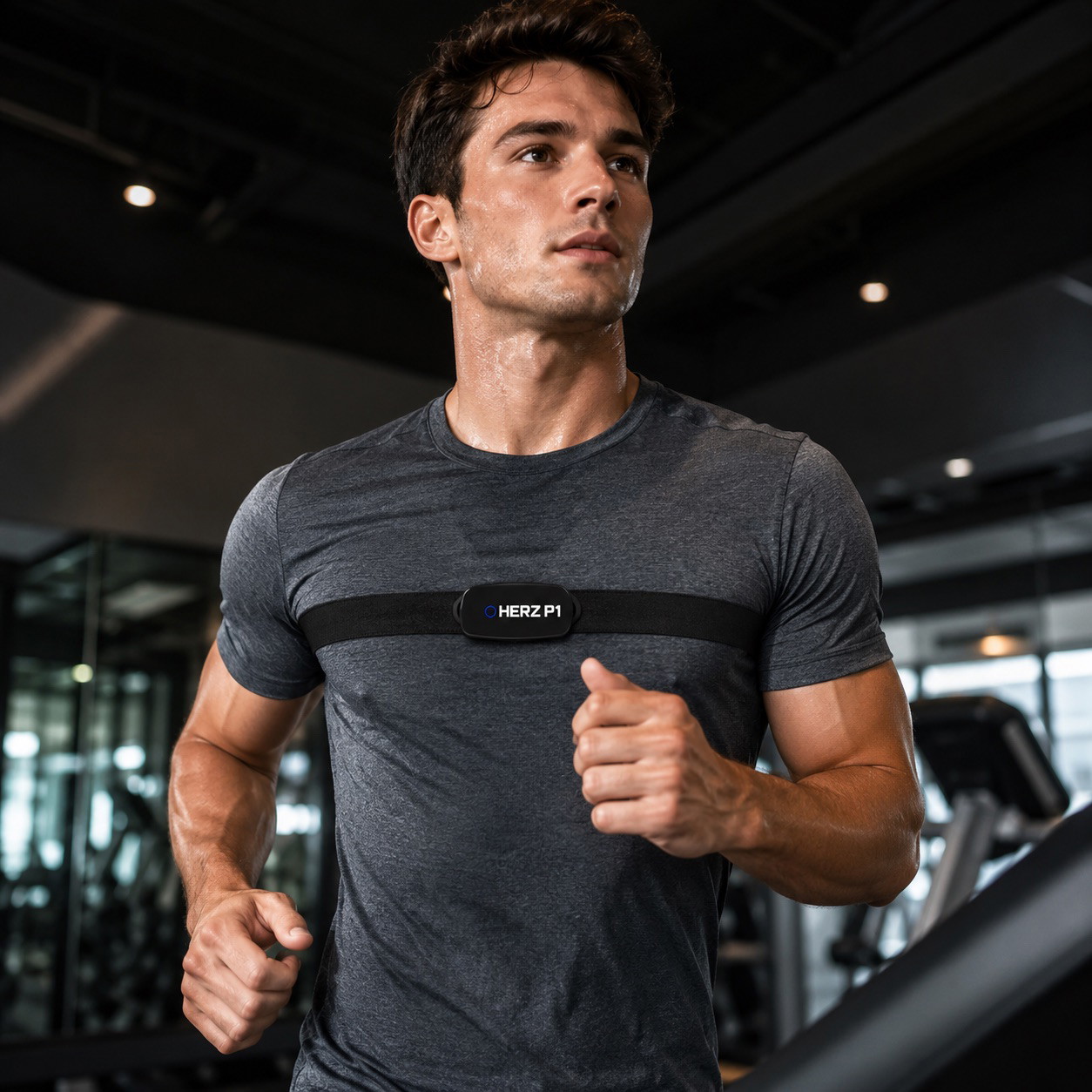
Herz reports a 4.9-star average across more than 82,000 reviews, with 97% of users saying they’d recommend it. The brand gathers those itself, so we read the number as a strong signal rather than independent testing.
The accuracy claim is believable because of the method, not the marketing. ECG chest sensing is how clinical monitors and the best sports straps work, and it’s inherently steadier under motion than wrist optical sensing. That’s physics, not a feature.
Here’s the beyond-the-brochure part. A chest strap only reads well with good skin contact, so a dry band gives you junk data for the first minute. Wet the electrodes before you start, which the quick-start glosses over, and the signal locks in immediately. The 48-hour memory is the sleeper feature: it’s what lets you train phone-free, and it’s the kind of thing you only appreciate once you’ve used it.
What owners say
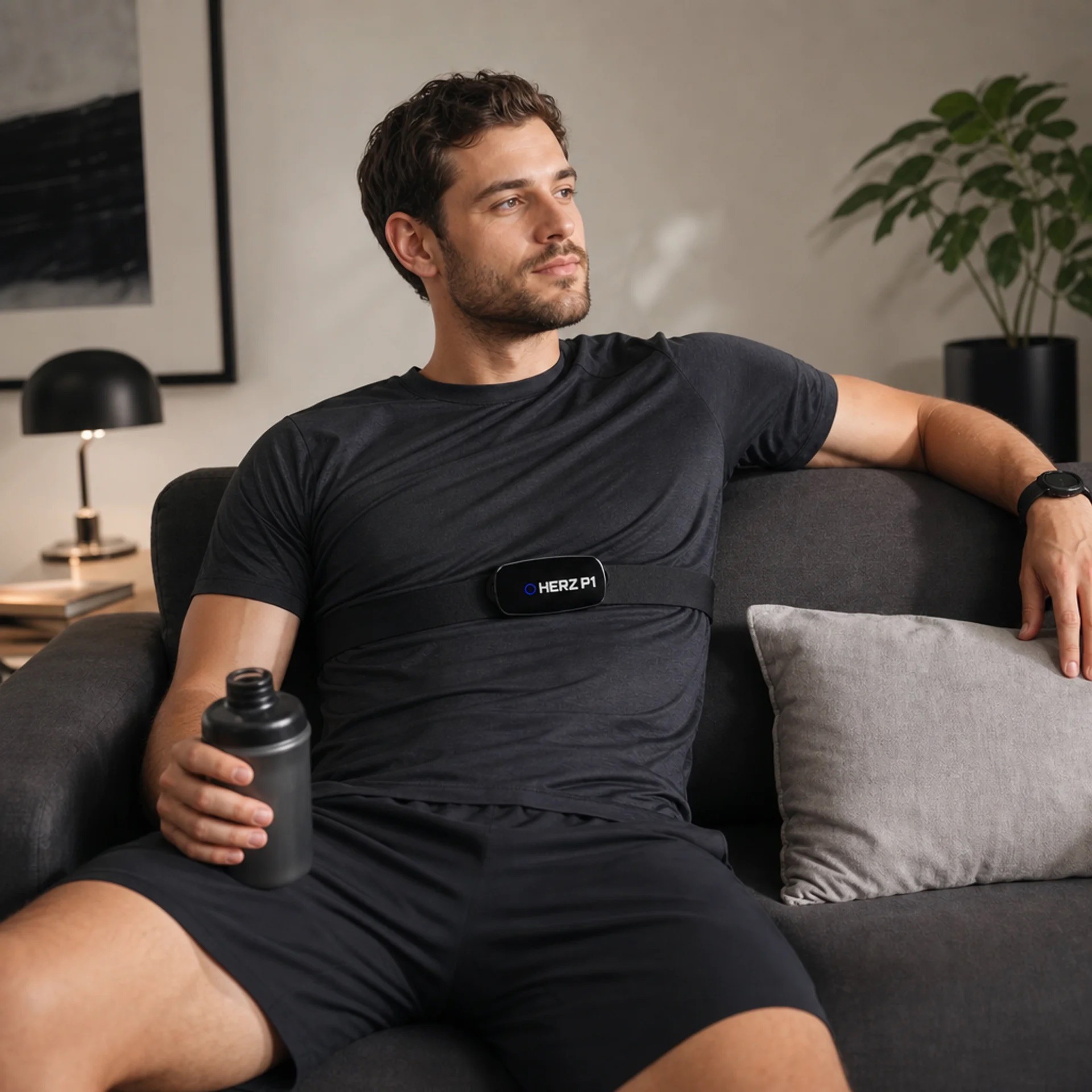
Across more than 82,000 reviews on the brand’s site, the Herz P1 averages 4.9 stars, and 97% of buyers say they’d recommend it. The feedback engine behind those numbers is the brand’s own, so we weight it as a strong sentiment signal rather than independent testing.
The brand doesn’t publish a verifiable breakdown of that score, so we’d rather point you at the facts you can check yourself. The ECG method, the 48-hour memory, and the dual-band pairing are the reasons to buy, and none of them rests on a star rating.
Honestly, the feature we keep coming back to is the 48 hours of onboard memory. Leaving your phone behind and still capturing a full week of sessions is the kind of thing that quietly changes how you train.
Pros and cons
What we liked
- ECG accuracy to within 1 bpm, steady through sprints and heavy sets
- 48 hours of onboard memory for phone-free training
- Simultaneous Bluetooth 5.0 and ANT+ pairs to watch and bike computer at once
- $75 with a 90-day money-back guarantee, under the Polar H10
What we didn't
- Only available online
Who it’s not for
If you only ever walk or jog at a steady pace, the wrist sensor on a watch you already own is probably accurate enough, and a chest strap is extra gear you don’t need.
And if maximum battery runtime and a decade of validation studies are your top priority, the Polar H10’s replaceable coin cell and long track record are the safer pick, for more money. For lifters, cyclists, and interval runners who want accurate numbers without overpaying, though, the Herz P1 is the sharp-value choice. If you’re building out a training setup, our FitScale X review covers the body-metrics side, our Glokore Knee Massager review covers recovery, and the health hub pulls the rest together.
Verdict
The Herz P1 does the one job a chest strap exists for: it gives you a heart-rate number you can trust during the efforts a watch can’t read, for $75.
You give up the Polar H10’s long battery runtime and validation history, but you gain 48 hours of phone-free memory, IP67 durability, and dual-band pairing, all for less money and with a 90-day guarantee. For anyone who trains hard enough to care about the number, it’s the best value in chest straps right now.
Check today's Herz P1 price