
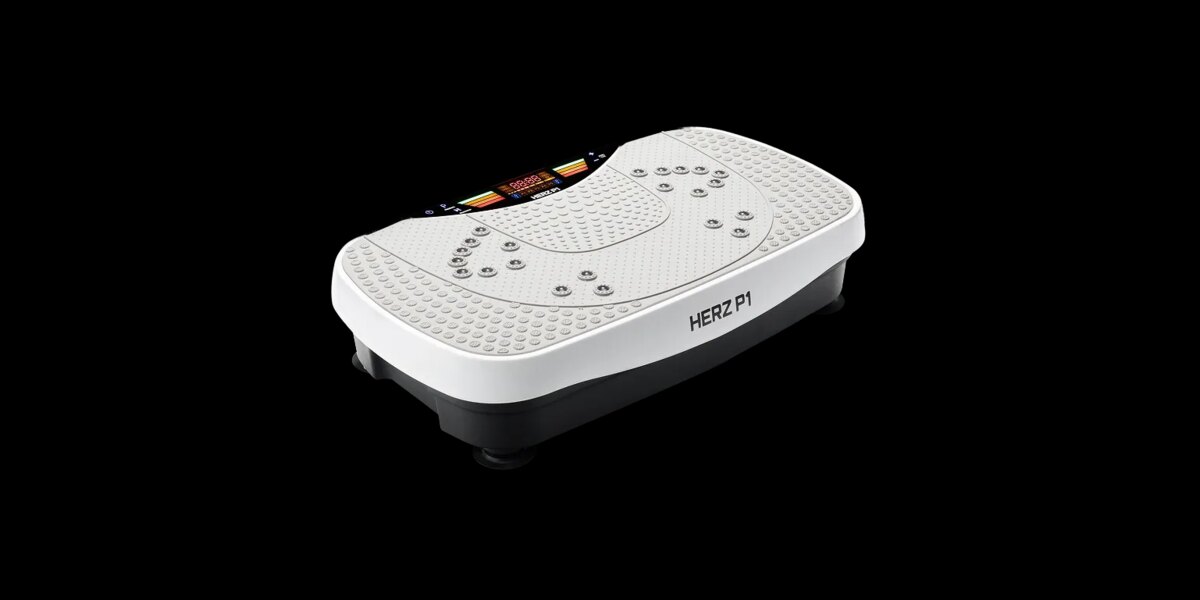
You don’t need a gym membership to get your blood moving, your legs working, and your balance sharper, you need ten quiet minutes standing on something that does the hard part for you. That’s the entire pitch for a vibration plate, and the Herz P1 is one of the more affordable ways to try it at home.
The Herz P1 vibration plate trainer is an oscillating whole-body vibration machine aimed at circulation, low-impact toning, balance, and recovery. This Herz P1 vibration plate trainer review digs into the real specs, the honest evidence for what these plates do, and whether it’s worth the money.
For this review we researched the Herz P1’s specifications, current pricing and guarantee, owner feedback, and the published research on whole-body vibration. We didn’t test a unit in a lab; this is analysis of what the machine is and what the science and owners actually say.
What whole-body vibration really does
Start here, because the honest evidence is the thing most sales pages skip, and it’s what makes a plate worth buying for the right reasons.
The research is strongest on lower-body muscle strength and power, balance in older adults, and low back pain, where whole-body vibration has genuine support. A plate also gives a short-term circulation boost, though Harvard Health notes that benefit mostly lasts while the machine is running.
Where to stay skeptical: weight loss and lymphatic or cellulite claims. Standing on a plate burns roughly what a brisk walk of the same length would, per researchers quoted by NBC, so the fat-loss comes from moving more, not the machine. Read this way, a vibration plate is a low-impact supplement to activity, which is exactly the job the Herz P1 is built for.
What the Herz P1 actually is
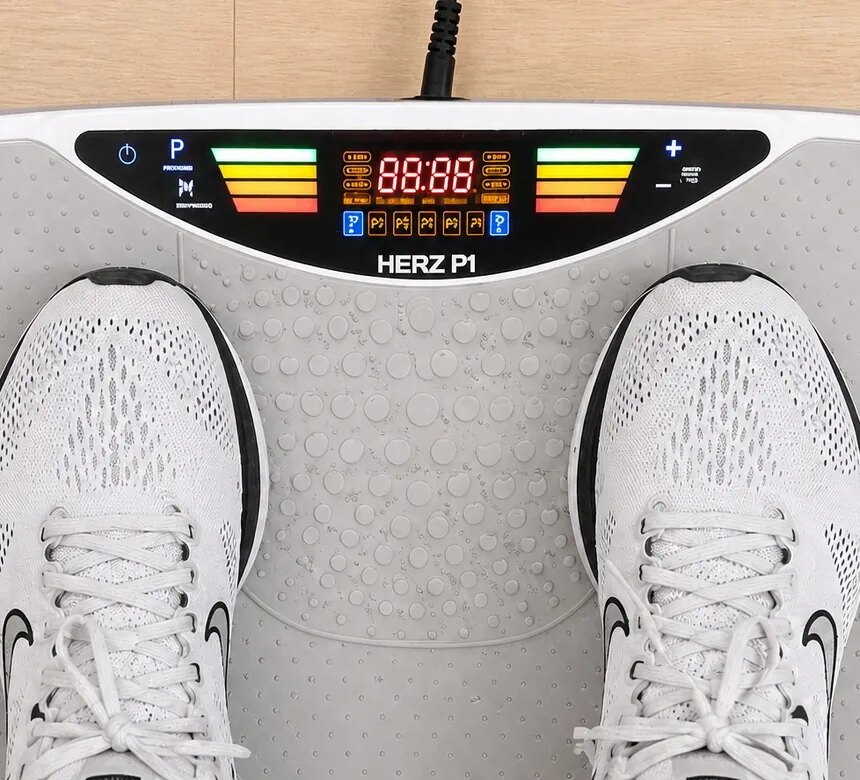
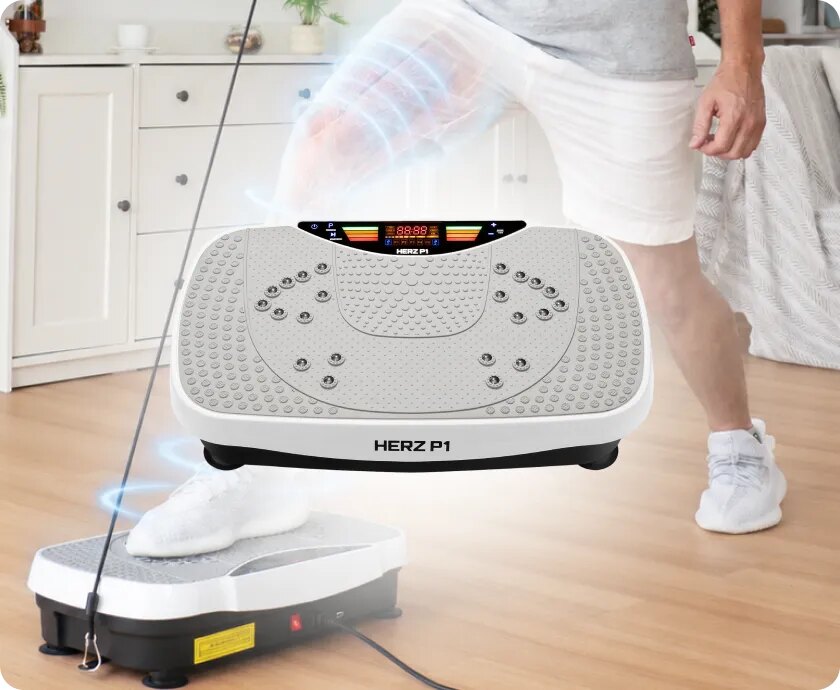
The Herz P1 is an oscillating (pivotal) plate, which tilts side to side like a seesaw rather than buzzing straight up and down. That style is the gentler, more common one, and it’s well suited to balance and circulation work. It runs on a 200W motor with 99 manual speed levels, five auto programs, and a 1-to-20-minute timer on a color screen.
A couple of nice touches set it apart at this price. It has a built-in Bluetooth speaker, so you can pair your phone and run a session to music, and the brand rates it at under 60 decibels, which is quieter than many budget plates.
Here’s the beyond-the-brochure detail worth knowing before you buy: the remote and the resistance bands are sold separately, usually for a few dollars each. The bands clip to the front so you can work your arms and shoulders, so if you want the full upper-body workout, plan on adding them at checkout.
How to actually use it
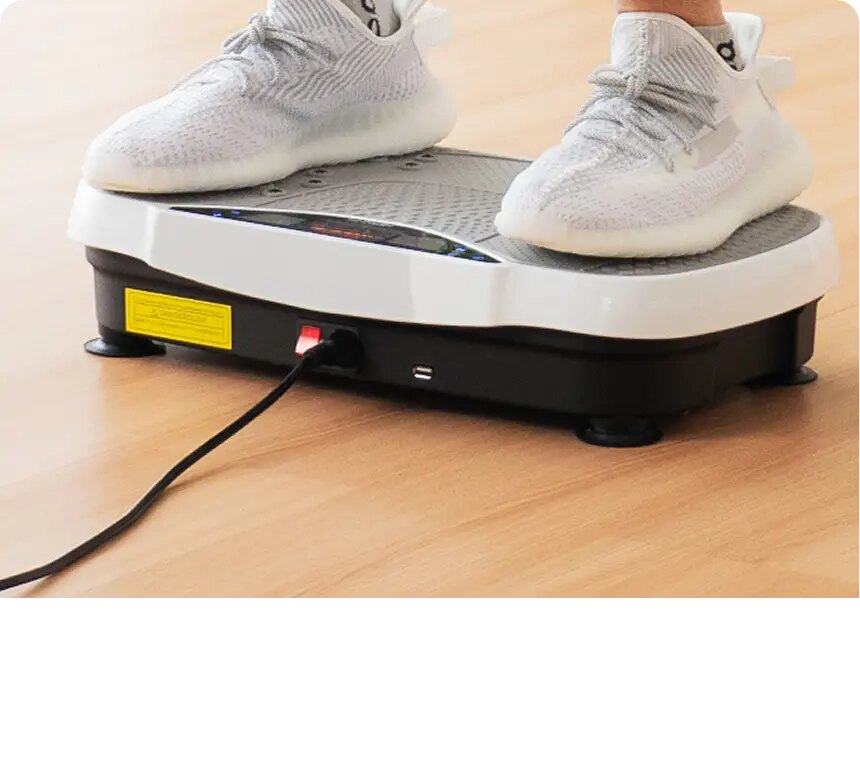
You don’t just stand there, although standing is a fine place to start. Begin with 5 to 10 minutes at a low speed while your body gets used to the sensation, then build up.
From there you can work through positions: standing for legs and glutes, seated for a gentler session, a plank or push-up hold for your core and arms, and resting your calves or feet on it for a massage-style cooldown. The five programs cycle speeds for you if you’d rather not fiddle with the levels.
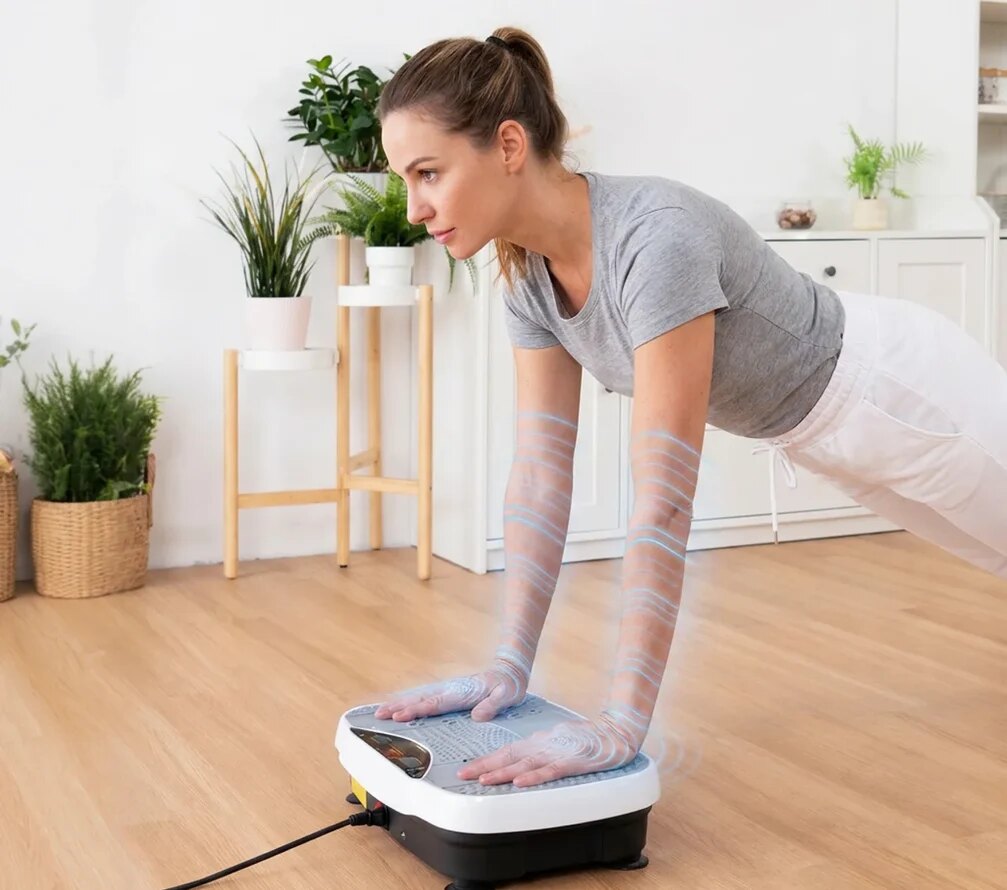
That versatility is the real selling point for a home machine. It tucks under a bed or sofa between sessions, and because it’s low-impact, it suits people easing back into movement as much as anyone chasing a quick post-work circuit.
Price, guarantee, and what owners say
The Herz P1 runs about $120 to $150 depending on the bundle and promotion, and it ships with a 90-day money-back guarantee. That guarantee is generous for this category and does a lot of the reassurance work, since you get three months to decide whether the daily habit sticks.
Put the price next to a studio-grade Power Plate, which runs well past $2,500, and the value case is obvious: the Herz P1 is a fraction of the cost for the same basic oscillating action. On its own store, Herz reports a 4.9 out of 5 from more than 82,000 customers, which is a first-party figure, so weigh it as the brand’s number rather than an independent audit.
Owners most often praise the easy setup, the compact size, and the quiet motor. The honest flip side: a few mention it gets louder and hums at the highest speeds, and that the remote feels basic. None of that is a dealbreaker for a $150 plate, and the guarantee covers you if it isn’t your thing.
Pros and cons
What we liked
- Oscillating 200W motor with 99 speeds, five programs, and a 1-to-20-minute timer
- Built-in Bluetooth speaker and a rated noise level under 60 decibels
- About $120 to $150, a fraction of a studio plate, with a 90-day money-back guarantee
- Low-impact and versatile, from standing legwork to seated sessions and foot recovery
What we didn't
- Only available online
Who it’s for
The Herz P1 is for anyone who wants a low-impact way to boost circulation, work on balance, and add gentle movement at home without a big outlay or a trip to the gym. It suits people easing back into activity, and it fits the ten-minutes-a-day habit far better than most people stick to a full workout.
Go in with the right expectations: it’s a supplement to moving more, not a weight-loss machine, and if you’re pregnant or managing a medical condition, it’s worth a quick word with your doctor before you start. Our best vibration plate exercise machine roundup ranks it against the field, and the best at-home body sculpting devices guide covers the rest of the low-effort toning tools.
Herz P1 vibration plate review verdict
The Herz P1 earns a 9.1. Judged as what it is, an affordable oscillating plate for circulation, balance, and gentle at-home toning, it delivers: a 200W motor, 99 speeds, five programs, a Bluetooth speaker, and a noise level that won’t annoy the house, all for a fraction of a studio machine.
The 90-day money-back guarantee makes it an easy thing to try, and the only real homework is adding the bands if you want upper-body work. Clear ten minutes a day, start slow, and it’s one of the simplest ways to keep moving when getting to the gym isn’t happening.
Check today's Herz P1 priceFor more low-effort home upgrades, the beauty hub rounds up the rest of our picks.