
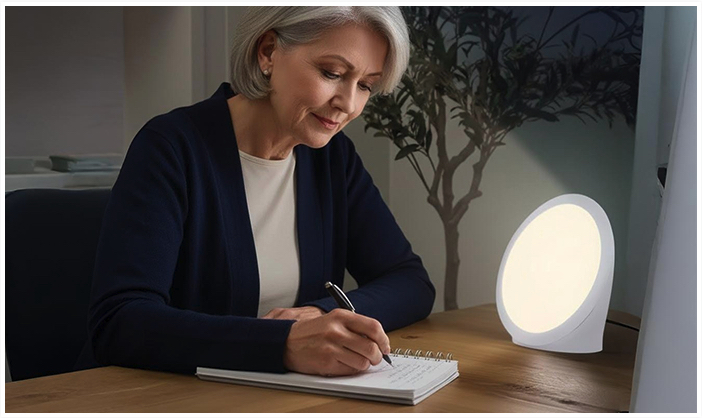
By mid-November the alarm goes off in the dark, you get home in the dark, and the slow flattening that comes with it feels less like a mood and more like a season you have to wait out. That winter dip has a name, seasonal affective disorder, and the most common at-home tool for it is a bright-light lamp used first thing in the morning.
The Sunniva Light is a compact 10,000-lux lamp built for exactly that routine. We researched its specs, the morning-light guidance from Mayo Clinic and the NHS, its price, and how it lines up against the name-brand SAD lamps people already cross-shop, including the units in our best red light therapy devices roundup, which answers a different light-wellness question.
Here’s the honest read on what it does, what the research actually supports, and who should buy it.
Why choose the Sunniva Light
What we liked
- Delivers 10,000 lux of UV-free, full-spectrum light, the standard intensity used for morning light therapy
- Adjustable color temperatures (warm, cool, daylight) and brightness, plus a 15/30/45/60-minute auto-off timer
- $59.99 with free shipping, undercutting the Verilux HappyLight Luxe and far below the Carex Day-Light
- 90-day money-back guarantee, long enough to judge it across a full dark month
What we didn't
- Only available online
Who the Sunniva Light is for
Buy the Sunniva Light if your energy and mood dip when the clocks change and you want the morning-light routine clinicians describe without paying name-brand prices. It’s small enough to sit on a desk or a kitchen counter where you’ll actually use it, which is most of the battle.
It’s also a sensible gift for anyone who dreads the winter slump, and the 90-day money-back guarantee means they can run it through the darkest weeks and send it back if it doesn’t help.
Try it with the 90-day money-back guaranteeSunniva Light vs the name-brand SAD lamps
Here’s the comparison the round-up pages gloss over: the Sunniva read side by side with the two lamps most people already know, on price, intensity and guarantee. Every lamp here delivers the same 10,000 lux that morning light therapy is built around, so the real difference is what you pay and how long you get to test it.
| Sunniva Light | Verilux HappyLight Luxe | Carex Day-Light Classic Plus | |
|---|---|---|---|
| Light output | 10,000 lux, UV-free | 10,000 lux at 6 in | 10,000 lux at 12 in |
| Price | $59.99 | $69.99 | $169.99 |
The Carex is a larger clinical-style panel with a long track record, and it costs nearly three times as much. The Verilux is the editor-favorite compact lamp at $69.99. The Sunniva matches the 10,000-lux benchmark both of them are judged on, adds adjustable color temperatures and a timer, and comes in cheapest at $59.99 with a 90-day money-back guarantee. One honest caveat: brands measure lux at different distances, and Sunniva doesn’t publish the distance for its figure, so treat the output as a stated spec rather than an independently verified one.
What the Sunniva Light actually is
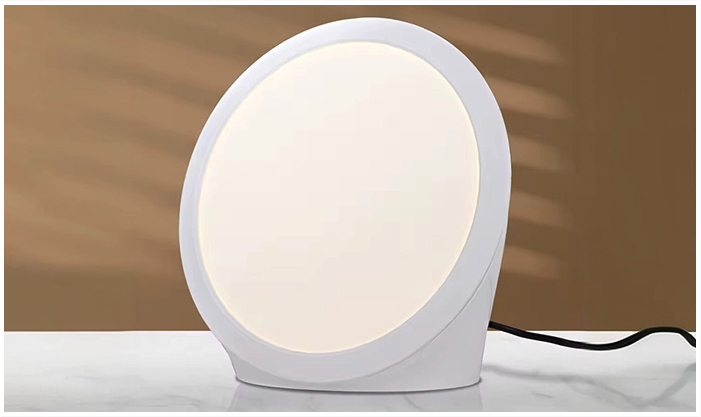
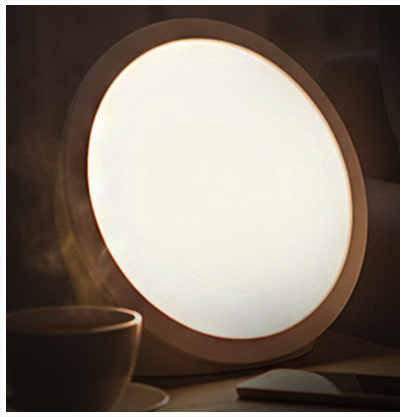
The Sunniva Light is a compact, round-faced lamp on a slim stand that throws 10,000 lux of UV-free, full-spectrum white light, the same intensity a clinic light box uses. It’s the brightness, not any special wavelength, that does the work in light therapy.
You control it with a smart touch panel: step the brightness up or down, and switch between warm white for a gentle wake-up, cool white for energy, and a daylight setting for focus. The body is PC and ABS plastic, and the LEDs are rated for a 50,000-plus-hour lifespan, so it outlasts the seasons you’ll use it for.
It’s light enough to move between a bedroom and a desk, which matters more than it sounds. A lamp you have to go to a special room to use is a lamp you stop using by January.
How to actually use it
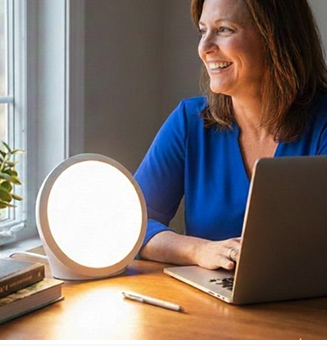
The timing is the whole game. Mayo Clinic’s light-box guidance is to use 10,000 lux within the first hour of waking, for about 20 to 30 minutes, sitting roughly 16 to 24 inches from your face with the light angled toward you, not staring into it. Set the Sunniva’s timer and let it run while you have coffee or answer email.
The auto-off timer (15, 30, 45 or 60 minutes) is the feature that makes the habit stick, because you never have to watch the clock. Morning use is deliberate, since bright light later in the day can push your sleep timing back.
One safety note, framed as a pairing rather than a warning: bright-light therapy sits alongside good sleep and daylight habits, and if you have an eye condition, take photosensitizing medication, or live with bipolar disorder, a quick word with your doctor first is the right call before you start.
Does the light therapy behind it hold up?
Here’s the beyond-the-brochure part, stated plainly. The idea behind a SAD lamp is that less winter daylight can shift brain chemicals like melatonin and serotonin, and a strong morning dose of light helps reset that rhythm. The NHS notes that 10,000 lux is the standard for a SAD light box and that it should be UV-free with a UKCA or CE mark. Sunniva lists its lamp as UV-free, which is the spec that matters most here.
The honest framing is this: the NHS also says the evidence for light therapy is limited, while many people find it genuinely helps their symptoms. Mayo Clinic’s SAD treatment guidance treats a 10,000-lux morning routine as a recognized first step. So the Sunniva gives you the right tool at the right intensity. It’s a daily habit worth trying, not a cure, and the 90-day guarantee is what lets you find out on your own schedule.
What buyers say
Sunniva collects its own testimonials, so we read them as a positive-leaning signal rather than independent testing, and there’s no aggregate star rating to cite. The recurring theme in the brand’s verified testimonials is mornings: buyers describe steadier energy and a better mood through the darker months.
Take brand-hosted feedback with the usual grain of salt, since there’s no third-party review base to cross-check it. What’s fair to say is that the design matches the recognized light-therapy benchmark, and the 90-day guarantee lets you test that promise against your own winter.
How it compares
The lamps most people weigh against it are the Verilux HappyLight Luxe at $69.99 and the clinical-style Carex Day-Light Classic Plus at $169.99, both 10,000-lux, UV-free units with real track records. The Sunniva’s case is simple: the same core intensity, adjustable color temperatures they don’t offer, the lowest price of the three, and the longest money-back window.
If your interest is light for skin and recovery rather than winter mood, that’s a different category entirely, and our best red light therapy devices roundup and the Glokore red light therapy wrap review cover it. For more everyday light-and-wellness picks, the health hub pulls them together.
Who it’s not for
If you already own a 10,000-lux lamp you use every morning, there’s no reason to switch. And if your low mood is severe or year-round rather than seasonal, a lamp is a supplement to proper care, not a replacement, so start with your doctor.
Verdict
The Sunniva Light does the one thing a SAD lamp has to do: it puts 10,000 lux of UV-free morning light where you’ll actually sit in it, with adjustable tones and a timer that makes the routine effortless.
It matches the intensity benchmark the NHS and Mayo Clinic describe, undercuts the name-brand lamps on price, and backs the whole thing with a 90-day money-back guarantee that covers a real stretch of winter. Buy it as what it is, a well-priced, properly-specced tool for the morning-light habit, and let the dark months tell you whether it earns its spot on your desk.
See today's Sunniva Light price