
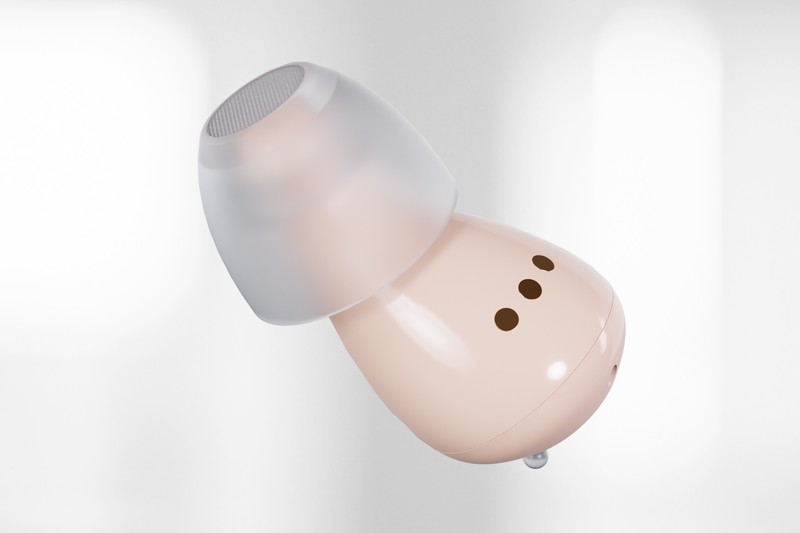
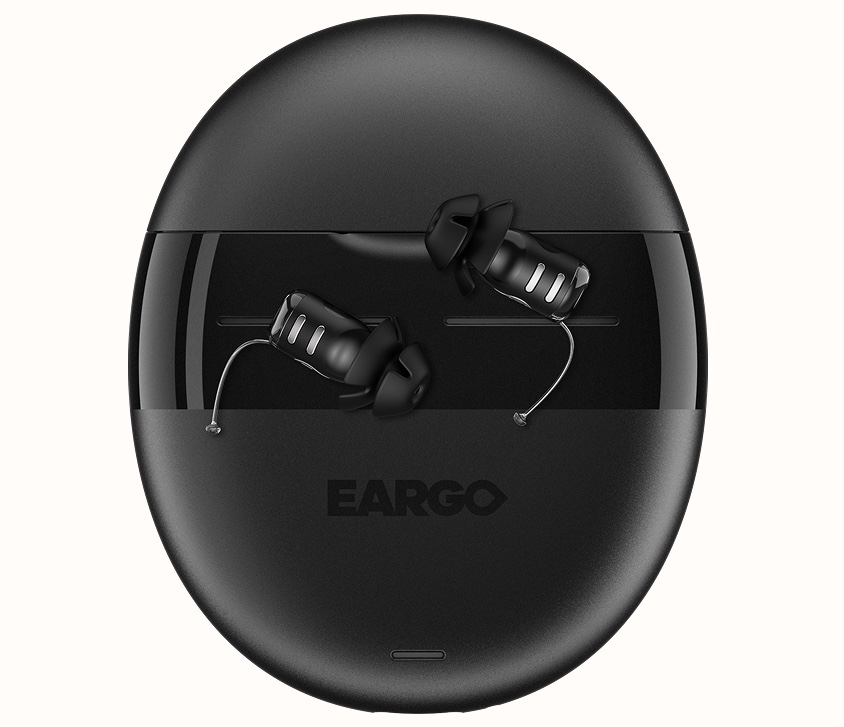
The price gap here is almost hard to believe: the Audien Atom 2 is $189 a pair, and Eargo runs from $799 to about $2,700.
That’s four to fourteen times the money for two devices that, on paper, do the same job, make speech and TV audible again for adults with mild hearing loss.
So the real question isn’t which one is “better” in a vacuum.
Eargo is the more capable device, full stop. The question is whether its extra abilities are worth paying for, or whether the cheap one is genuinely enough for you.
To answer that, this Audien Atom 2 vs Eargo comparison weighs both devices on the four things that actually decide it: price, how they’re fitted, how they handle noise, and the support you get.
We read thousands of buyer reviews, independent lab results, and the fine print on both brands’ return policies, weighting detailed verified feedback over drive-by one-liners. Here’s how they line up.
Audien Atom 2 vs Eargo at a glance
| Feature | Audien Atom 2 | Eargo |
|---|---|---|
| Price per pair | $189 | $799 to about $2,700 |
| Fitting | 4 fixed presets, tapped on the device | Self-fitting per ear via app (Sound Match) |
| Noise handling | Basic amplification | Automatic adjustment (Sound Adjust) |
| Design | In-the-ear, flesh-toned bud | Virtually invisible in-canal |
| App / Bluetooth | None | App tuning; Bluetooth on the Link model |
| Battery | Up to 24 hours per charge | Up to 16 hours (Eargo 8) |
| Return window | 45-day money-back guarantee | 45-day trial |
| Support | Customer service line | Lifetime support, no clinic visits |
| Our score | 9.2 / 10 | 8.0 / 10 |
What each device actually is
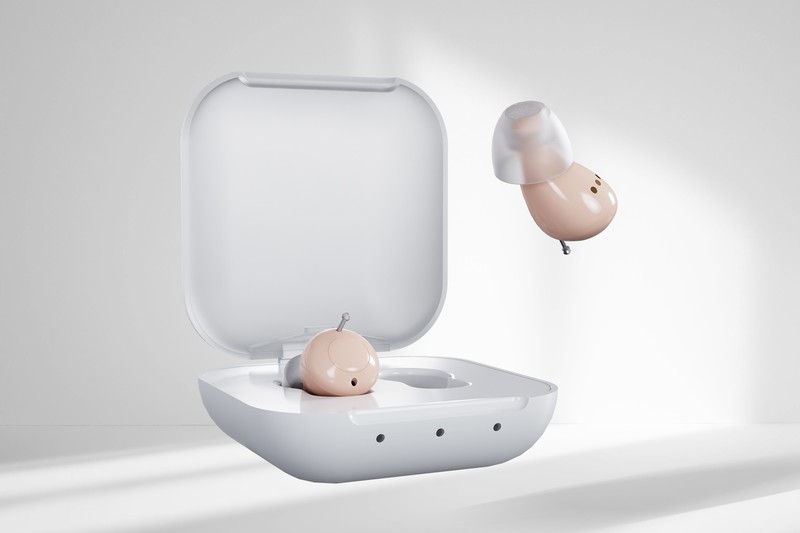
The Audien Atom 2 over-the-counter hearing aid is a small rechargeable bud that sits in your ear canal and amplifies sound on four preset modes: Conversation, Noisy Environment, Vehicle, and Outdoor. There’s no app, no Bluetooth, and no pairing.
You tap to change modes and that’s the whole interface. Setup takes minutes, which is the point.
Eargo is a self-fitting over-the-counter hearing aid built around a virtually invisible in-canal design and a phone app.
Its Sound Match feature walks you through a hearing check and tunes each ear to your own results, and Sound Adjust shifts the settings automatically as you move between quiet and noisy places.
The line spans several models: the earbud-style Link at $799 with Bluetooth streaming, the value-focused SE around $1,650, and the flagship Eargo 8 at $2,699 with the most advanced processing.
So the split is clear before you spend a dollar. The Atom 2 is fixed amplification you control with your finger. Eargo is adaptive amplification that tunes itself to your ears and your room.
Round by round
Price
Round winner: Audien Atom 2Here’s the number that frames everything. The Audien Atom 2 costs $189 for the pair.
The cheapest Eargo, the Link, is $799, and the ones most people picture when they think “Eargo,” the near-invisible SE and Eargo 8, run $1,650 to $2,699.
For that reason, most shoppers aren’t really choosing between two similar things at similar prices.
They’re deciding whether their hearing loss needs Eargo’s extra engineering, or whether $189 of honest amplification solves the actual problem, which for a lot of people is simply hearing conversation and the television again.
If money is the deciding factor and your loss is mild, the Atom 2 removes the excuse to keep waiting.
If you can spend four figures and want the device to do more of the work, that money buys real capability, not just a logo.
Fitting and sound
Round winner: EargoThis is Eargo’s home turf. Because Sound Match tunes each ear to your specific hearing test, Eargo boosts the exact frequencies you’ve lost instead of raising everything at once.
Sound Adjust then handles the hard part on its own, quieting a rattling restaurant so a voice across the table stays intelligible. In noisy, crowded settings, that per-frequency tuning is the difference between following a conversation and nodding along.
The Atom 2 works differently, and more bluntly. Its presets amplify in broad strokes rather than targeting your personal loss.
The independent picture backs this up: HearAdvisor’s lab graded the original Audien Atom a C, with a SoundScore of 2.65 out of 5, ranking it 42nd of 61 over-the-counter devices it measured.
The Atom 2 upgraded the sound chip and added the four modes, and reviewers at Soundly noted clearer speech than earlier generations, but it’s still basic amplification. In a quiet living room, that’s plenty.
In a loud room full of competing voices, Eargo’s processing does work the Atom 2 can’t.
Simplicity and support
Round winner: Audien Atom 2Capability isn’t the only thing that matters, and this is where the cheap device quietly wins some buyers back.
If you’re shopping for a parent who distrusts anything with an app, the Atom 2’s no-app, no-Bluetooth, tap-to-change design is a feature, not a shortcoming.
Nothing to pair, nothing to update, nothing to explain over the phone twice a week. Its 24-hour battery also outlasts Eargo 8’s rated 16 hours on a charge.
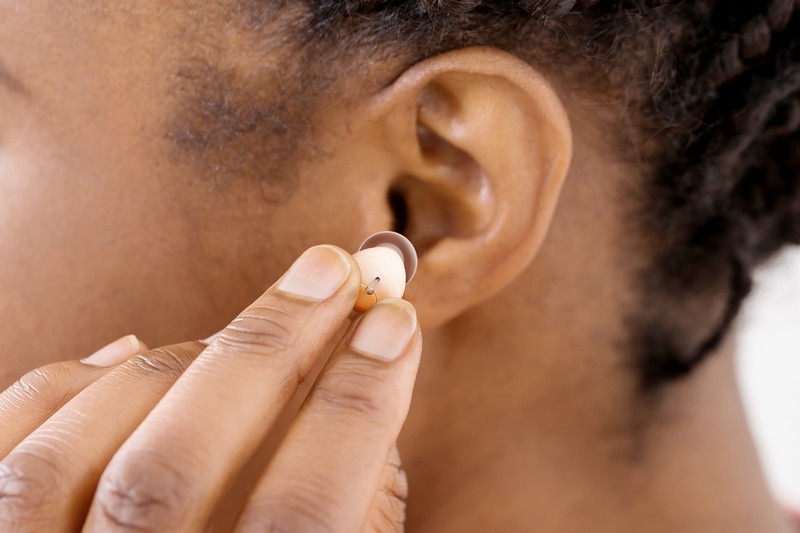
Eargo answers with support instead of simplicity: no clinic visits, self-fitting from your couch, and dedicated customer help for the life of the device. That hand-holding is part of what you’re buying at four figures.
Both brands give you a 45-day window to change your mind, but the experiences differ.
With Audien, returns must be authorized by customer service before you ship anything back, you pay return postage, and some buyers describe a pitch for a pricier model on the way out.
Treat that 45-day guarantee as a process to start early, not a button to press on day 44.
What owners say
“Small, light, and the conversation mode really helps when I'm out with friends.”
“Bought the Audien Hearing Atom II for my mom and she can finally join our conversations.”
“A solid option if you want a basic, affordable hearing aid without frills.”
The recurring theme in credible Audien feedback is people hearing conversation again after years of putting it off, for a price they assumed was impossible.
Audien holds a 4.6 average on Trustpilot, which needs a haircut because the company invites those reviews, so we weight it closer to the low 4s, in line with its roughly 4.2-star BBB profile.
Eargo owners, for their part, tend to praise the near-invisibility and the self-fitting experience, and grumble about the price and the occasional fit fiddliness. Neither brand is hiding a scandal; they’re serving different budgets.
Pros and cons of picking the Atom 2
What we liked
- $189 a pair, versus $799 to $2,700 for Eargo, for the same core job in quiet settings
- No app or Bluetooth: tap-to-change simplicity that suits tech-averse users
- 24-hour battery outlasts Eargo 8's rated 16 hours
- 45-day money-back window plus a one-year warranty
What we didn't
- Preset amplification can't self-fit to your ears or handle noise like Eargo
- No invisible in-canal design; the bud sits more visibly than Eargo's
- Returns need pre-authorization and you pay shipping, so start early
Who should buy which
Buy the Audien Atom 2 if your hearing loss is mild, you mostly need help with conversation and TV in fairly quiet settings, and $189 versus four figures is the deciding factor.
It’s also the smarter pick as a simple first pair for someone who won’t tolerate an app.
For the full breakdown, see our Audien Atom 2 review, and if you want to spend even less, the best OTC hearing aids under $150 covers cheaper options.
Buy Eargo if you struggle most in restaurants and group settings, you want near-invisible devices that tune themselves to your ears, and you can spend $799 to $2,700 for that capability and the lifetime support that comes with it.
That’s a real product doing real work, not an upsell.
For most people writing their first hearing-aid check with mild loss, though, the honest answer is that the $189 Atom 2 is enough, and the four-figure gap buys refinement you may not need yet. You can always upgrade later.
Curious how we weigh these? Here’s how we research.
Check today's Atom 2 price