
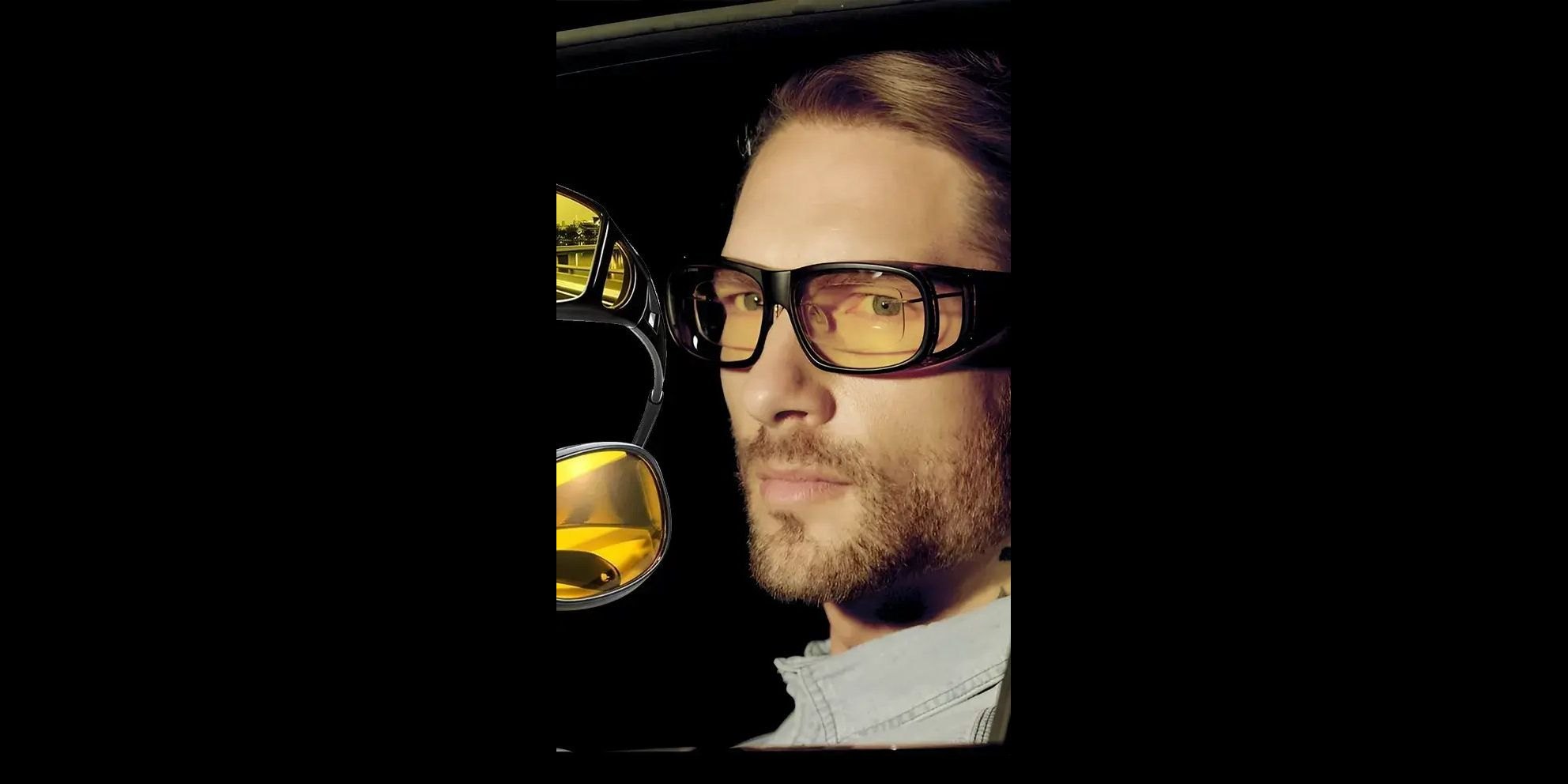
A Drive Bright vs Night Sight Glasses decision is really a choice between the honest amber comfort filter and the one that promises to turn night into day. Both are yellow-tinted, fit-over night driving glasses aimed at the same problem: oncoming LED headlights that feel like a floodlight in your face.
The Drive Bright is a $39.99 amber pair with an anti-reflective coating and a drop-resistant TR90 frame, sold on a comfort-first pitch. Night Sight Glasses is a cheaper As-Seen-On-TV rival at $19.99 that leans hard on “polarized HD” and “turn night into day” claims.
We compared them on lenses, fit, build, price, and guarantee, and we weighed all of it against what optometrists actually say about tinted night lenses. One is cheaper. The other makes the more sensible set of choices. Here’s the split, round by round.
Drive Bright vs Night Sight Glasses at a glance
| Feature | Drive Bright | Night Sight Glasses |
|---|---|---|
| Lens | Amber, anti-reflective coating | Amber, marketed as polarized |
| Best use | Night glare comfort | Night glare comfort |
| Fit-over design | Wrap-around TR90, fits over glasses | Wrap-around, fits over glasses |
| Frame | Drop-resistant TR90 | Not specified |
| Price | About $39.99 | About $19.99 |
| Guarantee | 90-day money-back | Return window varies |
| Claims | Comfort filter, no vision-fix hype | "HD," "turn night into day" |
| Our score | 9.0 / 10 | 8.1 / 10 |
What both of these actually do
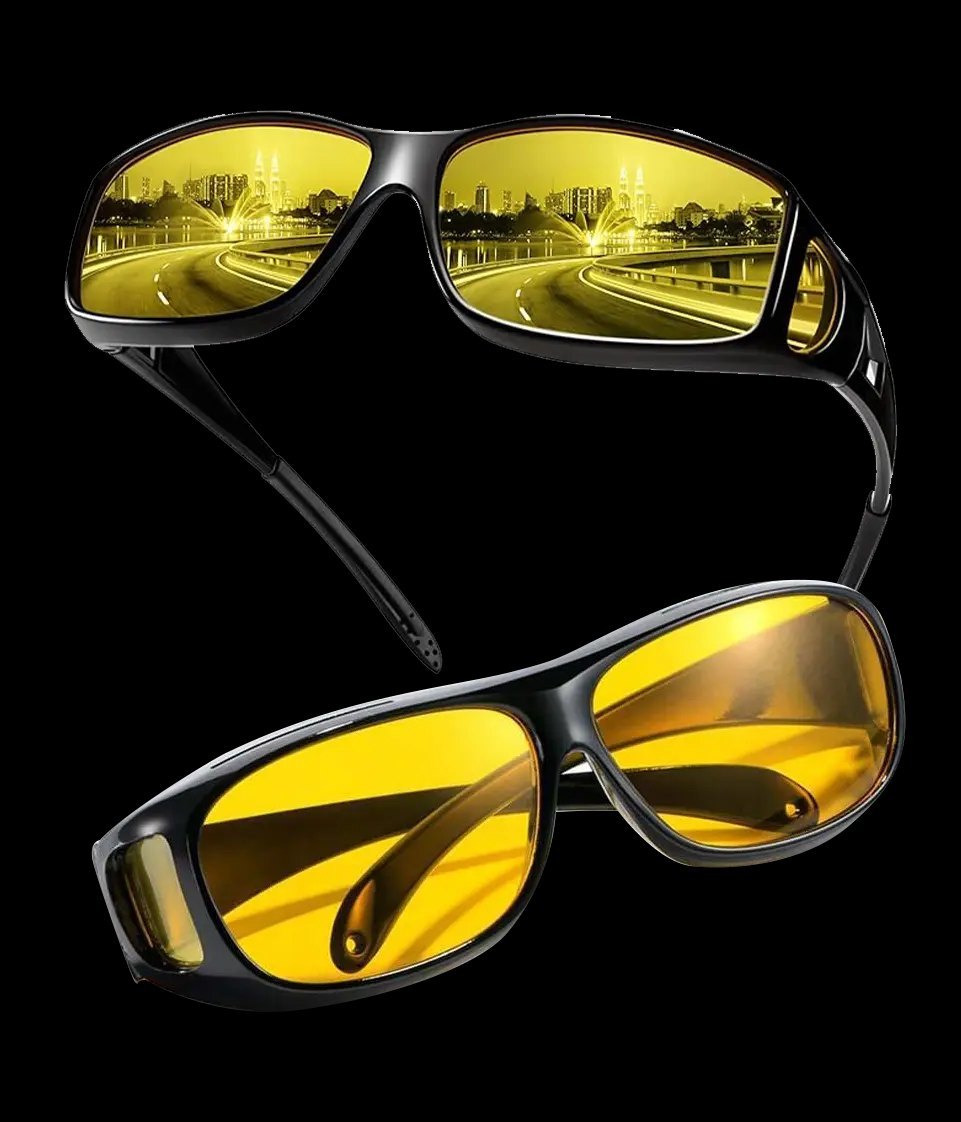
Start with the honest baseline, because it applies to both. An amber tint filters part of the blue-white light in modern LED headlights, and that can make glare feel softer and less tiring. That perceived comfort is the real, useful thing these glasses deliver.
What neither one does is measurably sharpen your night vision. A 2019 JAMA Ophthalmology study and the American Academy of Ophthalmology both found yellow lenses don’t help you detect pedestrians or beat glare on the instruments. So the right frame for this whole comparison is comfort, not a vision upgrade.
The Drive Bright sells itself that way, as a glare-comfort filter. Night Sight reaches further, promising “HD” clarity and to “turn night into day.” Same category of product, very different honesty in the pitch.
Round by round
Lenses and the honest science
Round winner: Drive BrightHere the sensible choice wins. The Drive Bright uses an amber lens with an anti-reflective coating, and an AR coating is exactly what eye doctors recommend for night glare, because it cuts internal reflections and lets more light through.
Night Sight leans on a “polarized HD” claim. The problem is that polarized lenses are the ones optometrists warn against at night, since polarization can darken the view and hide dark patches of road. Marketed as a feature, it’s arguably the wrong one for driving after dark.
For lens choices that line up with what the science actually favors, Drive Bright wins this round.
Fit over your glasses
Round result: Tie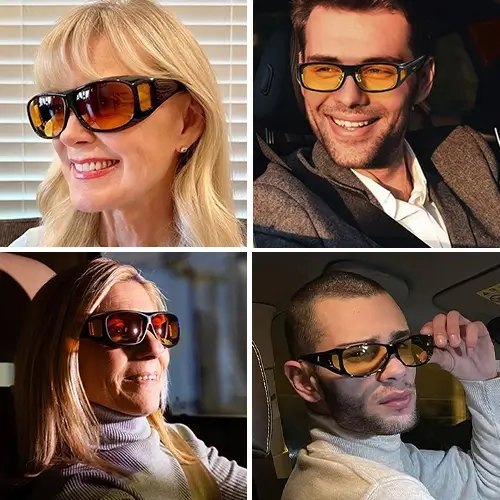
Call this one even. Both are wrap-around, fit-over designs built to sit over prescription, reading, or myopia glasses, with side panels that catch peripheral glare. If you already wear glasses, either will slip over them.
Drive Bright’s frame is a named TR90, and Night Sight doesn’t specify its frame material, but on the fit-over concept itself they’re matched.
Neither pulls ahead on the basic fit-over idea, so this round is a tie.
Build quality
Round winner: Drive Bright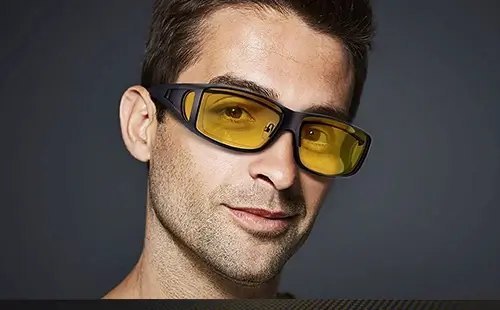
A pair of glasses that lives in the car door needs to survive being dropped. The Drive Bright frame is TR90, a lightweight, flexible plastic the brand calls drop-resistant and shatterproof, which is the kind of build that shrugs off getting sat on or tossed in a console.
Night Sight doesn’t publish a frame material, so you’re buying on looks rather than a stated spec.
For a named, drop-resistant frame, Drive Bright takes this round.
Price
Round winner: Night Sight GlassesGive the rival its clear win. Night Sight Glasses lists at $19.99, a good bit under Drive Bright’s $39.99, so if the only thing you care about is spending as little as possible on an amber pair, Night Sight is the cheaper ticket.
Drive Bright costs more, and the case for it rests on the lens coating, the frame, and the guarantee rather than the sticker.
On price alone, Night Sight wins here.
The guarantee
Round winner: Drive BrightA low-commitment tryout matters on a product whose benefit is subjective. The Drive Bright comes with a 90-day money-back guarantee, so you get a real stretch of night drives to decide whether the amber tint calms your commute.
Night Sight’s return terms vary by where you buy it and aren’t as clearly stated, so the safety net is fuzzier.
For a clear, generous guarantee, Drive Bright wins this one.
The honest scorecard
What we liked
- Drive Bright: anti-reflective amber lens tuned for glare comfort, the spec eye doctors favor
- Drive Bright: drop-resistant TR90 wrap-around frame with a 90-day money-back guarantee
- Night Sight: cheaper at about $19.99 for an amber fit-over pair
- Night Sight: same wrap-around fit-over design that sits over prescription glasses
What we didn't
- Only available online
Who should buy which
Choose the Drive Bright if you want the more sensible amber pair and a real safety net. The anti-reflective lens matches what optometrists recommend for glare, the TR90 frame takes a beating, and the 90-day guarantee lets you find out on your own commute whether the tint helps. For most glare-weary night drivers, it’s the pick we’d start with.
Choose Night Sight Glasses if the lowest price is the whole point and you’re comfortable with its bigger claims. At $19.99 it’s a cheaper way into the same fit-over amber category.
Go in with the right expectation on either: this is glare comfort, not a night-vision cure, and heavy halos or blur mean a trip to the eye doctor, not a tint. For the full field, see our Drive Bright review and our best night driving glasses of 2026 guide, plus more everyday-carry picks in the home hub.
Check today's Drive Bright price