
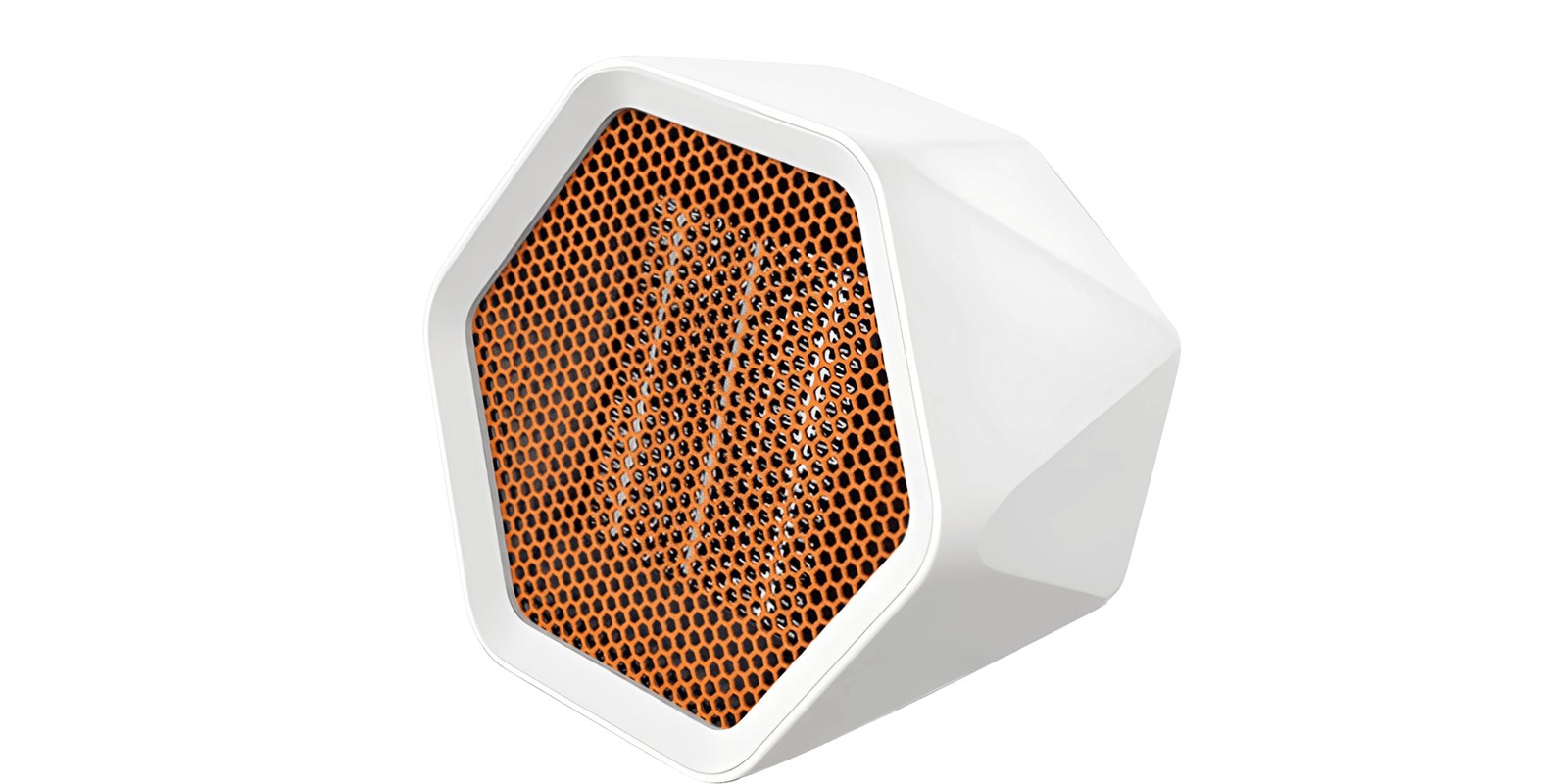
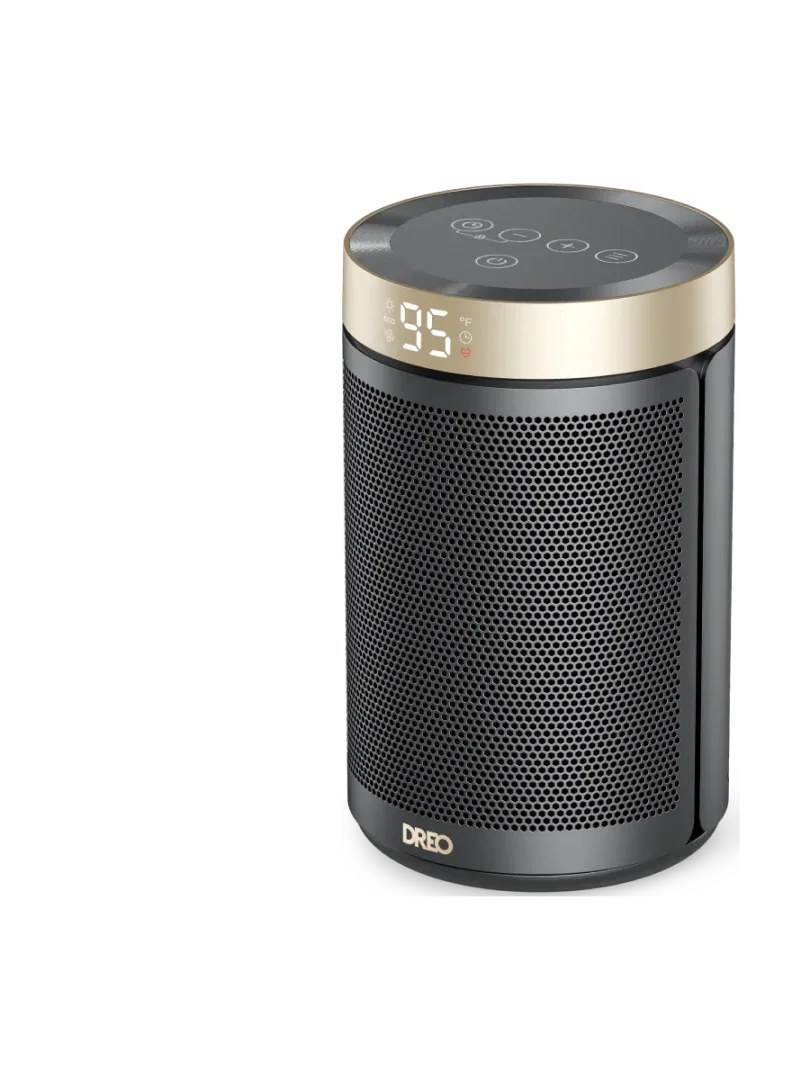
Before you buy either of these, know the one thing neither ad leads with: a HexaHeat and a Dreo Atom 316 are both compact personal heaters, not furnaces. They warm the space right around you, and on a normal wall outlet, no small heater escapes the roughly 1500W ceiling.
Once that’s clear, a HexaHeat vs Dreo comparison gets simple. Both are PTC ceramic heaters that push warm air within seconds, so the real questions are what you pay, how portable it is, and what protects you if it tips over.
The HexaHeat is the pocket-size, hexagon-shaped option with a long 90-day money-back guarantee. The Dreo Atom 316 is the higher-wattage, ETL-certified unit that costs a little less.
We read both brands’ specs, independent Dreo testing, and the owner feedback and return terms on each. One wins on portability and trial risk. The other wins on raw heat per dollar. Here’s the honest split. For the heater on its own, see our full HexaHeat review.
HexaHeat vs Dreo Atom 316 at a glance
| Feature | HexaHeat | Dreo Atom 316 |
|---|---|---|
| Price | ~$50 single, less in multipacks | ~$40 |
| Heating element | 1200W PTC ceramic | 1500W PTC ceramic |
| Warm-up | Warm air in seconds (PTC) | Warm air in seconds (PTC) |
| Coverage | Personal zone (unstated sq ft) | ~200 sq ft (stated) |
| Thermostat | Basic climate control | Digital, 1°F, 41–95°F |
| Safety certification | Tip-over + overheat, no ETL listed | ETL certified, tip-over + overheat |
| Portability | Compact hexagon, very light | Compact cylinder, carry handle |
| Guarantee | 90-day money-back | Standard retail returns |
| Best for | Grab-and-go personal warmth | Most heat per dollar, certified |
| Our score | 9.0 / 10 | 8.4 / 10 |
Two compact heaters, one honest split
Start with what they share, because it’s most of the story. Both use a PTC ceramic element, which is why each one blows genuinely warm air within seconds and can’t overheat the way an old coil heater could. Both are sized for one person’s space, and both are honest desk-and-bedside tools rather than room heaters.
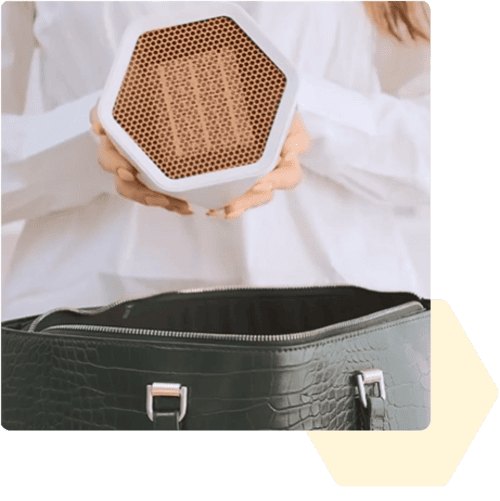
The HexaHeat leans into portability. It’s a 1200W hexagon barely bigger than a coffee mug, light enough to carry from the home office to the nightstand without a second thought, and it’s quiet enough to leave running while you work or sleep.
The Dreo Atom 316 leans into measured performance. It’s 1500W, rated for about 200 square feet, and it adds a precise digital thermostat you can set to the exact degree between 41 and 95°F, plus a remote. Independent testers at Trusted Reviews gave it 4.5 out of 5 and called it strong value.
Here’s the honest part. On raw heat per dollar, Dreo leads: more watts, a lower price, and third-party ETL certification. HexaHeat’s edge is different, and it’s real: it’s the smaller, easier-to-move unit, and the 90-day money-back guarantee lets you actually test it before you commit. Which of those matters more is the whole decision.
Round by round
Heat output and speed
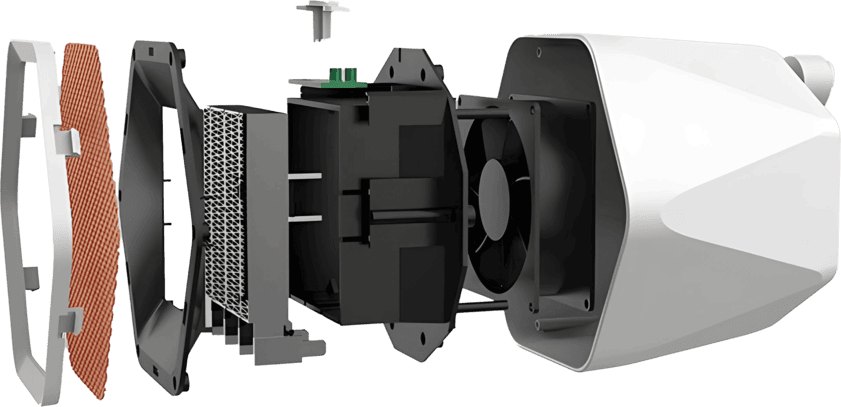
Round result: TieThis one’s closer than the wattage suggests. Both run PTC ceramic elements, so both deliver warm air in seconds and hold a steady output without the scorched-dust smell of old heaters.
Dreo’s 1500W does give it more ceiling than HexaHeat’s 1200W, which matters if you’re warming the larger end of a small room. But for a desk, a reading chair, or a cold corner, both put out plenty, and you feel the warmth just as fast from either.
Call it a tie at the personal-space distances both are actually built for. The wattage gap is real but only shows up when you push past what a compact heater should be asked to do.
Price and value
Round winner: Dreo Atom 316Dreo takes this cleanly. The Atom 316 runs about $40 direct from Dreo, undercutting HexaHeat’s roughly $50 single-unit price while offering more watts and a stated coverage number.
HexaHeat’s pricing improves in multipacks, so if you’re outfitting a few rooms the per-unit cost drops. But unit for unit, the cheaper, higher-wattage, independently reviewed heater here is the Dreo.
If your only question is “what’s the most warmth per dollar,” this round answers it, and it isn’t HexaHeat.
Safety and certification
Round winner: Dreo Atom 316Both cover the two protections that matter on a plug-in heater: tip-over shutoff and overheat auto-cutoff, and HexaHeat adds a flame-retardant housing. On the core safety features, they’re level.
The difference is paperwork that happens to matter. The Dreo Atom 316 carries ETL certification, an independent lab listing HexaHeat doesn’t publish. For most buyers that’s reassurance rather than a dealbreaker, but on anything that gets hot, an independent safety listing is worth real weight.
So this round goes to Dreo on certification, with the honest note that HexaHeat still has the tip-over and overheat protections you’d want.
Size and portability
Round winner: HexaHeat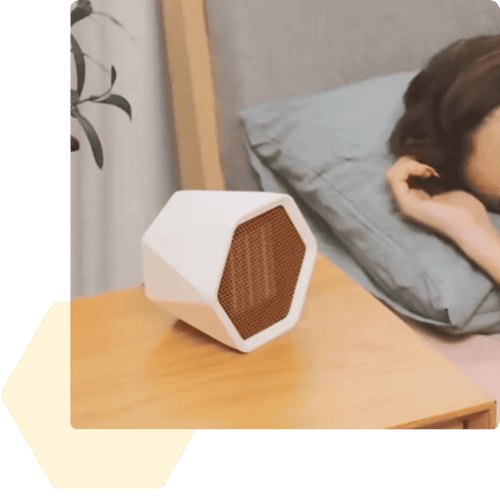
Here’s HexaHeat’s clearest win. That hexagon body is genuinely tiny and light, the kind of thing you set on a nightstand, move to the desk in the morning, and carry to the bathroom while you get ready, without thinking about it.
The Dreo Atom 316 is compact too and has a carry handle, but it’s a taller cylinder with more presence on a small surface. If you want one heater that follows you around the house, the HexaHeat is the easier one to actually pick up and move.
For a fixed spot, this barely matters. For a roamer, it’s the whole point.
Buying it and getting your money back
Round winner: HexaHeatHexaHeat’s other real edge is the 90-day money-back guarantee, which is longer than the return window on most store-bought heaters and far longer than the typical 30 days. That’s a genuine reason to try it: you get a full season’s cold snap to decide.
The trade is that it’s online-only, so you buy direct rather than grabbing one off a shelf. Order from the official checkout, keep your confirmation, and you’ve got three months to change your mind. Dreo’s returns are the standard retailer terms, which are fine but shorter.
If a long, low-risk trial matters to you, the HexaHeat gives you the most room to test before you’re committed.
The honest scorecard
What we liked
- HexaHeat: pocket-size hexagon that's genuinely easy to carry room to room
- HexaHeat: 90-day money-back guarantee, a long window to test it risk-light
- HexaHeat: PTC ceramic warmth in seconds, quiet enough for a desk or bedside
- Dreo Atom 316: more wattage, a lower price, and ETL certification
What we didn't
- Only available online
Who should buy which
Choose the HexaHeat if portability and a long trial window are what you care about. It’s the smallest, easiest heater here to carry from room to room, it warms up in seconds, and the 90-day money-back guarantee lets you try it through a real cold stretch before deciding. Buy it from the official checkout and keep your confirmation.
Choose the Dreo Atom 316 if you want the most heat per dollar with an independent safety listing. It’s cheaper, pushes more watts, holds a precise set temperature, and carries ETL certification, which is exactly what a spec-first buyer wants.
And set expectations for both: they’re personal heaters for the space around you, not a replacement for central heat. If you’re weighing other climate gadgets, our Heat Space Heater vs Lasko breakdown covers another compact-heater matchup, and for the opposite season the Glacier Breeze review and ChillWell 2.0 vs Arctic Air cover personal cooling, with more gear in the home hub.
Check today's HexaHeat price