

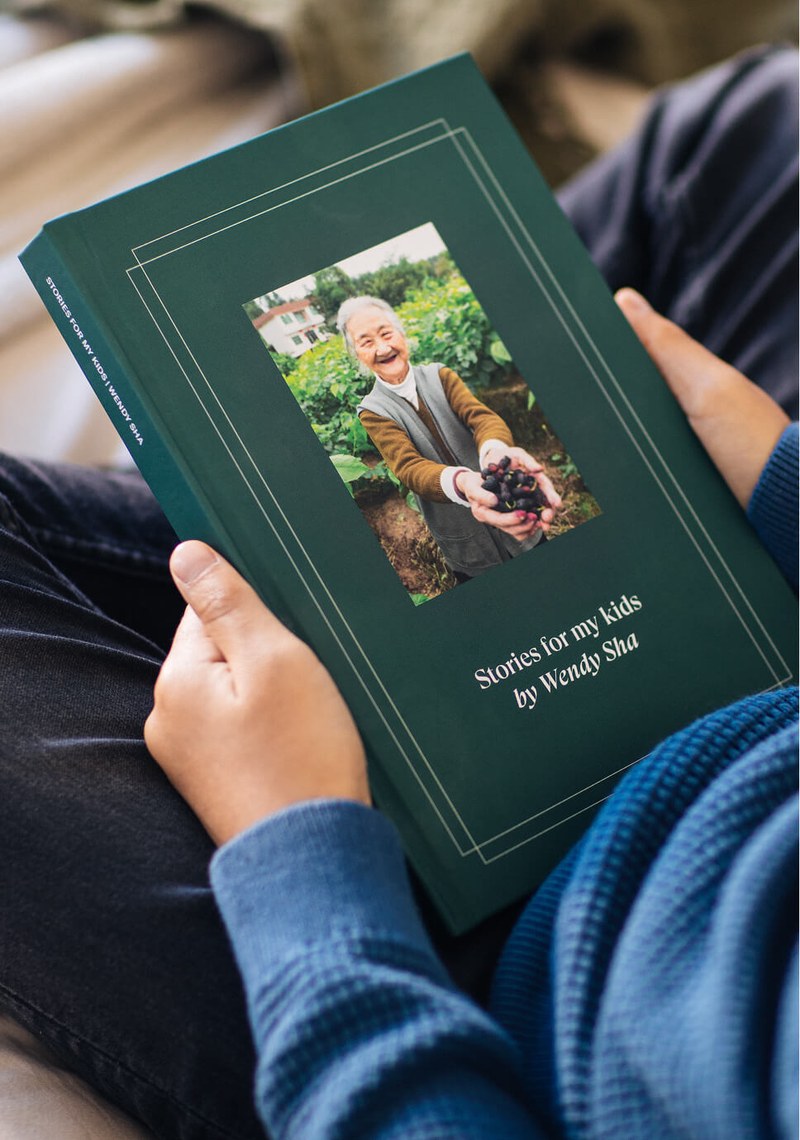
There’s a version of your dad’s laugh, and the exact way he tells the story about the car breaking down in 1974, that exists nowhere but inside his head. Right now it’s safe. In ten years it may not be, and a text transcript won’t bring the sound of it back.
That’s the quiet fear these legacy-book services sell against. In a StoryWorth vs Memorygram decision, the real question is which one captures the person, not just their words. Ask the questions now, while they’re here to answer them, and you keep the memories in a book instead of losing them.
StoryWorth is the name most people reach for first. It’s been mailing a weekly question since 2017 and turning the replies into a hardcover, and it more or less created this category. The Memorygram Legacy Book is the newer challenger, backed by Howie Mandel, and it does one thing StoryWorth’s simple email flow was never built to do.
It captures the voice. Every story in a Memorygram book carries a QR code that plays the storyteller’s actual recorded audio, and it can gather those answers by calling your relative on any phone, no typing required.
So in a straight Memorygram vs StoryWorth matchup, which one should you buy for the person whose stories you don’t want to lose? We compared both on price, how the storyteller actually answers, voice, and the finished keepsake, reading buyer reviews and each company’s own plan details.
The short version: StoryWorth is the simpler habit, but Memorygram is the one that saves the sound of them, and that’s why it wins.
StoryWorth vs Memorygram at a glance
| Feature | Memorygram | StoryWorth |
|---|---|---|
| Price | $123.50 one-time (often ~$99 on sale), extra copies ~$77 | $59 to $199 per year subscription |
| How you answer | Weekly prompts online OR a guided phone interview on any phone | One question a week by email, you type the reply |
| Voice / audio | QR on every story plays the real recorded voice; heart medallions too | Text on the base plan; voice on pricier tiers, audio lives online |
| The finished book | 8.5x11 all-color hardcover, up to 450 pages | Hardcover; black-and-white on the base plan |
| Guarantee / returns | Money-back before any book is printed | Satisfaction guarantee, subscription terms vary |
| Best for | Hearing the voice, and less tech-comfortable storytellers | A simple, well-known weekly-email routine |
| Our score | 9.5 / 10 | 8.6 / 10 |
Two ways to catch a life story
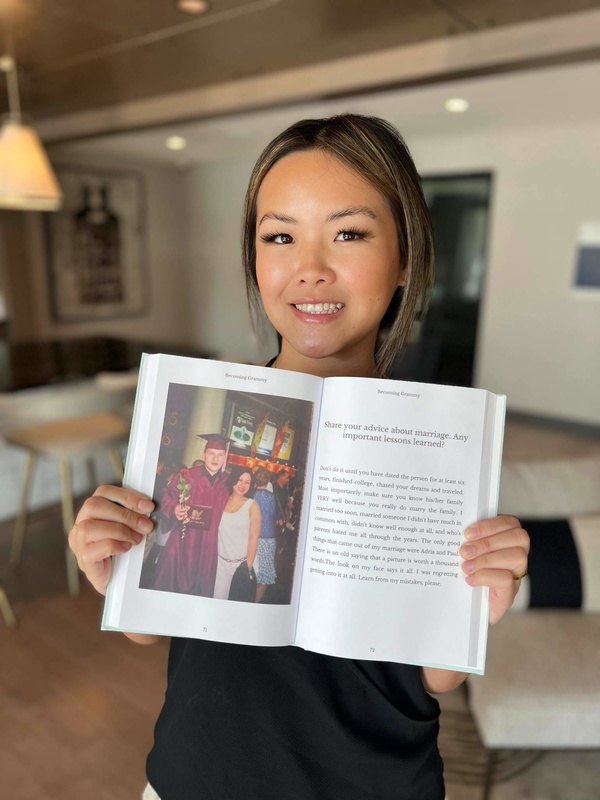
Both services run on the same clever idea: a whole memoir is intimidating, but one small question a week is easy. Answer roughly 52 of them over a year and you’ve written a book without ever sitting down to write a book.
Where they split is how the answering happens. StoryWorth emails the question, and your storyteller reads it and types a reply, optionally attaching a photo. It’s clean and familiar if the person is comfortable on a phone or laptop.
The Memorygram Legacy Book gives you that same online option, then adds one StoryWorth’s core flow doesn’t have: a phone-interview route. It calls your relative on any phone, even a landline, asks the week’s question, and records the answer. No app, no email, no internet.
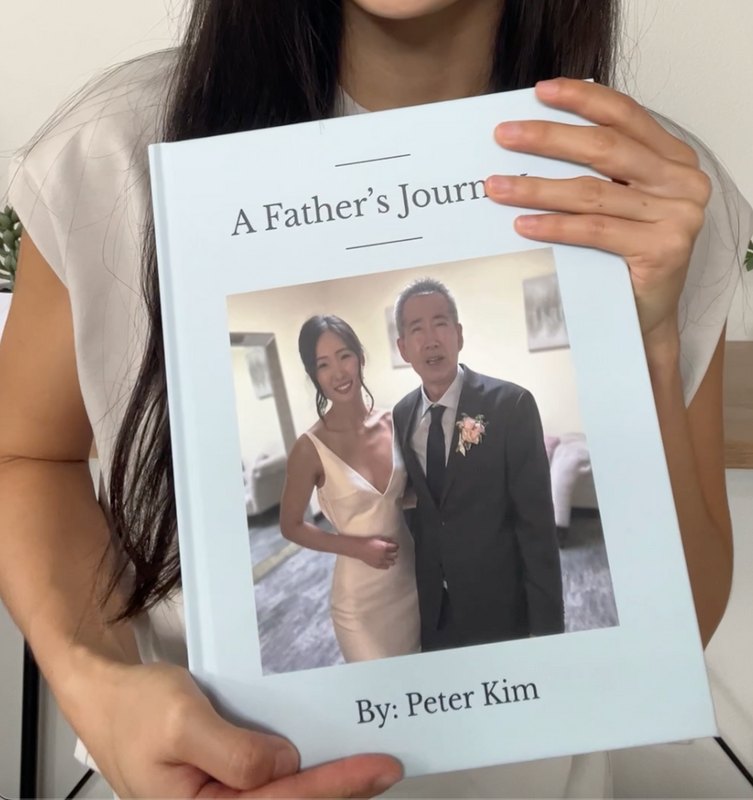
That difference sounds small until you’re the one trying to get an 84-year-old to reply to a weekly email. For a lot of families, the phone route is the whole reason the project actually gets finished.
And Memorygram keeps the recording. Every story in the printed book gets a QR code, so a grandchild can scan the page and hear the voice that told it. StoryWorth prints the words; on its base plan, the sound isn’t part of the deal.
Round by round
How your storyteller answers
Round winner: MemorygramThis is the round that decides the whole thing for a lot of buyers.
StoryWorth’s flow assumes the storyteller will read a weekly email and type back a few paragraphs. For a tech-comfortable parent, that’s genuinely pleasant. For a grandparent who doesn’t really use email, it’s a wall, and the project quietly stalls by week three.
Memorygram offers the same online answering, but its phone-interview option calls the storyteller on any phone, no internet needed, and records what they say. For a parent who doesn’t use email, that is the difference between a finished book and a project that stalls by week three.
StoryWorth does have guided phone interviews, but only on its pricier tiers. Memorygram makes the accessible route the default, not the upsell.
Voice and audio
Round winner: MemorygramHere’s the differentiator Memorygram was built around. Every story in the book gets a QR code that plays the storyteller’s actual recorded voice. Scan the page and you hear them, not a transcription of them.
Memorygram also sells heart-shaped QR medallions as a separate keepsake, so a family can hold something that plays a voice, a memorial object rather than a page.
StoryWorth has added voice features, and it’s fair to credit them: guided phone interviews on its paid tiers can capture audio. But that audio lives online rather than embedded story by story in the printed book, and the $59 base book is text only. If hearing the person is the point, Memorygram does it more directly, on every page, from the entry price.
Price and what you own
Round winner: MemorygramMemorygram is a one-time purchase, about $123.50 and often near $99 on its Howie Mandel sale, with extra hardcover copies around $77 and a downloadable PDF add-on for $19.99. You buy the book, you own the book.
StoryWorth is a yearly subscription, $59 to $199 a year. It renews annually, so the cost repeats, and full color sits on the higher tiers while the base plan prints in black and white.
For a single all-color keepsake you keep, Memorygram’s one-and-done pricing is the cleaner deal. This round isn’t close.
Track record and simplicity
Round winner: StoryWorthCredit where it’s due. StoryWorth has been running this exact playbook since 2017, it’s the best-known name in the category, and that longevity is worth something when you’re trusting a company with a year of your family’s memories.
Its email flow is also dead simple. One question lands each week, you reply, and a year later a book shows up. There’s almost nothing to learn, and for a storyteller who lives in their inbox, that frictionless routine is genuinely the draw.
Memorygram is newer and does more, and doing more means slightly more to set up. On pure name recognition and simplicity, StoryWorth takes this one honestly.
The finished keepsake
Round winner: MemorygramBoth end in a real hardcover. StoryWorth prints in black and white or color depending on the tier; Memorygram prints an 8.5x11 all-color hardcover up to 450 pages.
The tiebreaker is color and voice. Memorygram’s book is all-color throughout, and each story links to its audio, while StoryWorth’s cheapest tier is black-and-white inside with color reserved for pricier plans.
You can also invite several relatives to contribute to one Memorygram book, turning it into a shared family project, and edit the voice-to-text transcript before anything prints. For the richer finished object, Memorygram edges it.
What owners say
“The editor was very easy to use for my mom, and it let us add a bunch of other people to contribute to the story, turning it into a family project.”
“I lost my grandmother in 2020 and wanted to do something special for my mom, so I got her a medallion and uploaded memories for her to look back on.”
Memorygram holds a 4.4 out of 5 TrustScore across roughly 133 Trustpilot reviews, with about 76% at five stars, and it’s a BBB-accredited business. The recurring praise is the phone calls and the voice playback; the recurring gripe is the editing interface and a tight refund window. StoryWorth, for its part, has the far longer track record and a much larger review base, which is its own kind of reassurance.
The honest scorecard
What we liked
- Records the storyteller's real voice, with a QR on every page to play it back
- Phone-interview option works on any phone with no internet, ideal for elderly relatives
- One-time price (often near $99 on sale) with an all-color hardcover you own outright
- Invite multiple family members to co-write one book, then edit the transcript before printing
What we didn't
- Only available online
Who should buy which
Choose Memorygram if hearing the voice matters, if your storyteller is older or not glued to email, or if you’d rather pay once for an all-color book than subscribe by the year. The phone-interview route alone is why a lot of these projects actually get finished, and it’s our winner.
StoryWorth is the honest pick if your storyteller is comfortable answering a weekly email and you like the reassurance of the category’s oldest name. It’s simpler, and simple is a real virtue when you just want the questions to keep coming.
If your family’s stories cross a language, a keepsake like this pairs naturally with everyday tools that bridge the gap, and our guide to the best translation earbuds of 2026 covers the ones worth owning.
Want to go deeper before you buy? Our full Memorygram review breaks down the phone interviews, medallions, and book quality, and the best memory book services of 2026 roundup shows where both land against the rest of the field.
Check today's Memorygram price