

Nobody plans for the moment at the dinner table when a laugh turns into a gasp and the room goes still. One second everything’s normal, and the next someone can’t breathe and your first-aid training is racing against the clock. That’s the fear these devices are sold against.
An anti-choking device gives you a second option for that moment: a suction tool that seals over the nose and mouth and pulls a blockage up and out. The trouble is the category is full of near-identical plunger-and-mask units and viral sellers, and the marketing leans hard on words like “proven” that the science doesn’t back for consumer devices.
We compared the best anti-choking devices for 2026 on what actually matters: how they work, whether they cover a whole household, price, guarantee, and how honestly they position themselves. Three earned a spot, and the ResQVac is the one we’d keep in the drawer first.
The best anti-choking devices of 2026 at a glance
- ResQVac: Best overall, reusable with child and adult masks ($49.99)
- Dechoker: Best-known household name
- LifeVac: Best if you want an FDA Class II registered device
1. ResQVac: best overall
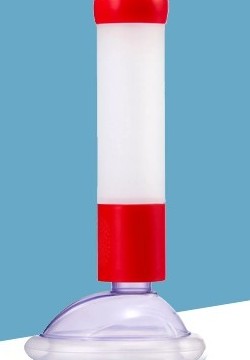
The ResQVac takes the top slot because it gets the basics right and adds the household coverage the pricier single-patient devices skip. It’s a battery-free suction tool with a soft mask, using a simple place, push, and pull motion that anyone in the house can learn in a minute.
The honest way to read it is as a backup, not a first move. If someone’s choking, trained back blows and abdominal thrusts come first, and a 911 call comes first of all. The ResQVac is the extra option you reach for when those steps haven’t cleared the airway, the perfect partner to the first-aid basics you already keep.
What sets it apart from the field is coverage. It’s reusable, and it ships with two interchangeable mask sizes, a smaller one for children and a larger one for adults, so a single unit protects a toddler, a teen, and a grandparent. There’s nothing to charge and no app, and the maker says it handles a range of blockages, from food to small objects.
Here’s the part the checkout page skips, and it’s the strongest reason to buy through the official store: every order carries a 90-day money-back guarantee. Because this is a thing you buy hoping to never use it, a three-month window to look the ResQVac over and practice the motion is the fair way to buy one.
How does it compare? Against a single-patient device it covers the whole family from one purchase, and against the plain plunger units it adds two mask sizes and that long guarantee. The one honest caveat, since we don’t hide these, is that no consumer suction device has independent clinical consensus behind it, so keep it beside your training, not in place of it.
It runs $49.99 for a single device, with family multi-packs for a second one in the car, and there’s no subscription. Our full ResQVac review walks through the motion step by step.
What we liked
- Reusable with two mask sizes, so one unit covers both children and adults
- Battery-free and training-free, with a simple place, push, and pull motion
- Compact enough for a kitchen drawer, diaper bag, or glovebox
- A 90-day money-back guarantee, so you look it over and practice with no real risk
What we didn't
- Only available online
2. Dechoker
Dechoker is the household name to know if brand familiarity is what reassures you. It’s a widely-sold suction rescue tool built around a mask and a chamber, marketed for years to families, care homes, and schools, so it has the kind of public presence a newer direct-to-buyer product doesn’t.
It works on the same suction principle as the rest of the list: seal the mask, pull, and lift the obstruction up rather than push it down. Dechoker sells its units in size options for adults and children, so households often buy the size that matches who’s most at risk.
What you weigh against our top pick is cost and coverage. Dechoker units are typically priced per size rather than bundled with two masks, and they don’t carry the ResQVac’s long money-back window. As a well-known, established option, though, it’s a reasonable pick if the name is what puts you at ease.
3. LifeVac
LifeVac is the pick if a formal regulatory listing is your deciding factor. It’s a suction rescue tool registered with the FDA as a Class II medical device, which is a listing rather than an approval claim, and it has a long, public track record that reassures a lot of buyers.
It’s a non-powered unit that seals over the nose and mouth and uses a one-way valve, and the maker states it works on anyone 22 pounds and over. It uses a single-patient design, so families covering several people, or several rooms, often buy more than one.
This is a different trade-off from our top pick. You get the reassurance of the FDA Class II registration, but usually at a higher per-unit cost and without a reusable, two-mask setup. We put it head to head with our winner in our ResQVac vs LifeVac breakdown.
How to choose an anti-choking device
Start with the honest frame, because it decides everything else. These devices are backups, not cures. The response health bodies teach, back blows and abdominal thrusts, comes first, and calling emergency services comes first of all. A suction tool earns its place as the second layer for when those steps haven’t worked, so buy one to sit beside your first-aid knowledge, not to replace it.
Then think about who you’re covering. A reusable, multi-mask device like the ResQVac protects a whole household from one purchase, while a single-patient design points you toward buying several. If you’ve got young kids and older relatives under one roof, coverage and reuse save you both money and clutter.
Weigh the claims carefully, too. There’s no independent clinical consensus behind consumer suction devices, so treat “proven” and “100% effective” marketing with a raised eyebrow, whatever the brand. A formal FDA Class II registration, like LifeVac’s, is a genuine data point if that matters to you; for everyone else, price, mask sizes, and a real money-back window are the practical differentiators.
Last, keep it reachable and practice once. A device buried in a closet helps no one, so store it where the whole family can find it in a hurry, and run through the motion when it arrives so your hands know it before any real moment. A safer home stacks a few of these quiet safeguards, from a personal safety alarm for anyone living alone to steadier footing with our Ready Walker smart cane review, with more picks in the home hub.
FAQ
What is the best anti-choking device in 2026?
For most homes the ResQVac is the best overall: a reusable, battery-free suction tool that ships with a child and an adult mask and costs about $49.99 with a 90-day money-back guarantee. Dechoker is the known household name, and LifeVac is the pick if you specifically want a device registered with the FDA as a Class II medical device.
Do anti-choking devices actually work?
They’re designed to create suction that lifts a blockage up and out of the airway rather than pushing it deeper, and many families keep one as a backup. There’s no independent clinical consensus behind consumer suction devices as a category, so the honest way to use one is as a second layer behind trained back blows, abdominal thrusts, and a 911 call.
Are anti-choking devices safe to use on children?
Most are sold with size options for children and adults, like the ResQVac’s two interchangeable masks, and a correct mask seal matters most for younger faces. They’re meant as a backup for a bystander, not a replacement for pediatric first-aid training. For any child, the trained response and a call to emergency services still come first.
Can you use an anti-choking device on yourself?
Several, including the ResQVac, are designed so you can use them on yourself if you’re alone and every second counts, by sealing the mask over your own nose and mouth and pulling. It’s a genuine reassurance for people who live alone, but self-rescue is harder under panic, so keeping the device somewhere obvious and practicing the motion beforehand both help.
Is a suction device a replacement for trained first aid?
No. Back blows and abdominal thrusts are the first-line response health bodies teach, and calling emergency services comes first. Every device on this list is a backup for when those steps haven’t cleared the airway, not a substitute for first-aid training. Treat any of them as one part of a plan, kept right beside what you already know.
The bottom line
The ResQVac is the one to keep in the drawer first: a reusable, battery-free suction tool with child and adult masks and a 90-day money-back guarantee that lets you look it over with nothing to lose.
Step to Dechoker if a long-standing household name is what reassures you, and choose LifeVac if a formal FDA Class II registration is your deciding factor. Whichever you pick, keep it beside your first-aid training, not in place of it, and store it where everyone can reach it fast.
See today's ResQVac price