

A personal safety alarm has one job: make so much noise that a bad situation stops being quiet and private. That’s the whole point. Attackers count on you being alone and unheard, and a loud siren takes both away in a second.
The problem is that the category is crowded with lookalike keychains, and the marketing muddies what these things actually do. Some pages hint that an alarm will summon police or ping your family. Most of them, the good ones included, just get very loud and very bright, and that noise is what brings people running.
We compared the best personal safety alarms of 2026 that people actually carry, on the things that matter in the moment: how loud they get, how fast they fire, battery, and price. Three are worth recommending, and the Halo Siren is the one we’d clip on first.
The best personal safety alarms of 2026 at a glance
- Halo Siren: Best overall (~$29.99)
- She’s Birdie 3.0: Best-known premium alternative (~$34.95)
- SABRE Personal Alarm: Cheapest proven keychain (~$24)
1. Halo Siren: best overall
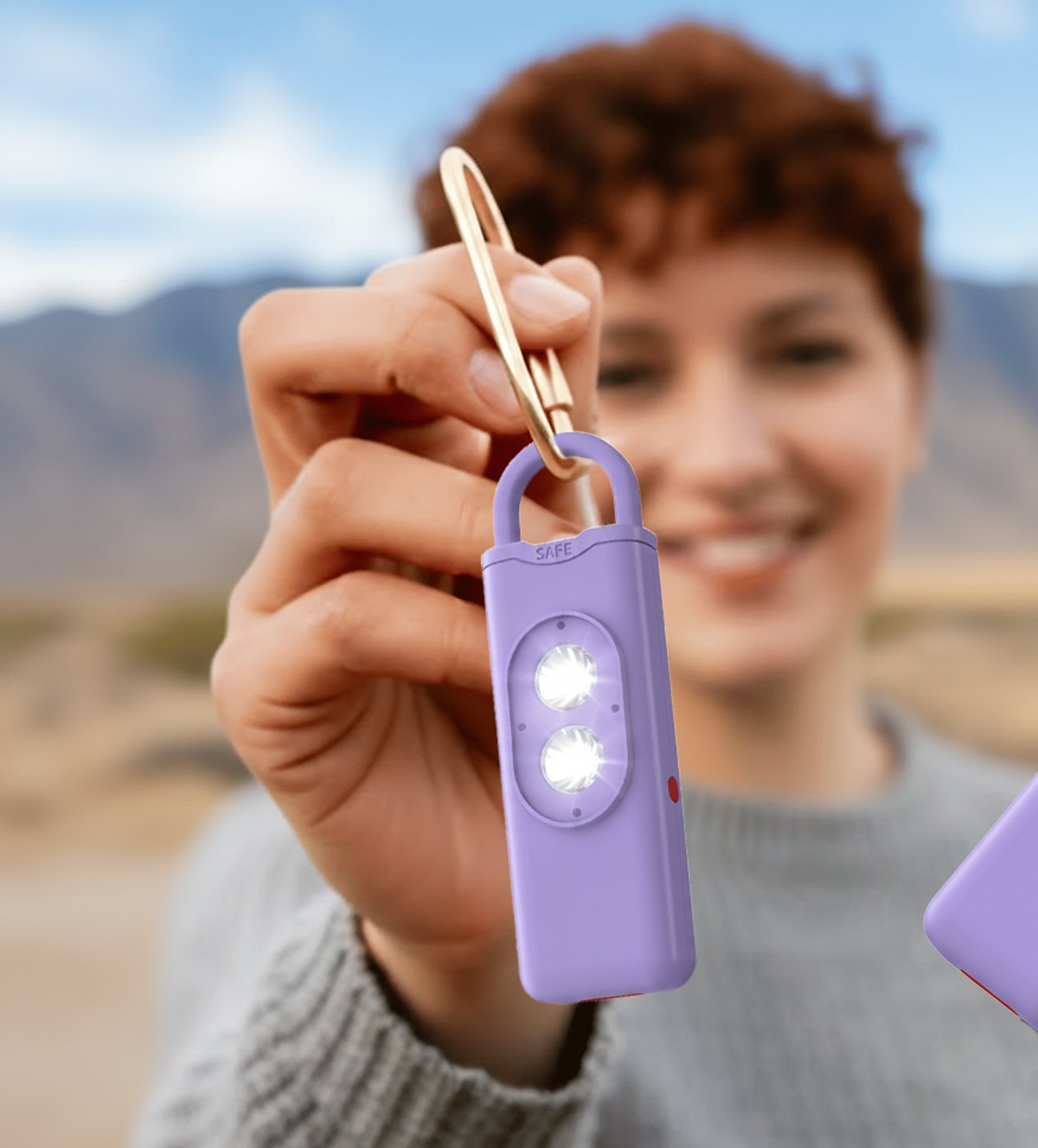
The Halo Siren is a compact pull-pin personal safety alarm, and it earns the top slot by nailing the two things that count when you’re scared: volume and speed.
Pull the pin and it fires a 130dB siren the instant it separates, no button to find and no fumbling. At the same time a bright LED strobe starts flashing, so you’re loud and visible together, which matters in a dim parking garage or a stairwell where sound alone might not tell someone where to look.
It’s built to actually live on your keys. The body is pocket-sized and keychain-ready, so it rides on the same ring you already reach for, and a safety alarm you never carry protects no one. The battery is rechargeable and long-lasting, so there’s no coin cell to hunt for at midnight.
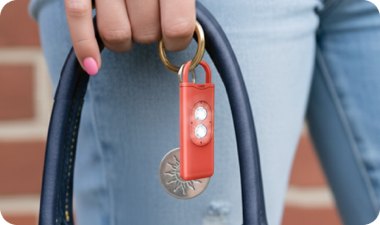
Here’s the part the product page glosses over, and it’s a point in the Halo Siren’s favor once you understand it. The Halo Siren has no GPS, no app, and no cellular connection. It doesn’t message your family or dial 911. What it does is get loud enough that people nearby do those things for you. The upside is real: it works in a dead-signal basement, on a plane, on a trail, anywhere a phone-based safety app would sit there useless.
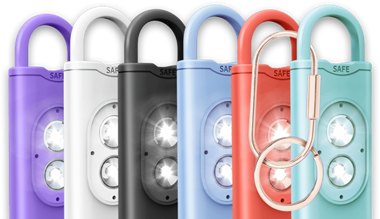
On numbers, the maker reports a 4.8 out of 5 rating from more than 10,000 customers, and it’s priced around $29.99. That’s the brand’s own figure, not an independent lab, but it lines up with what buyers say about this style of alarm: earsplitting, and hard to ignore.
Against the better-known She’s Birdie 3.0, the Halo Siren matches the same 130dB output and adds the strobe, while landing a few dollars cheaper at list. Honestly, the spec I’d weigh most here is the rechargeable battery, because a dead alarm is worse than no alarm, and this one you just top up. Our full Halo Siren review covers the specs and the guarantee in depth.
What we liked
- 130dB siren fires instantly the moment you pull the pin
- Bright LED strobe makes you loud and visible at the same time
- Pocket-sized and keychain-ready, so it's actually with you
- Works with no phone, app, or signal to depend on
What we didn't
- Only available online
2. She’s Birdie 3.0
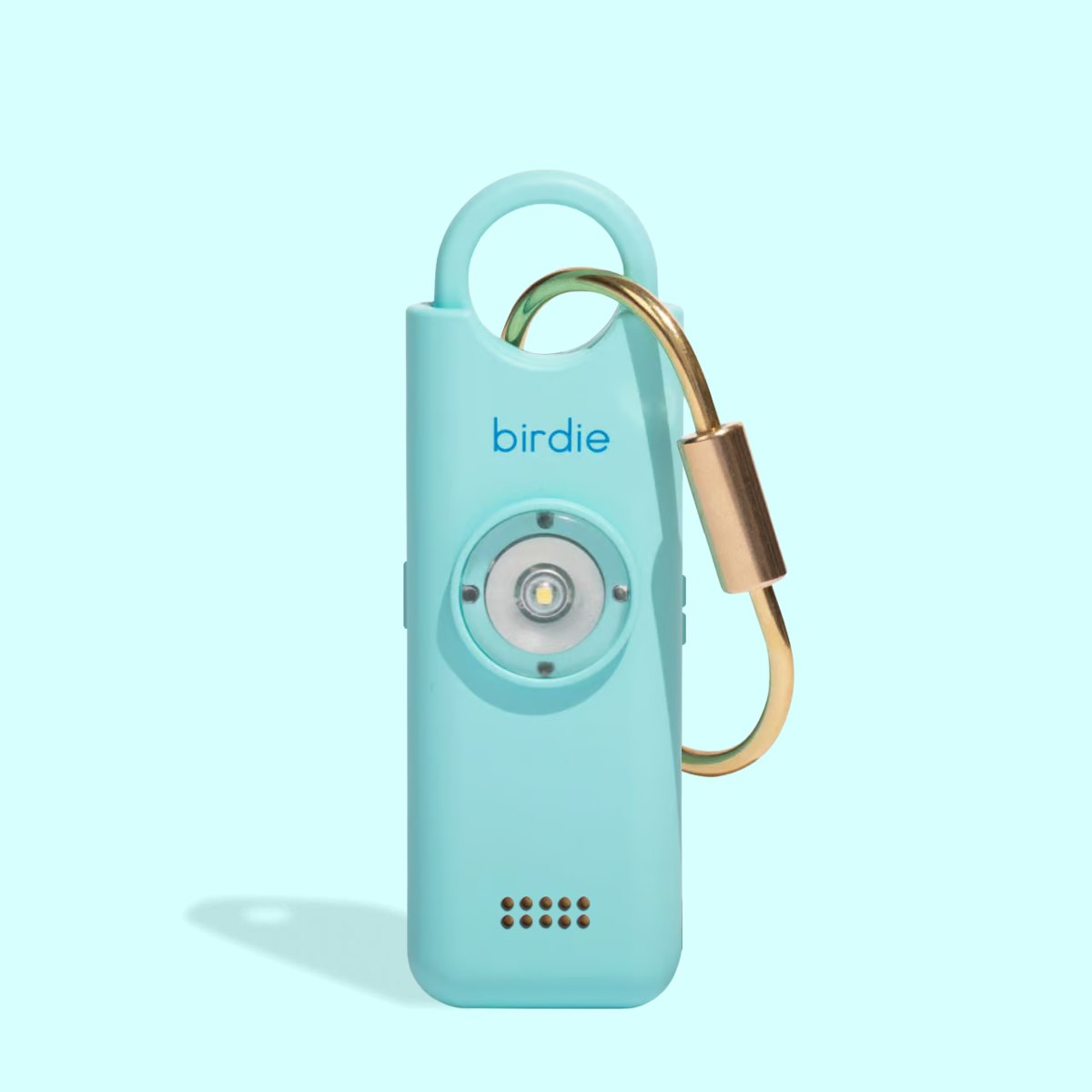
The She’s Birdie 3.0 is the name most people already know, and it’s a genuinely good alarm. It’s the pick if brand recognition and design matter to you as much as the specs.
It pulls the same 130dB siren and flashing strobe as our top pick, activated by pulling the top ring. The 3.0 charges over USB-C and runs up to 120 minutes of continuous sound and light on a charge, and it adds a flashlight you can use without triggering the siren.
The tradeoffs that keep it at number two are small but real. It lists at $34.95, a few dollars above the Halo Siren, and it’s a touch bigger on the keyring. It pairs its 130dB siren with a strobe and a built-in flashlight, recharges over USB-C, and needs no subscription or app for the base alarm. If you want the widely recognized name and don’t mind paying a little more, Birdie is a safe call.
3. SABRE Personal Alarm
The SABRE Personal Alarm is the budget answer from a brand that’s been in self-defense for decades, best known for its pepper spray. If you want spend-as-little-as-possible coverage from a name with a track record, this is it.
The current keychain model puts out a 130dB siren with a built-in LED light and a listed range of about 1,250 feet. You pull the pin to sound it and push it back in to reset, so it’s reusable, and it runs on a long-lasting battery with no recharging between uses, which some people prefer to a rechargeable cell.
At around $24 it’s the cheapest pick here, and it does the core job well. What you give up versus the top two is the rechargeable convenience of the Halo Siren. For a spare to keep in a bag, a backpack, or a teen’s keys, it’s hard to argue with.
How to choose a personal safety alarm
Start with volume, because it’s the whole mechanism. Look for at least 120 decibels, and treat 130dB as the target, which is where all three of our picks land. That noise is what turns a private moment into a public one and pulls eyes toward you.
Next, think about how it fires. A pull-pin or pull-ring design goes off the instant you yank it, which beats hunting for a button under stress. A strobe light is a real bonus, since it tells a bystander where the sound is coming from in the dark.
Be clear-eyed about what an alarm is not. A standard one, our Halo Siren included, makes sound only. It has no GPS and won’t call anyone. That’s fine, because its strength is working anywhere, even where a phone has no bars, but it means these alarms do their best work in places where people are around to hear. If you want an SOS that also shares your location, that’s a different category: we weigh a wearable panic button against a safety app in our invisaWear vs bSafe comparison, and for watching the home itself, our Home Defender Cam vs Ring breakdown covers budget cameras. If you carry other everyday-carry gear, the same logic that drives our best RFID blocking card guide and the discreet tools in our Hero Privacy Pen review applies here: small, always on you, no thinking required.
Then weigh battery and carry. Rechargeable means no scrambling for a coin cell, while a replaceable battery never needs a cable. Either way, it has to be small enough to actually clip to the keys you carry every day, next to whatever key organizer you already use. The same small-upgrade thinking extends to the drive home, where glare-cutting night driving glasses, we rate Drive Bright first, take the harsh edge off oncoming headlights. An alarm covers you when you’re out; back home, the same instinct points at the dark corners of the yard, which is why we also rate solar motion sensor security lights for lighting the paths an alarm can’t. That be-ready mindset carries indoors too: our best anti-choking devices of 2026 roundup and ResQVac review cover a kitchen-drawer backup for a choking emergency, and our Ready Walker smart cane review looks at steadier footing for older relatives. The best alarm is the one that’s on you when it counts, so browse the rest of our everyday-carry picks in the home hub and pick the one you’ll genuinely keep clipped on.
FAQ
Do personal safety alarms actually work?
Yes, within limits. A 130dB siren can disorient an attacker and pull the attention of everyone nearby, which buys you seconds to get away. The catch is that they work by attracting people, so they help most in public places where someone can actually hear you and respond.
How loud should a personal safety alarm be?
Aim for at least 120 decibels, and 130dB is the sweet spot most top alarms hit. For reference, 130dB is roughly as loud as a jet engine heard from a short distance, loud enough to carry hundreds of feet outdoors and to force a person nearby to turn and look.
Are personal safety alarms legal?
Personal safety alarms are legal in all 50 US states and need no permit or training, since they only make noise and can’t hurt anyone. They travel easily too, unlike pepper spray, which faces airline and some state limits. Setting one off falsely on purpose can still carry local penalties.
Do personal safety alarms call the police?
A standard alarm like the Halo Siren does not call police or contact anyone by itself. It has no GPS, app, or cellular link. It makes a loud sound only. That noise draws in bystanders who can then call for help, so response depends on someone nearby hearing it.
What is the best personal safety alarm in 2026?
For most people the Halo Siren is the best overall pick, pairing a 130dB siren with a bright LED strobe and instant pull-pin activation for around $29.99. She’s Birdie 3.0 is the well-known premium alternative near $34.95, and the SABRE Personal Alarm is a proven low-cost keychain option around $24.
The bottom line
The Halo Siren is the one to clip on first: a 130dB siren and bright strobe that fire the instant you pull the pin, on a keychain-ready body that goes loud with no phone, app, or signal in the way.
Step up to She’s Birdie 3.0 if you want the best-known name and its flashlight, and grab the SABRE Personal Alarm if you just want a proven keychain siren for the least money. Whichever you choose, the right one is the one you’ll actually carry. And if your worry runs to being caught out in the cold, our LifeTent vs SOL Emergency Bivvy breakdown covers the grab-and-go emergency shelters worth keeping in the car.
Check the current Halo Siren deal