

If you’ve searched “is Emma Relief legit,” you want to know whether the gut supplement you’ve seen in a hundred ads is the real deal before you spend $59. The claims are big, a doctor’s name is attached, and it’s fair to ask what the unhappy buyers ran into.
Here’s the short answer up front. Emma Relief is a real product from a real company, developed with a genuine gastroenterologist, and it isn’t a scam. It’s also a heavily-marketed direct-to-consumer brand with genuinely mixed reviews, and the honest gripes cluster around billing and refunds rather than the pills themselves.
For this guide we read the live Trustpilot reviews, the Better Business Bureau file on the parent company, and the ingredient list, and we confirmed the doctor behind it is real and licensed. Here’s who makes Emma Relief, what buyers actually flag, and how to buy so none of it lands on you.
Is Emma Relief a real product from a real company?

Yes. Emma Relief is made by Enclave BioActives, whose legal entity is Enclave, LLC, a US company, and it’s developed with gastroenterologist Dr. Gina Sam. That’s a real brand with a corporate paper trail and a credentialed name behind it, not an anonymous storefront.
Dr. Sam checks out, which matters because “doctor-formulated” is where a lot of supplement marketing bends the truth. She’s a licensed gastroenterologist in New York, verifiable in the national provider registry, with a digestive-motility background who previously directed a motility center at Mount Sinai. The honest footnote: her name shows up in the ads and advertorials more than on the bottle itself.
The Emma Relief capsule is a botanical blend, not a probiotic, built around digestive botanicals rather than live bacteria. It’s sold with a 90-day money-back guarantee, which is the baseline that separates a real brand from a fly-by-night one.
What the ratings actually say
On Trustpilot, Emma Relief sits around 3.6 out of 5 across more than 2,700 reviews, with roughly 47% five-star and 23% one-star. That’s a genuinely split base, a large group of happy repeat buyers and a real, loud minority, which is a more honest picture than the “thousands of five-star reviews” you’ll see on affiliate pages.
The Better Business Bureau rates the parent company, Enclave, LLC, a B, lists it as not accredited, and shows about 20 complaints over three years. For a brand with a review base in the thousands, that complaint volume is modest, not alarming.
One thing to set straight: there’s no official Emma Relief Amazon storefront. The listings you’ll find there are third-party resellers, often with short-dated stock and no access to the brand’s guarantee, so the official site is the place to buy.
The real complaints, and what’s behind them
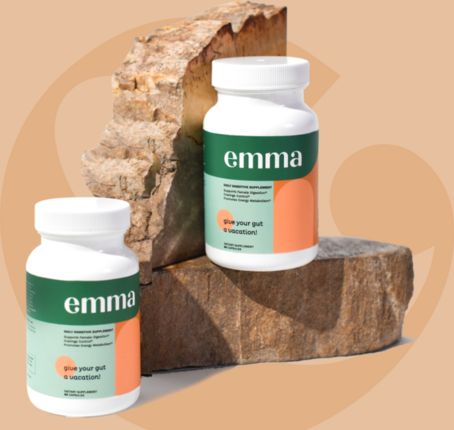
Read across Trustpilot and the complaint boards and the same handful of gripes come up, and the loudest ones are about the checkout, not the capsules. Here’s each one, and why it happens.
A bigger bundle than you meant to buy. The most serious theme is buyers who intended to order one bottle and got charged for a multi-bottle bundle instead. The current order page sells one-time bundles rather than a locked subscription, so this traces to the upsells and bundle selection at checkout. The fix is to confirm the exact quantity and price on the order summary before you pay.
Slow refunds. A real share of buyers say the 90-day guarantee pays out, but only after a follow-up email or two. The money comes; the process isn’t always quick.
“It didn’t work for me.” Plenty of reviewers report no change in gas, bloating, or regularity after a few weeks. That’s ordinary for a botanical supplement with no efficacy guarantee, and it’s exactly what the money-back window is for.
Bright yellow urine. Some first-time users are startled by vivid yellow urine. That’s the berberine in the formula, it’s harmless, and it isn’t a sign anything’s wrong.
None of this is a fraud pattern. It’s the familiar friction of an aggressively-marketed direct-to-consumer brand, and every item on the list has a simple sidestep.
What’s actually in it, and does it work
Emma is marketed as an 18-ingredient botanical formula, and the named actives are a coherent digestive lineup. The ginger, fennel, peppermint, and star anise are carminatives, the botanicals people have reached for to settle a gassy, bloated stomach for generations.
Around them sit DGL licorice for the stomach lining, chicory root inulin as a prebiotic fiber, and berberine, quercetin, and resveratrol. These are reasonable ingredients for everyday gas and bloating, and they work as structure-and-function support, not as a treatment for any condition.
Be clear-eyed on the evidence, though, because it’s the fairest basis for skepticism. There are no published clinical trials on the finished Emma formula, so any “clinically proven” language in the ads refers at best to individual ingredients. Like every supplement, it isn’t FDA-approved, and that’s normal. This is the situation the 90-day guarantee is built for: your own gut is the only review that counts.
What satisfied customers say
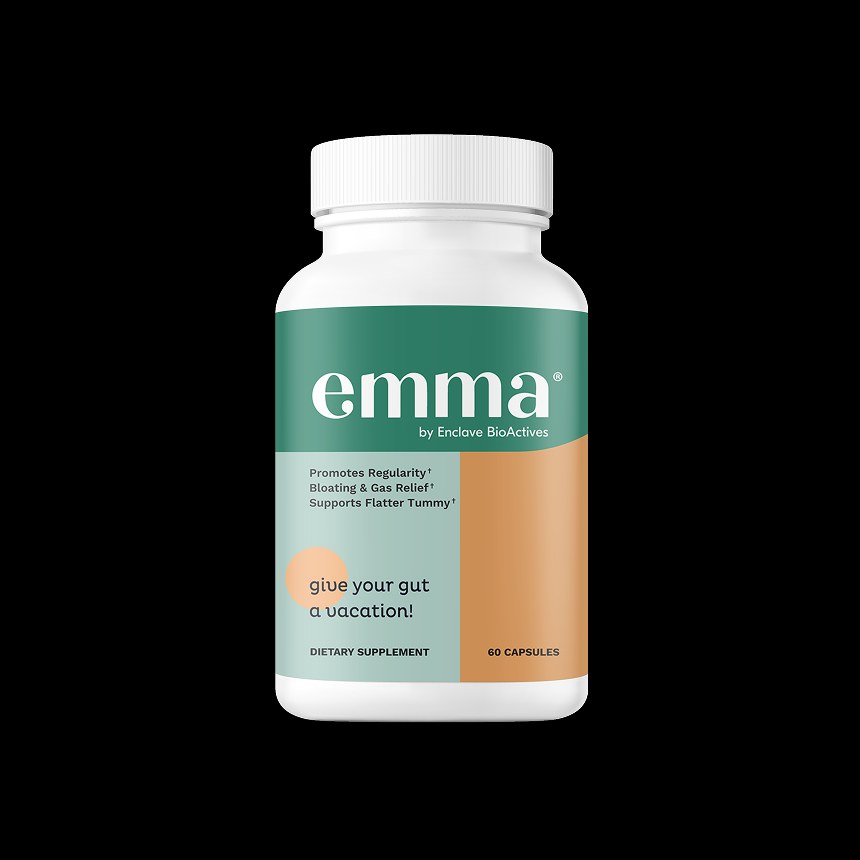
The happy repeat buyers are specific and believable, which is a better signal than any single star.
“Less gas, no bloating, more energy because I have more regular bowel movements, so yes, for me, it works.”
“A year in, I feel great, and using this supplement has helped me tremendously.”
The year-in reviewer is the one I’d point a skeptic to. Someone still reordering twelve months later is a more useful vote than a one-time five-star click. For the full ingredient breakdown and the honest expectations, our Emma Relief review digs into the formula and who it’s really for.
How to buy so none of it lands on you
Four steps head off nearly every complaint we read.
Buy direct. The Emma Relief 90-day guarantee only applies to orders placed with the official store, not eBay or Amazon resellers.
Confirm your bundle before you pay. Read the order summary and check the exact quantity and price, and decline the one-click upsells. That single habit prevents the “charged for six” surprise that drives the loudest complaints.
Pay with a credit card. Given the refund-delay reports, card chargeback protection is a useful backstop, and keeping your confirmation email gives you proof of purchase.
Start the refund early. If it isn’t working after a few weeks, don’t wait out the window. Open the request with time to spare inside the 90 days.
If you want live bacteria rather than botanicals, our Emma Relief vs Seed comparison lines it up against the Seed DS-01 synbiotic, and the best gut health supplement roundup ranks the wider field, with the newer Akkermansia probiotics covered in Akka vs Pendulum. More daily-wellness picks live in the health hub.
Pros and cons
What we liked
- A real product from an established US brand, developed with a licensed gastroenterologist
- Sensible carminative lineup, ginger, fennel, peppermint, and DGL licorice, in one daily capsule
- Sold in one-time bundles rather than a locked subscription
- A 90-day money-back guarantee makes it low-risk to try
What we didn't
- Only available online
The bottom line
Emma Relief is legit. The company is real, the doctor behind it is a genuine gastroenterologist, the capsules ship, and the complaints are the ordinary friction of a big direct-to-consumer supplement: bundle billing surprises, a slow refund or two, and results that vary, every one of them avoidable.
Buy from the official store so the 90-day guarantee has your back, confirm your bundle before you pay, and give it a consistent few-week run. Your own gut gets the deciding vote, and the guarantee is what lets it make the call.
See the Emma Relief price and 90-day guarantee