

Vagus nerve stimulation devices now range from a surgeon’s implant to a $269 collar you charge by your bed, and the word “device” hides how different those things really are. One is regulated medicine. Another is a wellness gadget you order online.
Getting them confused is easy, because the marketing borrows the credibility of the medical tier to sell the consumer one. So this guide sorts the field into three honest tiers, explains how each type reaches the vagus nerve, and tells you which conditions each is actually cleared to help.
The vagus nerve is the long wandering nerve that runs from your brainstem down through your neck to your gut, and it’s the main line of your body’s “rest and digest” system. Stimulating it, gently and on purpose, is the shared idea behind every device below. What changes is how far the signal travels, how much evidence stands behind it, and who’s allowed to sell it to you.
The three tiers of vagus nerve stimulation devices
Almost every product you’ll see fits into one of three tiers, and the tier tells you most of what you need to know before you read a single spec.
| Tier | Example | How it reaches the nerve | Regulatory status |
|---|---|---|---|
| Implanted (surgical) | LivaNova VNS Therapy, Vivistim | Electrode wrapped around the vagus nerve in the neck | FDA-approved for specific conditions |
| Prescription non-invasive | gammaCore | Handheld, through the skin of the neck | FDA-cleared, prescription only |
| Consumer wellness | Pulsetto, Truvaga | Worn collar or handheld, through the skin | Sold as wellness, not FDA-approved to treat anything |
The gap between the top row and the bottom row is the whole story. As you move down, the surgery disappears, the price drops, and so does the strength of the evidence. Keep that trade in mind and the rest is detail.
Implanted VNS: the medical tier
Implanted vagus nerve stimulation is established medicine, and it’s decades old. A surgeon places a small pulse generator under the skin of your chest, then threads a thin wire up to an electrode wrapped around the left vagus nerve in your neck. It fires programmed pulses on a schedule a neurologist sets, and you never feel it working.
The FDA approved implanted VNS for hard-to-treat epilepsy in 1997, and for treatment-resistant depression in 2005. The maker, once Cyberonics and now LivaNova, still sells it as VNS Therapy.
A newer implanted system, Vivistim from MicroTransponder, won FDA approval in 2021 for a different job: paired with rehab, it helps restore arm and hand movement after an ischemic stroke. In its pivotal trial, patients using paired stimulation regained two to three times more movement than rehab alone.
None of this is something you buy online. It requires surgery, a prescription, and a specific diagnosis, which is exactly what separates it from the gadgets further down.
Prescription non-invasive devices
The middle tier skips the surgery but keeps the prescription. These are non-invasive devices, sometimes shortened to nVNS or tVNS, that push the signal through the skin instead of an implanted wire.
The best-known is gammaCore, from electroCore. You hold it against the side of your neck for a couple of two-minute treatments. The FDA cleared it for cluster headache pain in 2017 and migraine pain in 2018, and it’s available by prescription only.
A second style targets the ear. The vagus nerve has a surface branch at the tragus, the little flap at the front of your ear canal, and ear-clip devices like the CE-marked Nurosym stimulate it there over sessions of roughly 15 to 30 minutes. Nurosym is sold in Europe and isn’t FDA-cleared in the US, and its long list of study claims comes from the maker, so read them as marketing rather than settled fact.
The theme of this tier: real regulatory clearance, tied to a named condition, gatekept by a doctor.
Consumer wellness devices
The bottom tier is the one flooding your feed. These are neck collars and handhelds you buy directly, no prescription, sold for stress, relaxation and sleep rather than any diagnosis.
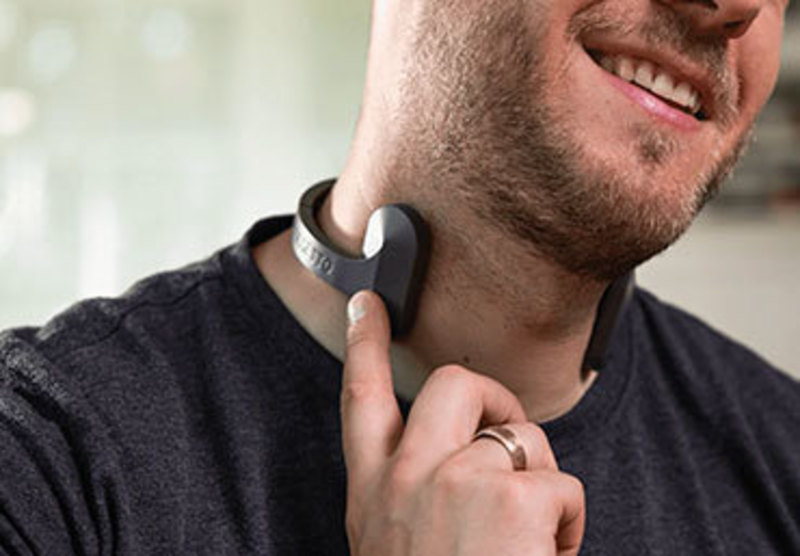
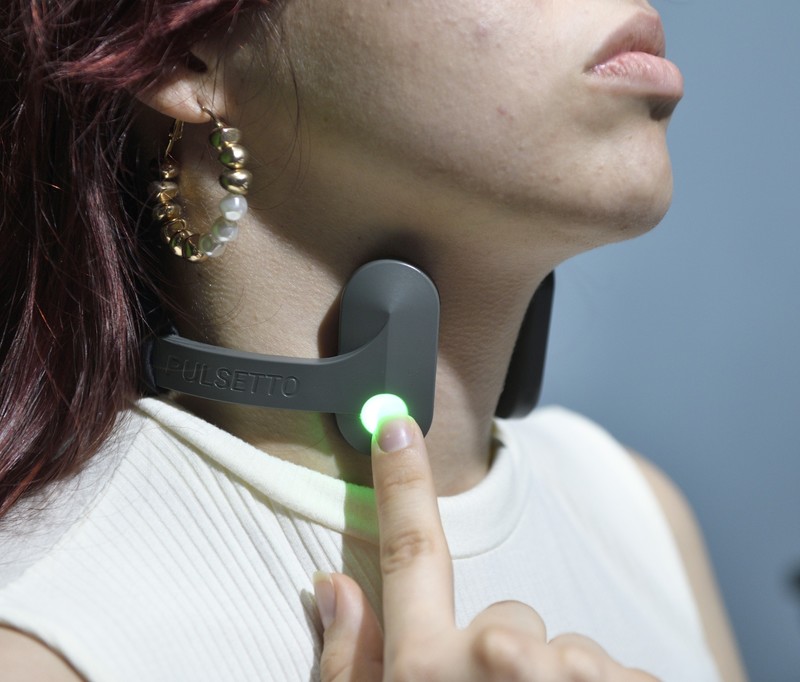
The Pulsetto vagus nerve stimulator is the category’s most visible example. It’s a soft collar that sits on the front of your neck, pairs with an app, and runs short programs of roughly 6 to 10 minutes for stress, sleep or focus. At $269 it’s a fraction of the medical tier, and it’s explicitly a wellness device, not a treatment.
What sets the better consumer devices apart is early evidence. A 2025 peer-reviewed, sham-controlled study of neck stimulation measured lower arterial blood pressure and a rise in calming alpha-wave activity after real sessions compared with a convincing fake. That sham design matters, because sitting still for ten minutes is relaxing on its own, and the fake device controls for exactly that.
Be clear-eyed, though. The studies so far are small and single-session, a real minority of users feel nothing, and no honest seller claims these treat a medical condition. Truvaga, from the same company behind gammaCore, is a similar consumer handheld with two-minute sessions. If you want the full breakdown of one device’s study, sentiment and annoyances, our Pulsetto review digs into the $269 collar in detail.
Are consumer vagus nerve stimulation devices FDA approved?
No, and this is the single most important line in the guide. Consumer neck and ear devices like Pulsetto and Truvaga are sold as general wellness products, so they carry no FDA approval or clearance to treat any condition. Only the implanted systems and prescription devices like gammaCore are FDA-authorized, each for a specific diagnosis.
That’s not a scandal, it’s a category. A wellness device is allowed to help you relax and wind down without promising to fix anything, and that’s the honest frame for the whole consumer tier. If you’re managing a diagnosed illness, the gadget on your feed isn’t a stand-in for the prescription tier.
Who should avoid vagus nerve stimulation
Some people shouldn’t use any of these devices, and the makers say so in their own safety pages. Rule yourself out if you have an implanted electronic device, meaning a pacemaker, defibrillator or cochlear implant, or if you’re pregnant, or if you’re under 18.
Two more groups need a doctor’s sign-off first: anyone with a history of seizures, and anyone with a serious heart condition or rhythm problem, since stimulation can nudge heart rate and blood pressure. Metal in or near the neck is also on the no-go list.
Honestly, the smart move for a curious beginner is to try the free version first. Slow breathing with a long exhale, humming, and a splash of cold water hit the same nerve, cost nothing, and tell you whether the whole approach does anything for you.
The bottom line
The nerve is real, the pathway is real, and the medical tier proves that stimulating it does something measurable. What changes across the three tiers is how much evidence backs the specific product in your cart.
If you’re shopping the consumer tier, start with the device that’s furthest along the evidence curve rather than the loudest ad. Our best vagus nerve stimulator roundup ranks the leading options, the Pulsetto vs Nurosym comparison pits the budget collar against the research-heavy ear clip, and if you’re still asking the basic question, do vagus nerve stimulators really work walks the evidence in depth. More sleep and stress coverage lives in our sleep hub.