
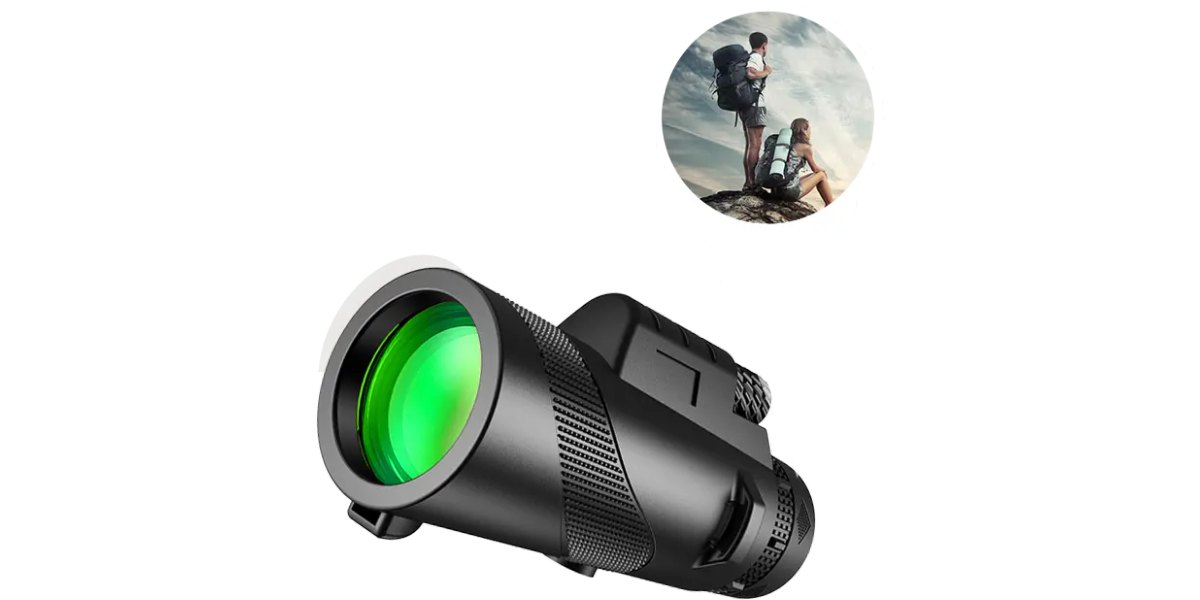
You spot a hawk on a fence post a football field away, lift your phone, and the zoom turns it into a smear of brown pixels. Binoculars would fix it, but they’re the thing you left in the car.
That’s the gap a pocket monocular fills: half the bulk of binoculars, one that actually rides in a jacket pocket, and a clip that puts your phone camera behind the glass.
The Horizon Scope monocular is one of the cheapest ways to try that idea, sold direct for around $47.50 with a 30-day money-back guarantee.
For this Horizon Scope review we went through the brand’s sales page and spec claims, the customer testimonials it publishes, and how it stacks up against established compact monoculars like the Gosky 12x55.
The short version: the optical hardware it describes is legitimate for the price, the phone-photo angle is genuinely fun, and the honest catch is that the listed specs wander, so you’re buying partly on the guarantee.
What the Horizon Scope is
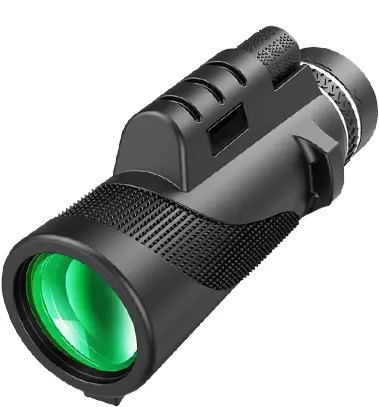
The Horizon Scope is a compact, single-eye monocular built for outdoor viewing: hiking, birdwatching, hunting, sporting events, and travel. It’s the same product family as the budget pocket monoculars that have circulated for years.
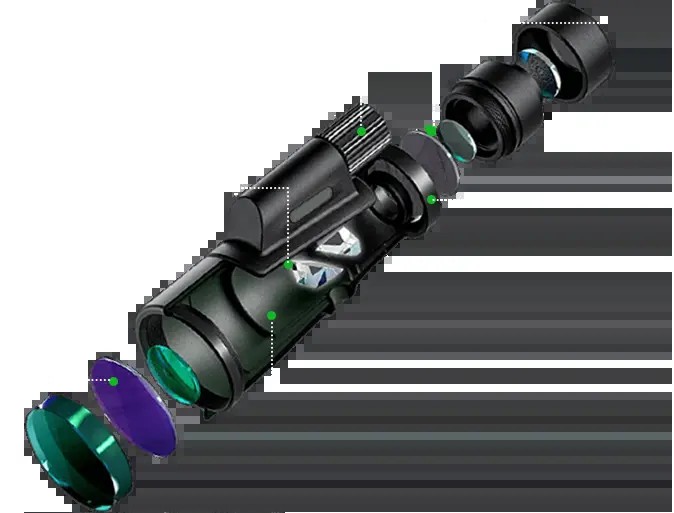
It runs on BAK-4 prism glass with fully multi-coated lenses, a metal frame, a precision focus wheel, and a twist-up 24mm eyecup. The maker says it weighs under a pound and packs down small enough to forget you’re carrying it.
The headline feature is the phone mount. A clip lines your smartphone camera up with the eyepiece, and the kit adds a small tripod, so you can photograph or film something far away instead of just looking at it.
No batteries, nothing to charge. It’s glass, prisms, and your own eye, sold direct with a 30-day money-back guarantee.
The specs, and where they get messy
Here’s the part to be straight about. The Horizon Scope’s sales page can’t keep its own numbers consistent, and that’s the single biggest reason to lean on the guarantee.
The optic is listed as 12x50 in one spot, 10x42 in another, and an 80x100 figure turns up in the FAQ. An 80x monocular you hold in one hand isn’t a real thing, so read that as marketing, not physics. A genuine 10x to 12x on a 50mm objective is the believable spec, and it’s a sensible one for handheld use.
| Spec | Claimed detail |
|---|---|
| Type | Compact single-eye monocular with phone mount |
| Magnification | Listed as 10x to 12x (page also quotes an unrealistic 80x100) |
| Objective lens | 50mm |
| Prisms / coating | BAK-4 prism, fully multi-coated lenses |
| Phone mount | Clip adapter plus a mini tripod |
| Weatherproofing | Water, dust, and scratch resistant; waterproof to ~1m (no IP rating) |
| Weight | Under 1 lb |
| Price | $89.99 list, about $47.50 on the current deal |
| Guarantee | 30-day money-back, ships from Ohio, USA |
The thing the brochure won’t tell you plainly: the 50mm objective is what actually matters here, more than any magnification number. A wider objective pulls in more light, which is why a 10x50 looks brighter at dusk than a 12x42, and dawn and dusk are exactly when wildlife moves.
What it’s actually good for
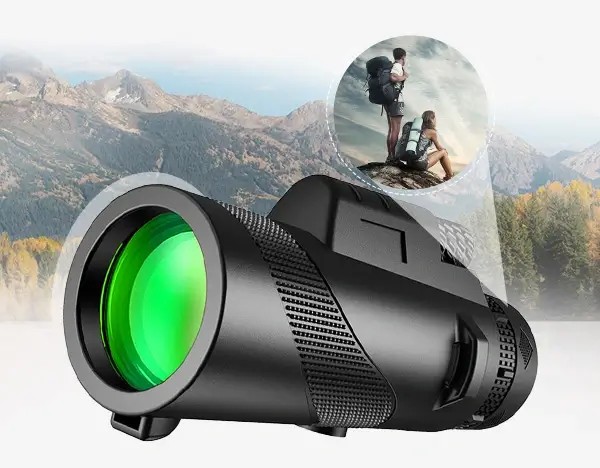
A monocular is the optic you’ll actually carry. It’s half the size and weight of binoculars, so it ends up in the pack for a hike or the pocket at a game, where full binoculars stay home.
The trade is real: one eye is less comfortable for long sessions and gives you a narrower view than binoculars. For quick, packable glances at something far off, though, that’s a fair deal, and it’s the whole reason this category exists.
The brand also leans on a weather-resistant, fog-resistant body rated to about a meter of water. There’s no published IP rating, so treat it as drizzle-and-trail-dust tough rather than submersible. For most hikers and birders, that’s the right amount of rugged.
Honestly, the shifting spec numbers are the thing that would make me pause before paying full price. What tips it back is the low deal price and the 30-day window, which let you find out whether a pocket monocular earns a place in your bag before you commit real money.
Clipping it to your phone
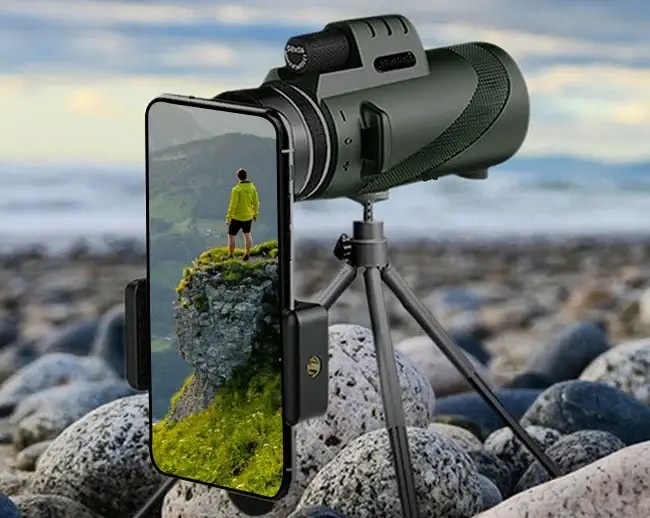
This is where the Horizon Scope earns its keep. Clip your phone over the eyepiece, and the monocular becomes a long lens your camera never had, pulling distant birds, players, and ridgelines close enough to photograph.
It takes a minute to align the phone camera cleanly with the eyepiece, and bigger phones are fiddlier than small ones. The included mini tripod is the trick most owners figure out fast: brace it on a rail or a rock and the shake that ruins handheld zoom shots mostly goes away.
It won’t replace a real telephoto lens. But for turning a view your naked phone can’t reach into a shot worth keeping, a $47.50 clip-on monocular is a genuinely fun tool.
What buyers say
The independent review base here is thin, and most of what exists is promotional, so weigh it accordingly. The brand’s own page cites 3,200-plus reviews and runs testimonials from birders, hikers, and photographers, all positive by selection.
Taken at face value, the recurring themes in that feedback are the BAK-4 prism’s clarity, low-light brightness, and the novelty of building a photo collection through the phone adapter.
“The high magnification and clarity have made bird identification a breeze, and the BAK4 prism delivers excellent light transmission even in low-light conditions. Thanks to the smartphone adapter, I have started building an impressive collection of bird photos.”
“Its waterproof and fog-resistant design has been a lifesaver during unpredictable weather. The image clarity and magnification are impressive, making scenic viewpoints even more striking.”
Because these are the advertiser’s own curated testimonials, the fair read is to treat them as a sense of what happy owners like, not as a verified star rating. That’s exactly why the 30-day money-back guarantee matters more here than on a product with thousands of third-party reviews.
Pros and cons
What we liked
- BAK-4 prism glass and fully multi-coated lenses, the optical building blocks used in pricier monoculars
- Clips to your phone (with a mini tripod included) so you can photograph and film distant subjects
- Weather-resistant to about 1 meter and under a pound, so it packs easily for hiking and travel
- About $47.50 on the current deal with a 30-day money-back guarantee
What we didn't
- Only available online
How to choose a pocket monocular
If you’re weighing the Horizon Scope against other compact monoculars, three numbers do most of the work.
Magnification is first: 8x to 12x is the handheld sweet spot. Below 8x feels weak on distant subjects, and above 12x your hand shake blurs the image without a tripod. A 10x is the most forgiving all-rounder.
The objective lens diameter, the second number, sets brightness. A 50mm objective like the Horizon Scope’s gathers more light than the 42mm glass on many pocket models, which helps at dawn and dusk.
Then the glass itself: look for BAK-4 prisms and multi-coated lenses, both of which the Horizon Scope lists, because they’re what keep the image bright and the edges sharp. If phone photography is the goal, confirm the clip fits your phone and that a tripod is in the box, since a steady mount is the difference between a keeper and a blur. For a full field of picks, see our guide to the best monocular for phone photography.
Who it’s for
The Horizon Scope suits the casual outdoor viewer who wants a pocketable optic and the fun of phone photos without spending serious-birder money. It’s built for hikes, ballgames, concerts, and travel, where the win is having any decent glass on you at all.
If you want documented, checkable optics and thousands of verified reviews behind your money, the established Gosky 12x55 is the more proven buy, and we lay out that head-to-head in our Horizon Scope vs Gosky monocular comparison.
For the pocketable everyday-carry crowd, it sits nicely alongside gear like the KeySmart key organizer and the rest of our home and everyday-carry picks.
For most people who just want to see farther and grab the occasional shot of it, the Horizon Scope is an easy, low-risk yes at this price. The 50mm glass and phone clip are the real draw, and the 30-day guarantee means the deal price is the only commitment you’re making.
Check today's Horizon Scope price