
These two translators look similar in your hand and then work in almost opposite ways. One is a two-way conversation device that borrows your phone’s brain. The other is a one-way gadget that carries its own and needs nothing else.
That single split decides the whole “Enence translator vs ili instant translator” question: how many languages you get, whether the other person can talk back, what you pay, and whether you can even buy the thing right now.
The Enence is a small two-button voice translator from MUAMA. You speak, it plays the translation out loud, and it does the same in reverse when the other person answers. Its maker lists 68+ languages, and it runs around $58 as a one-time purchase with no subscription. The catch is that it pairs to your phone over Bluetooth for its full language set.
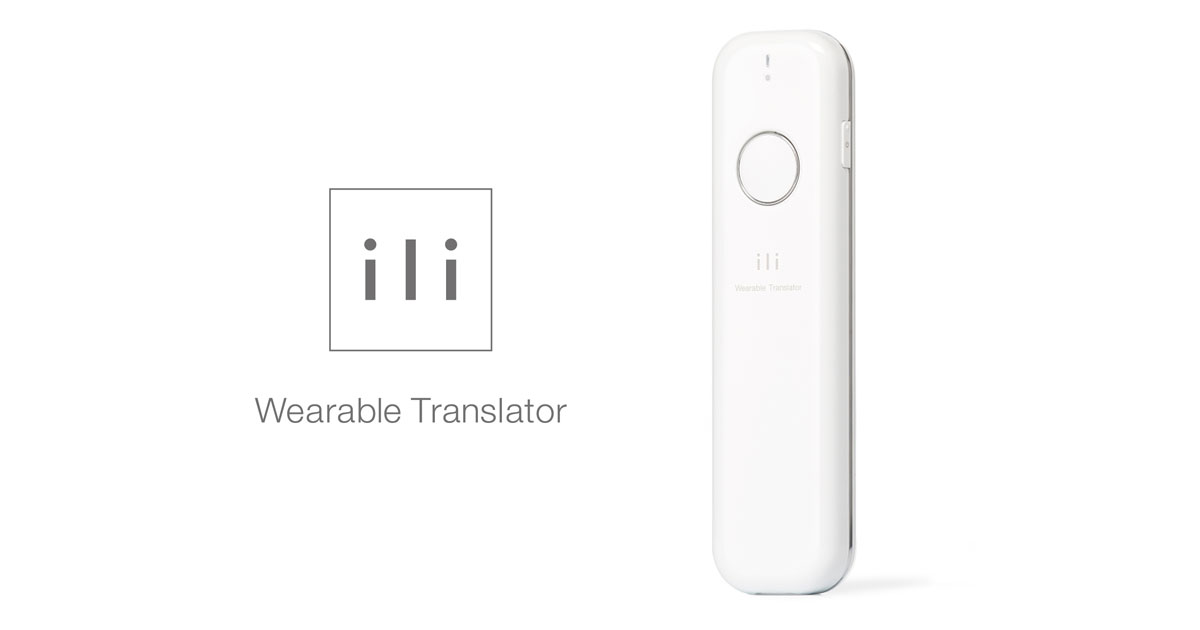
The Logbar ili is the opposite idea. It’s a standalone offline translator with the engine built in, so it needs no phone, no app, and no internet. That independence is real, but it comes at a cost: it only translates one direction, from English into three languages, and it’s an older device that’s now hard to find in stock.
We compared both on languages, direction, price, and how you actually use them, working from each maker’s own specs and how travelers describe living with these devices. We didn’t take either one abroad ourselves. Here’s the honest split.
Enence translator vs ili at a glance
| Feature | Enence | Logbar ili |
|---|---|---|
| Price | ~$58, one-time | ~$189+ at launch (legacy stock) |
| Translation direction | Two-way (both speakers) | One-way (English out only) |
| Languages | 68+ (brand-listed) | 3 (Japanese, Mandarin, Spanish) |
| Works with no phone | No, pairs to your phone | Yes, fully standalone |
| Needs internet | Yes for the full language list | No, works offline |
| Subscription | None, one-time buy | None |
| Battery | Up to 4 days (brand claim) | Up to 3 days |
| Availability | Sold now, 30-day guarantee | Older device, limited stock |
| Best for | Two-way travel conversation | Solo, no-signal one-way phrases |
| Our score | 9.0 / 10 | 8.4 / 10 |
How the two actually differ
Start with the thing that matters most: who can talk. The Enence is two-way, so a shopkeeper, a taxi driver, or a hotel clerk can answer in their own language and you’ll hear it back in yours. The ili is one-way. You speak English, it speaks the phrase, and that’s the end of the exchange. For asking directions it’s fine. For an actual conversation, it can’t do the return leg.

Then there’s the language count. Enence’s maker lists 68+ languages, while the ili covers three: Japanese, Mandarin Chinese, and Spanish. That was a deliberate choice by Logbar to keep ili fast and offline, and it works for its niche. But if your trip isn’t Tokyo, Beijing, or Madrid, the math gets lopsided fast.

The ili’s advantage is genuine and worth stating plainly: it needs no phone and no signal. The Enence leans on a paired phone and its data connection for the full language list, keeping only a smaller set available offline. So the real question is whether you value breadth and two-way talk, or total independence from a phone.
Honestly, for most travelers that’s an easy call. You’re carrying a phone anyway.
Round by round
Languages and coverage
Round winner: EnenceThis one isn’t close. Enence’s maker lists 68+ languages with two-way translation, covering the big ones across Europe, Asia, and the Americas.
The Enence is built for the traveler who doesn’t know exactly where next year’s trip lands. The ili’s three languages are useful if your world is Japanese, Mandarin, or Spanish, and useless the moment you step outside them.
Breadth wins here, clearly.
Two-way conversation
Round winner: EnenceA conversation needs two directions, and only one of these does that. Press the button, speak, and the Enence plays your words in the other language, then flips so their reply comes back in yours.
The ili only translates English outward. It’s designed as a one-way phrase machine, not a back-and-forth device, and Logbar has always been upfront about that. If you want to be understood and to understand the answer, Enence is the only one of the two that gets you there.
Works offline and without a phone
Round winner: Logbar iliCredit where it’s due, because the ili wins this one cleanly.
The ili carries its translation engine on board, so it works with no phone, no app, and no internet, anywhere. That’s the entire reason it exists, and for a hiker in a dead-signal valley or a traveler who refuses to burn roaming data, it’s the better tool.
The Enence pairs to your phone and uses your data for its full 68+ list, keeping a smaller set offline. It’s a phone companion by design. If your priority is a gadget that owes nothing to a phone or a signal, the ili takes this round.
Price, availability, and guarantee
Round winner: EnenceHere’s where the gap turns into a chasm. The Enence is listed around $58 as a one-time purchase, with no subscription and a 30-day money-back guarantee, and you can order it today.
The ili launched near $189 to $249 back in 2017 and is now an older product sold mostly through secondary markets. Stock is patchy and prices are all over the place. Paying more for a legacy device that does less, when you can even find one, is a hard sell.
Cheaper, current, and guaranteed. Enence wins the money round.
The honest scorecard
What we liked
- Two-way voice translation, so both people speak their own language and are understood
- Maker lists 68+ languages, far more than the ili's three, for trips anywhere
- One-time price around $58 with no subscription, backed by a 30-day money-back guarantee
- In stock and supported now, unlike the older, hard-to-find ili
What we didn't
- Only available online
One honest note on how the Enence works: for its full language list it pairs to your phone and uses your data connection, keeping a smaller set of phrases available offline. Think of it as a phone companion that makes you understood, and pack it alongside a phone you’re carrying anyway.
Who should buy which
Buy the Enence if you want to actually converse. It translates both directions, lists 68+ languages, costs about $58 as a one-time buy, and comes with a 30-day money-back guarantee. For the vast majority of travelers, that’s the right tool, and it’s the one you can put in a bag this week.
Buy the Logbar ili only if your single need is speaking short English phrases with no phone and no signal, in Japanese, Mandarin, or Spanish. Its offline independence is real, but the one-way limit, the three-language ceiling, and the legacy-stock hunt narrow it to a small group.
For most people weighing “Enence translator vs ili instant translator,” the Enence is the more capable, cheaper, and easier buy. If you want the full breakdown of the Enence on its own, read our Enence translator review, see how it ranks against other devices in our best portable translator device guide, and if hands-free is more your style, compare it with translation earbuds.
Check today's Enence price