
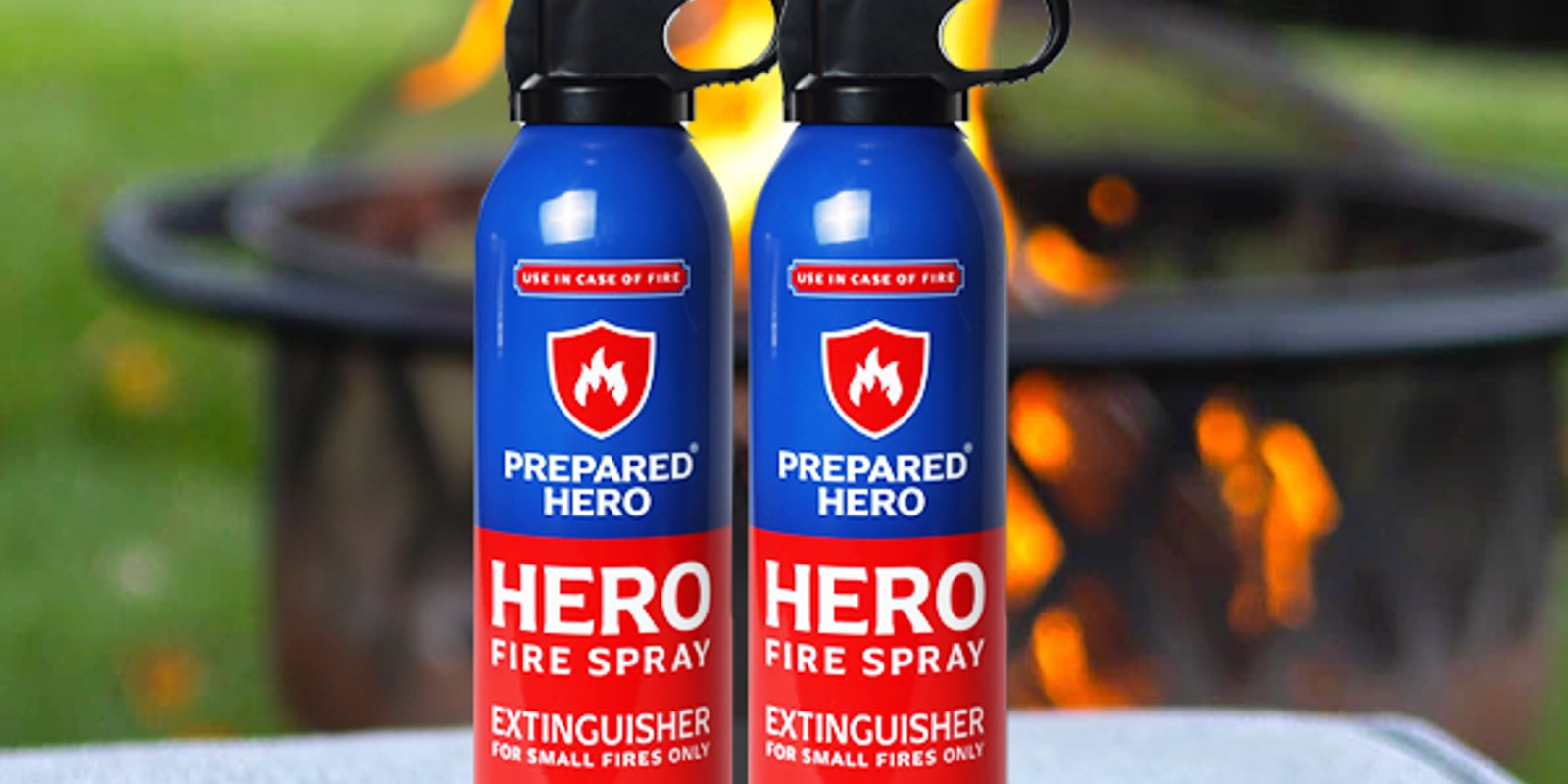
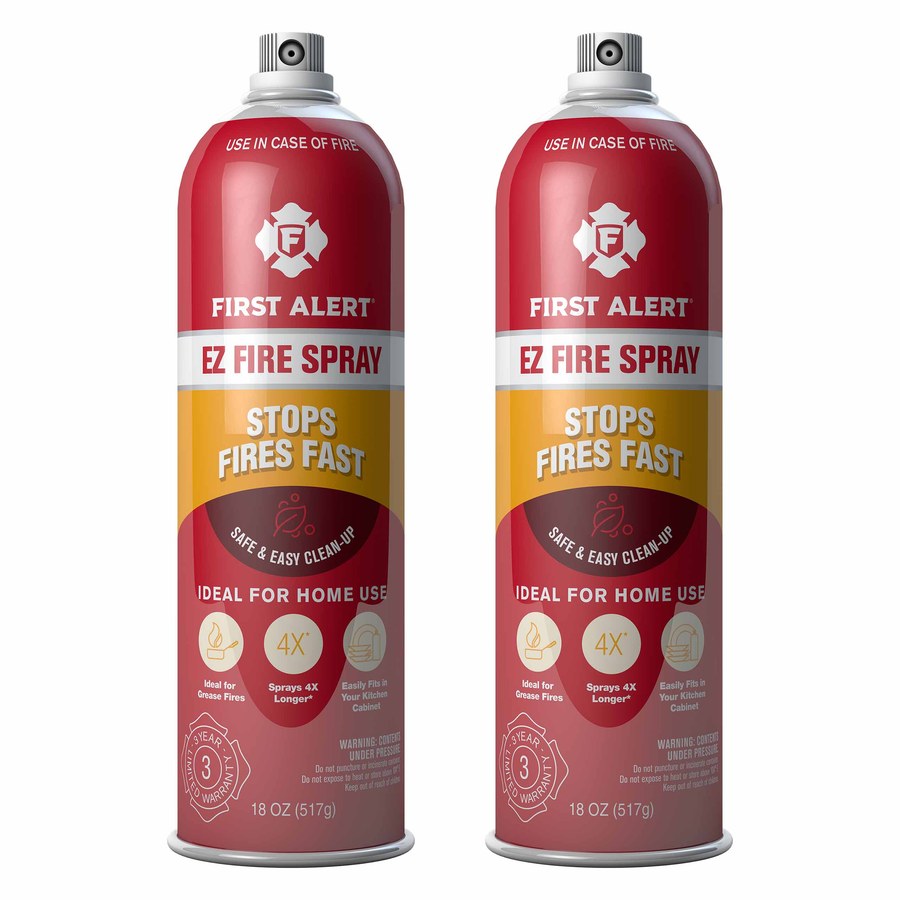
A Hero Fire Spray vs First Alert decision comes down to one thing: do you want the bigger, non-toxic can, or the cheaper one from a name you already know? Both are aerosol cans you point at a small fire and spray, the kind of thing you keep by the stove for the grease flare-up that turns a dinner into a 911 call.
A grease fire goes from a wisp to the cabinets in under a minute. Reaching under the sink, pulling the pin on a heavy extinguisher, and remembering the technique is a lot to ask in those seconds. A spray can is the thing a panicked person can actually use: grab, aim, squeeze.
The Hero Fire Spray is the larger, water-based pick from Prepared Hero. First Alert’s Tundra is the cheaper aerosol from the brand behind half the smoke alarms in America. One holds more and sprays a non-toxic formula. The other costs less and carries a trusted badge.
We compared both on can size, the fires they cover, price per can, shelf life, and the honest safety limits that apply to any spray like this. Here’s the split, round by round.
Hero Fire Spray vs First Alert at a glance
| Feature | Hero Fire Spray | First Alert Tundra |
|---|---|---|
| Price | $29.99 (less in multipacks) | Around $15-20 per can |
| Can size | 20.3 oz (600 ml) | 18 oz |
| Formula | Water-based, non-toxic, easy cleanup | Potassium-based, biodegradable |
| Fire classes | A, B, C, K (claimed) | A, B, C, K |
| Discharge time | Not published | About 32 seconds |
| Shelf life | Replace every ~3 years | Replace every ~3-4 years |
| Guarantee | 30-day money-back + 1-year warranty | Retailer return policy |
| UL-rated extinguisher? | No | No |
| Our score | 9.1 / 10 | 8.5 / 10 |
Two sprays doing the same small job
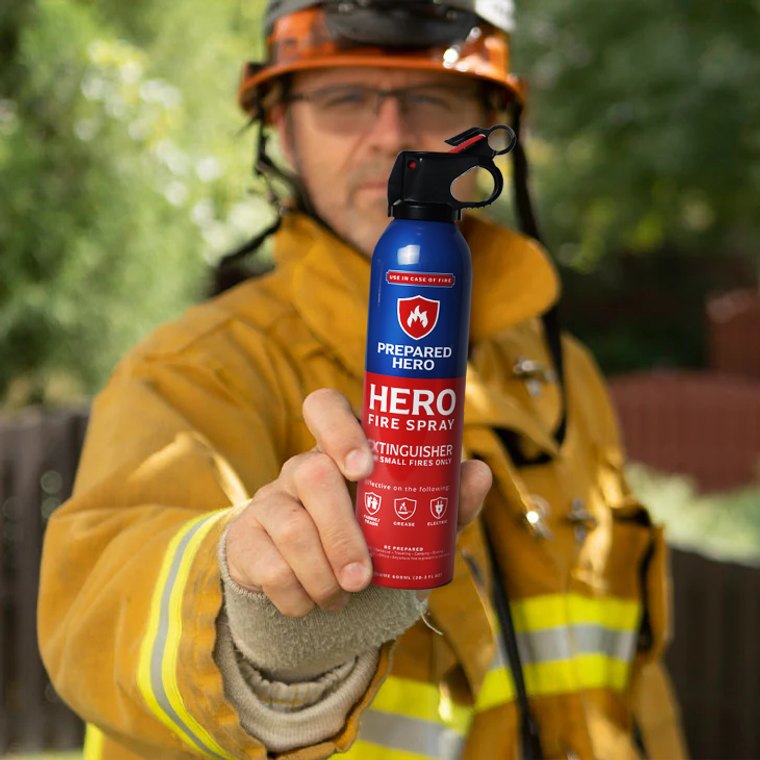
Start with what they share, because it’s the most important thing on this page. Both the Hero Fire Spray and the First Alert Tundra are aerosol suppressants for small, early fires, and neither is a UL 711-listed fire extinguisher. Read that twice. They’re for the pan that just caught, not the room that’s already going.
The Hero Fire Spray is the bigger can. It holds 20.3 oz (600 ml) of a water-based, “non-toxic” formula that wipes up with a damp cloth, and it’s marketed for Class A, B, C, and K fires, meaning fabric and trash, flammable liquids, electrical, and cooking grease. It works one-handed with no shaking, which matters when your other hand is moving a child or a pan.
First Alert’s Tundra, now branded EZ Fire Spray, is the 18 oz version of the same idea. It sprays a biodegradable potassium-based formula, covers the same A, B, C, K classes, and its headline number is about 32 seconds of discharge, which First Alert pitches as four times a traditional extinguisher’s run time. It comes from a brand that has been in home-safety aisles for decades.
That’s the honest frame. One can is bigger and sprays a non-toxic formula; the other is cheaper and wears a trusted badge. What you’re arming, and who has to use it, decides this.
One more thing up front, because it’s the responsible way to read either product. Consumer Reports has been blunt that aerosol sprays are no substitute for a real extinguisher, and their own labels say so. Treat either spray as the fast first grab, then keep a UL-rated extinguisher in the house too. If a fire is bigger than small and contained, get everyone out and call 911.
Round by round
Price per can
Round winner: First Alert TundraCredit where it’s due: First Alert wins this one outright. A Tundra can runs about $15 to $20 at big-box and grocery stores, and First Alert’s own store lists a two-pack at $34.95. A single Hero Fire Spray lists at $29.99 plus shipping.
The gap narrows in multipacks. Hero’s four-pack works out to roughly $19.99 a can and its larger bundles drop toward $17, which is Tundra territory once you’re buying for the kitchen, the car, and the garage at once. But can for can, at the register, Tundra is the cheaper grab.
If your only question is lowest sticker price on one can, First Alert takes it.
How much you get, and the formula
Round winner: Hero Fire Spray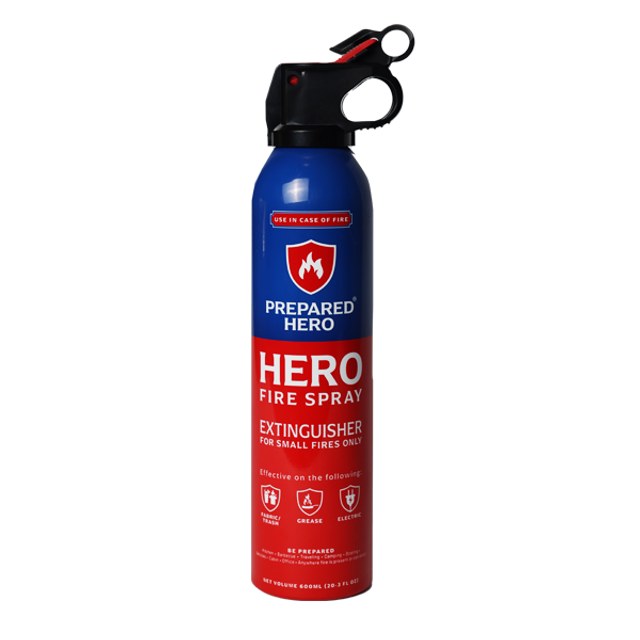
Here the Hero Fire Spray edges ahead, and the formula is why. Hero sprays a water-based, non-toxic mix that wipes up with a damp cloth, which is genuinely reassuring for a can you’re aiming near food, dishes, and outlets. Tundra’s potassium-based spray is also biodegradable and easy to clean, so this is a lead on the formula, not a blowout.
Capacity nudges the same way. Hero’s can holds 20.3 oz against the Tundra’s 18 oz, a couple of extra ounces of agent in your hand. It’s a smaller gap than against the older 14 oz Tundra, but in a real flare-up every second of spray is margin to knock a fire down and keep going if it creeps back.
On an easy-cleanup, non-toxic formula and a little more in the can, this round is Hero’s.
Run time and technique
Round winner: First Alert TundraThis is Tundra’s strongest card. First Alert quantifies its discharge at about 32 seconds, and a published number you can plan around beats a blank. Prepared Hero doesn’t publish a spray time for the Hero Fire Spray, which is a real gap when you’re comparing on paper.
Both use the same simple method: aim at the base of the flame and sweep, standing a few feet back. Neither needs the pin-pull of a traditional extinguisher, which is the whole point of a spray. But if you want the reassurance of a stated run time, First Alert gives it and Hero doesn’t.
Longer, stated discharge time takes the round for Tundra.
Guarantee and buying
Round winner: Hero Fire Spray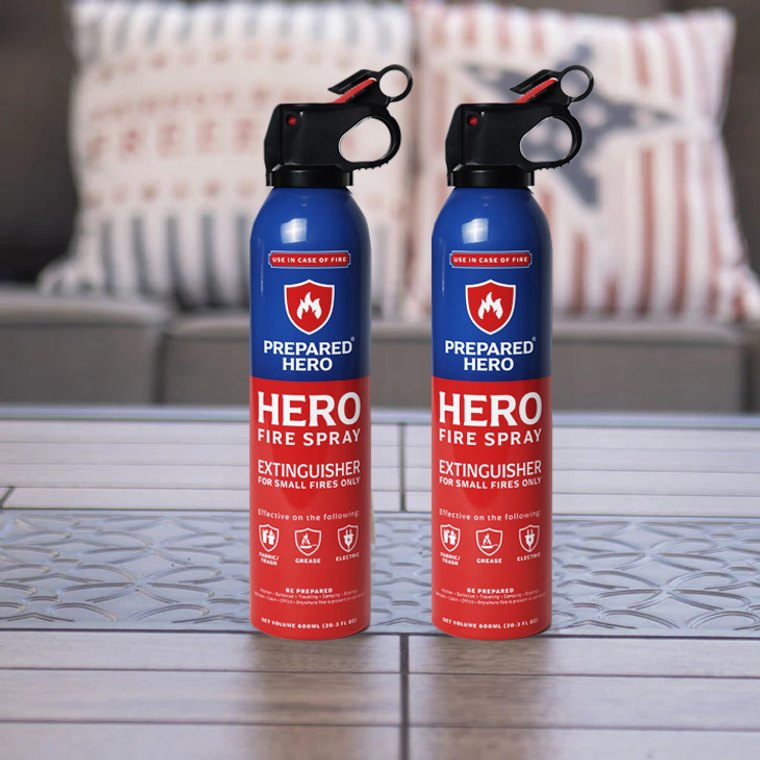
The Hero Fire Spray is sold with a 30-day money-back “HERO Guarantee” and a 1-year warranty direct from Prepared Hero, so you can mount one, live with it, and return it if it isn’t for you. Tundra relies on standard retailer return policies, which vary by store.
One honest heads-up on Hero’s checkout, because it’s the most common complaint in its reviews: buyers report a “VIP membership” upsell that can add a recurring charge if you don’t opt out. It has nothing to do with how the spray performs, but buy from the official store and decline the membership add-on so your receipt is just the cans. Prepared Hero’s overall Trustpilot sits at 4.3 out of 5 across more than 2,600 reviews, with most of the anger aimed at that billing flow rather than the product.
For a stronger stand-behind-it guarantee, this round is Hero’s: a 30-day money-back window straight from Prepared Hero, so a can you mount today owes you nothing if it isn’t right.
The honest scorecard
What we liked
- Hero: a larger 20.3 oz can, a couple of ounces more agent than the Tundra's 18 oz
- Hero: water-based, non-toxic formula rated for grease, electrical, fabric and cooking fires, with a 30-day money-back guarantee
- First Alert: cheaper per can at roughly $15-20, from a decades-old home-safety brand
- First Alert: a stated ~32 seconds of discharge, four times a traditional extinguisher's run time
What we didn't
- Only available online
Across more than 2,600 Trustpilot reviews, Prepared Hero averages 4.3 out of 5, and First Alert’s Tundra draws 4.4 to 4.9 across Walmart, Home Depot, and First Alert’s own store. Both land well with buyers who use them as intended. The recurring Hero gripe is the checkout membership, not the can, which is why buying direct and declining the add-on matters. Keep either one paired with a real UL-rated extinguisher, the way First Alert’s own PRO5 is what fire pros mean by the real thing.
Who should buy which
Choose the Hero Fire Spray if you want the bigger, non-toxic can that anyone in the house can grab and aim: 20.3 oz of water-based formula for grease, electrical, and fabric fires, one-handed with no shaking, and a 30-day money-back guarantee. Buy it from the official store, skip the VIP add-on at checkout, and mount one by the stove and one in the car this week.
Choose First Alert’s Tundra if the lowest per-can price and a familiar badge matter most, and you want a stated 32-second discharge from a name you’ve trusted for years.
Either way, the smart move is layered: a spray where fires actually start, a real extinguisher in the house, and a plan to get out and call 911 if a fire is anything more than small. For the flames a spray can’t handle, a fire blanket smothers a stovetop pan without the mess, covered in our Prepared Hero fire blanket review and head to head in Cobra vs Prepared Hero. See the full field in our best fire blankets for home, round out the kit with a personal safety alarm, and find more in our home hub.
Check today's Hero Fire Spray price