
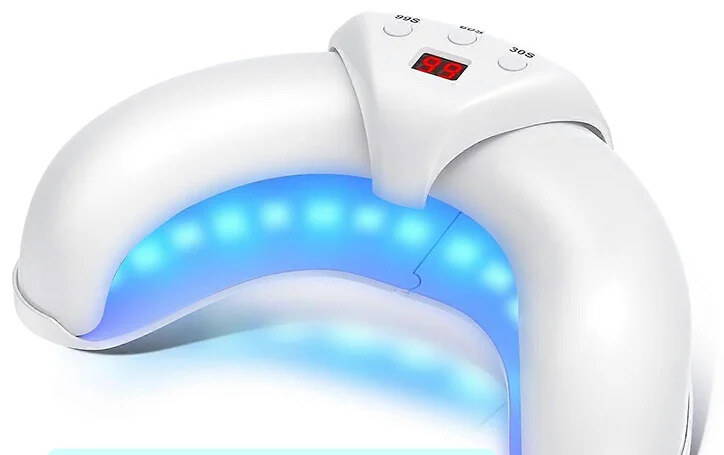
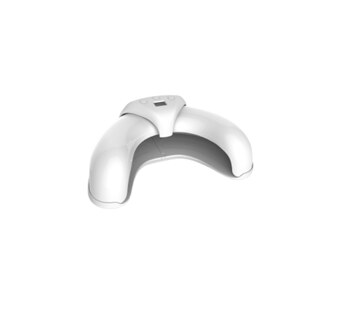
A Lumora Beam vs Fungabeam decision really comes down to one question: do you want the device that makes the daily habit easiest, or the one with deeper infrared and a longer guarantee? Both are handheld at-home nail lights, and both ask for the same thing: a few minutes a day for months.
The Lumora Beam is a foldable arch that combines UV, blue and red light and starts each session with a smart sensor. Fungabeam is a compact chamber using 905nm infrared and 470nm blue light, with a fixed seven-minute session.
One honest note up front that applies to both: neither has published device-specific clinical proof, so treat each as a cosmetic-appearance tool for mild cases, not a cure. We compared them on light types, ease of use, price and guarantee, read off each seller’s own page. Here’s the split, round by round.
Lumora Beam vs Fungabeam at a glance
| Feature | Lumora Beam | Fungabeam |
|---|---|---|
| Price (single) | $89.99 (from $179.98) | $99.99 (from $179.98) |
| Light types | UV, blue (470nm) + red (660nm) | Infrared (905nm) + blue (470nm) |
| Session start | Smart sensor auto-starts | Manual start, auto shutoff |
| Session length | 7-10 min | 7 min fixed |
| Format | Foldable arch over the nail | Compact chamber holds the nail |
| Guarantee | 14-day money-back return | 30-day money-back guarantee |
| Rating | No verified aggregate | 4.8/3,758, self-reported on its own page |
| Our score | 9.0 / 10 | 8.5 / 10 |
Two takes on the same idea
Start with what they share, because it’s a lot. Both are handheld, rechargeable, and built around short daily sessions, and both use 470nm blue light, the wavelength with the most supportive lab evidence in this category. After that they diverge.
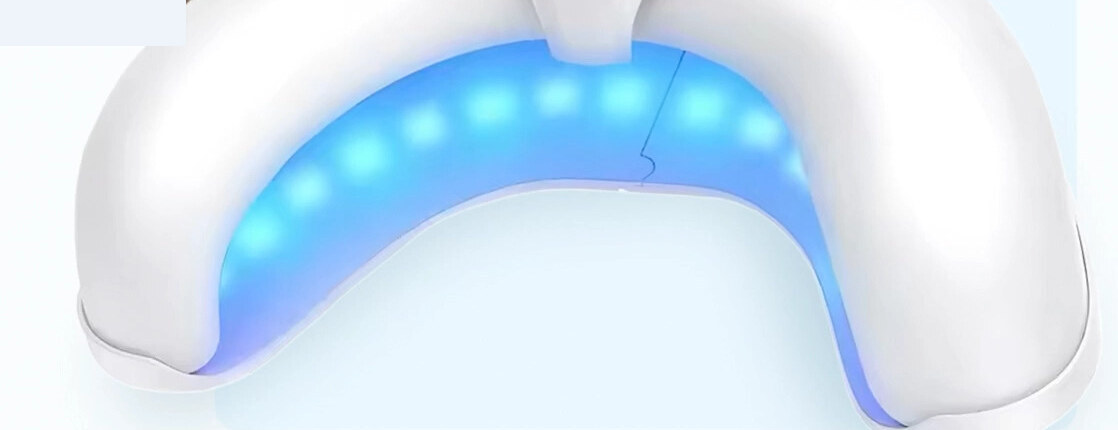
The Lumora Beam spreads its bets on light. It adds UV and 660nm red light to the blue, folds into an arch you rest over the nail, and uses a smart sensor to start the session on its own. It lists at $89.99 for a single unit.
Fungabeam goes narrow and deep. It pairs 470nm blue with 905nm infrared, pitched for deeper penetration, in a chamber that holds the nail for a fixed seven-minute session you start yourself. It lists at $99.99 for one, with a 30-day money-back guarantee, and its own checkout page states a self-reported 4.8 from 3,758 reviews. That rating is on the seller’s own page, so weigh it as a brand claim, not an independent audit.
Round by round
Light coverage
Round winner: Lumora BeamThe Lumora Beam brings three kinds of light in one device: UV, 470nm blue, and 660nm red. Fungabeam runs two, 470nm blue and 905nm infrared.
Neither spectrum is clinically proven for this use, so this isn’t about a guaranteed outcome. But if you’re buying a light device, more wavelengths in one body is more of the thing you came for, and Lumora gives you the wider mix.
On breadth of light, the Lumora Beam takes it.
Ease of use
Round winner: Lumora BeamThis is where Lumora earns its keep. The smart sensor starts the session the moment your nail is in place, so there’s nothing to press and nothing to remember. Fungabeam has an auto shutoff, but you still start it yourself each time.
That sounds small until week three, when the real reason home light devices fail is that people stop bothering. A device that starts itself is a device you’re more likely to still be using in month two.
For a months-long routine, the Lumora Beam is the easier one to keep.
Price up front
Round winner: Lumora BeamOn a single unit, the Lumora Beam is $89.99 versus Fungabeam’s $99.99, so you’re $10 ahead at the door for the broader-spectrum device.
Fungabeam narrows the gap with multi-unit bundles, so if you’re buying several it can work out close. But for the typical single-device buyer trying this for the first time, the Lumora Beam is the cheaper start.
On entry price, Lumora wins.
Guarantee window
Round winner: FungabeamCredit to Fungabeam here. It backs its device with a 30-day money-back guarantee, while the Lumora Beam’s clearest stated terms are a 14-day money-back return on unused items.
A longer window is more room to decide whether a slow, cosmetic routine is working for you, and that’s a real point in Fungabeam’s favor.
On the guarantee, Fungabeam takes the round.
Depth of light
Round winner: FungabeamFungabeam’s pitch is its 905nm infrared, a longer wavelength marketed for deeper penetration than the blue and red Lumora leans on. Whether that translates to a better real-world result is unproven, like everything in this category.
But on the spec sheet, the deeper infrared is Fungabeam’s distinct idea, and if penetration depth is what you care about, it’s the one making that case.
On infrared depth, Fungabeam wins it.
The honest scorecard
What we liked
- Lumora Beam: combines UV, blue (470nm) and red (660nm) light in one foldable arch
- Lumora Beam: smart auto-start sensor and a lower $89.99 single-unit price
- Fungabeam: deeper 905nm infrared and a longer 30-day money-back guarantee
- Fungabeam: compact chamber design with a fixed, simple seven-minute session
What we didn't
- Lumora Beam: Only available online
- Fungabeam: narrower light mix (no red or UV) and a rating that's self-reported, not independently verified
Who should buy which
Choose the Lumora Beam if you want the easiest daily routine: three kinds of light in one arch, a smart sensor that starts each session for you, and a lower $89.99 entry price. For most people trying at-home light care for a mildly affected nail, it’s the simpler, cheaper start, and our full Lumora Beam review covers the sensor and sessions in more detail.
Choose Fungabeam if deeper 905nm infrared and a longer 30-day guarantee outweigh the narrower light mix and higher single-unit price.
Either way, keep expectations honest: both are cosmetic-appearance tools for mild cases, and anything painful, thick, or spreading, or any diabetic foot, belongs with a podiatrist. For more foot care, see the best toenail fungus pen, the best nail clippers for thick toenails, and the health hub.
Check today's Lumora Beam price