
EMF blocking products are one of the easiest things to buy on worry and one of the hardest to judge on evidence. Your phone lives against your head and on your nightstand, the ads promise to shield you, and the actual science sits somewhere between “plausible for physical shielding” and “unproven for stickers.”
We compared the best EMF blocking products of 2026 on the things that actually differ: whether the shielding is physical or a claim, the price, the guarantee, and how honest each brand is about what it can prove.
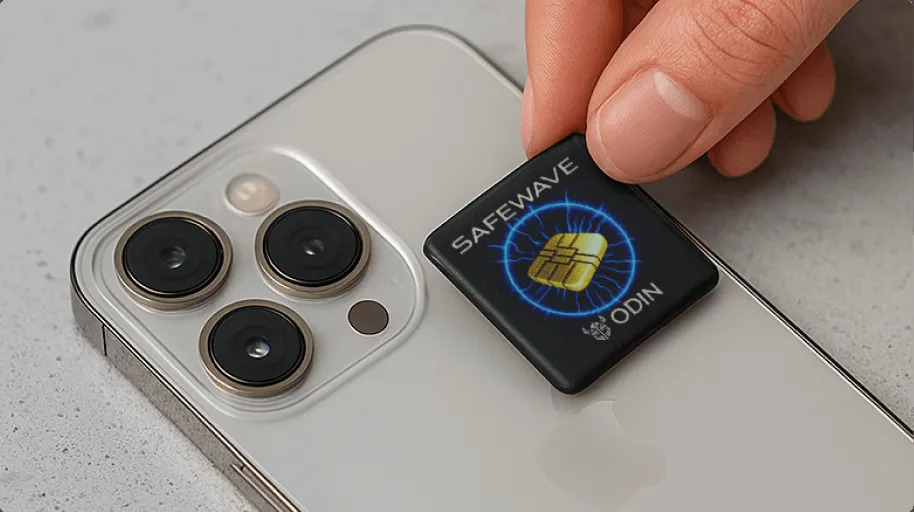
Our top pick is the ODIN SafeWave sticker, the lowest-risk way to act on EMF worry without losing your Wi-Fi or your money.
One honest note up front, and it’s the thing most roundups bury. No product here has published, independent proof that it lowers your real exposure. The US Federal Trade Commission has said for years that phone-radiation shields aren’t scientifically shown to work as claimed. So we ranked these on price, build, mechanism, and the guarantee behind them, not on health promises. Here’s the shortlist.
The best EMF blocking products of 2026 at a glance
- ODIN SafeWave: Best overall value, peel-and-stick sticker ($39.99)
- WaveBlock: The patented sticker rival (from ~$30)
- DefenderShield: Best premium shielding case (~$80)
- SafeSleeve: Best budget shielding case (~$40)
Before the picks, the number that reframes the whole category. We read the current price and guarantee off each brand’s own store: the ODIN sticker is $39.99 with a 30-day money-back refund, while the shielding cases run $40 to $85 and the sticker rivals sit near $30. Since none of them has independent proof of effect, the refund policy does more work than the marketing, and that’s exactly how we weighted it.
1. ODIN SafeWave: the best value in EMF stickers
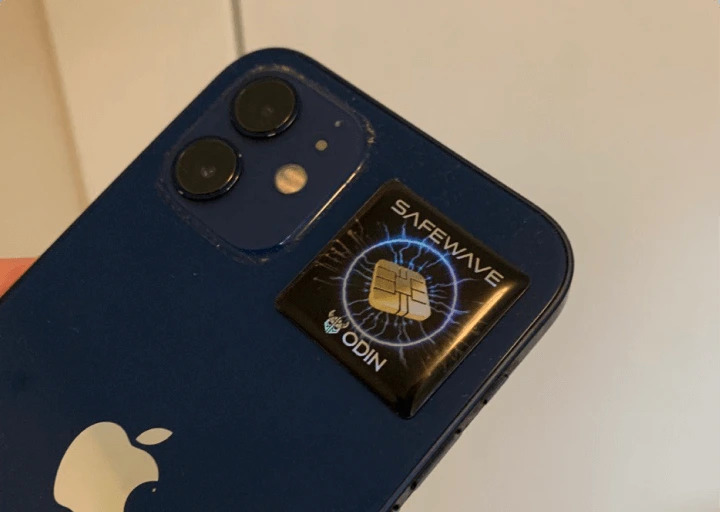
The ODIN SafeWave takes the top spot for a simple reason: it’s the cheapest, least intrusive way to act on EMF worry, and it comes with a real refund. It’s a small adhesive chip you stick to the back of any device, and it’s $39.99, listed down from $79.98.
Its best quality is what it doesn’t do. The brand states it doesn’t interfere with Wi-Fi, Bluetooth, cellular signal or battery, and reviewers confirm connectivity and tap-to-pay keep working after it’s applied. One sticker covers one device, phone, tablet, laptop or router, and it hides inside a phone case.
Be clear-eyed about the evidence. ODIN cites its own commissioned testing of 18 to 45 percent SAR reduction, but that’s brand-funded and not independently replicated, which is true of every sticker here. Its on-site rating of 4.8 across more than 21,364 customers is a brand-collected figure, not an audited one. What’s checkable is the 30-day money-back guarantee, and that’s the real reason it’s a low-risk buy. Our full ODIN EMF sticker review digs into the claims.
What we liked
- The lowest-cost way to try EMF shielding, at $39.99 with a 30-day refund
- Doesn't interfere with Wi-Fi, Bluetooth, cellular signal or battery
- Works on any device and hides inside a phone case
- Sold by a US-registered company, one-time price, no subscription
What we didn't
- Only available online
2. WaveBlock: the patented sticker rival
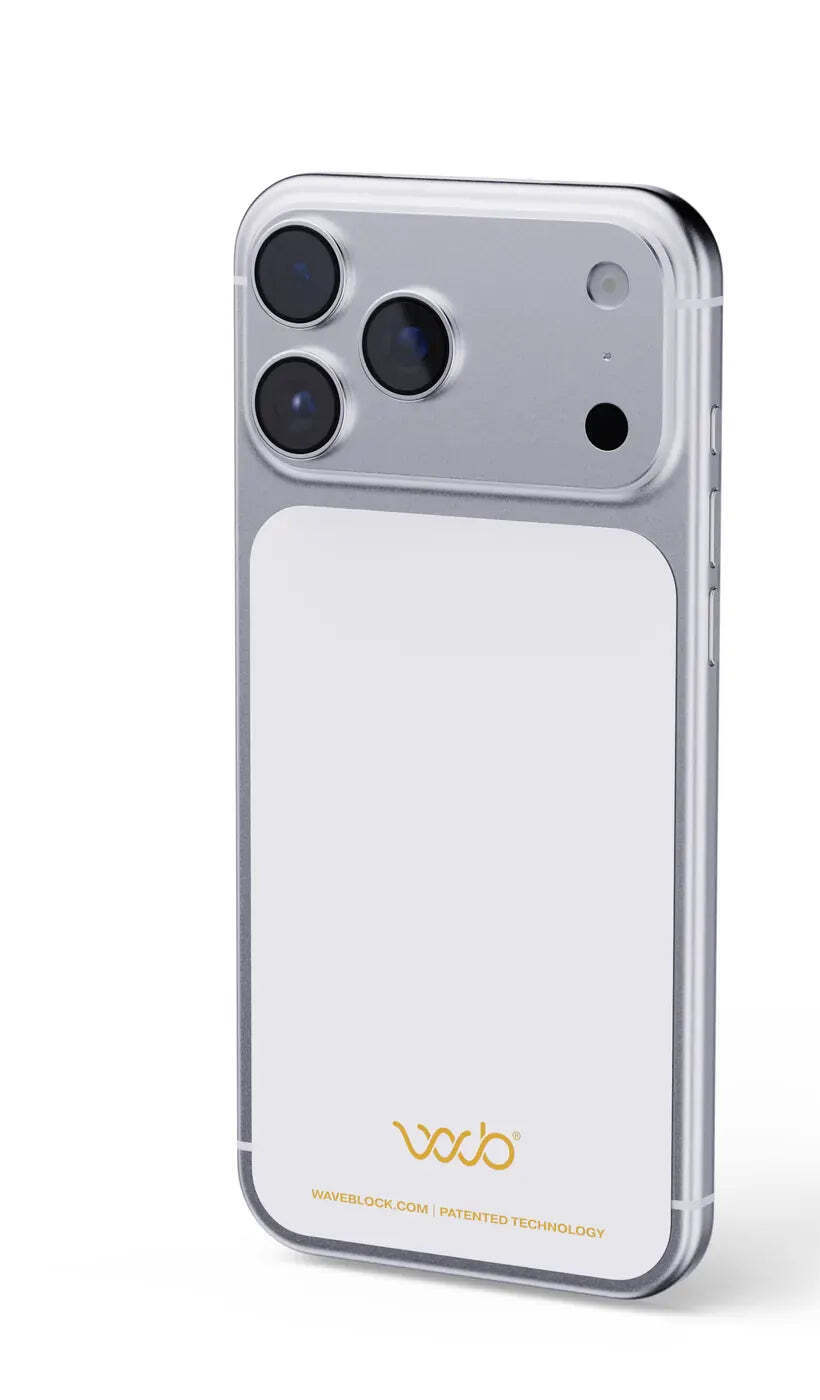
The name most people weigh against ODIN is WaveBlock, another stick-on shield that markets itself as a patented, lab-tested 5G shield for phones, tablets and AirPods. It’s the closest direct rival to our top pick, and it lands in the same form factor: a thin shield you apply and forget.
WaveBlock leans harder on the “patented technology” framing than ODIN does, and it sells device-specific and multi-device sets rather than one universal sticker, with single shields starting around $30. If you want a shape cut for a specific phone or earbuds, that’s its edge.
The honest catch is identical to ODIN’s: there’s no published, independent attenuation data a reader can check. So the choice between the two stickers comes down to price, fit, and the return policy, not proof. Our ODIN vs WaveBlock comparison runs them side by side.
See WaveBlock on the official site
3. DefenderShield: the premium shielding case
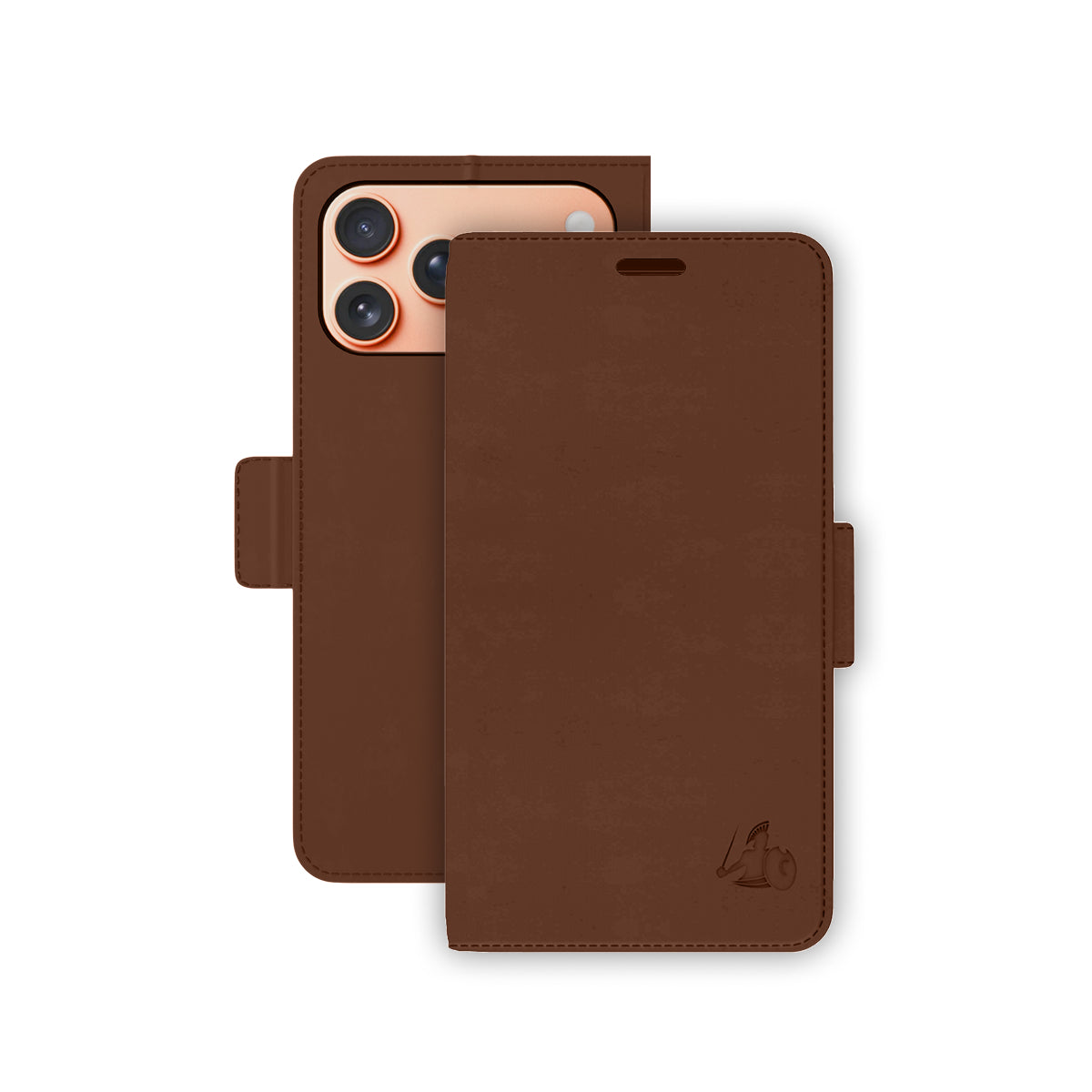
If you want shielding with a physical mechanism rather than a claim, a lined case is the more convincing form factor, and DefenderShield is the established name. Its folio and wallet cases carry conductive shielding in the front flap, which physically sits between your phone and your body when the flap is closed.
DefenderShield markets up to 99% EMF reduction over a tested frequency range, and it’s a real company with a deep catalog, from cases to beanies to air-tube headphones. Its phone cases run about $70 to $85, so you’re paying a premium for a known brand and a physical barrier.
Two honest points. The 99% figure is the brand’s own tested number, not independent, and the shielding only works on the side the flap covers, while the flap is shut. You’re buying a plausible physical barrier and a trusted name, at the top of the price range. For a direct matchup, our SafeSleeve vs DefenderShield comparison weighs the two case brands.
See DefenderShield on the official site
4. SafeSleeve: the budget shielding case
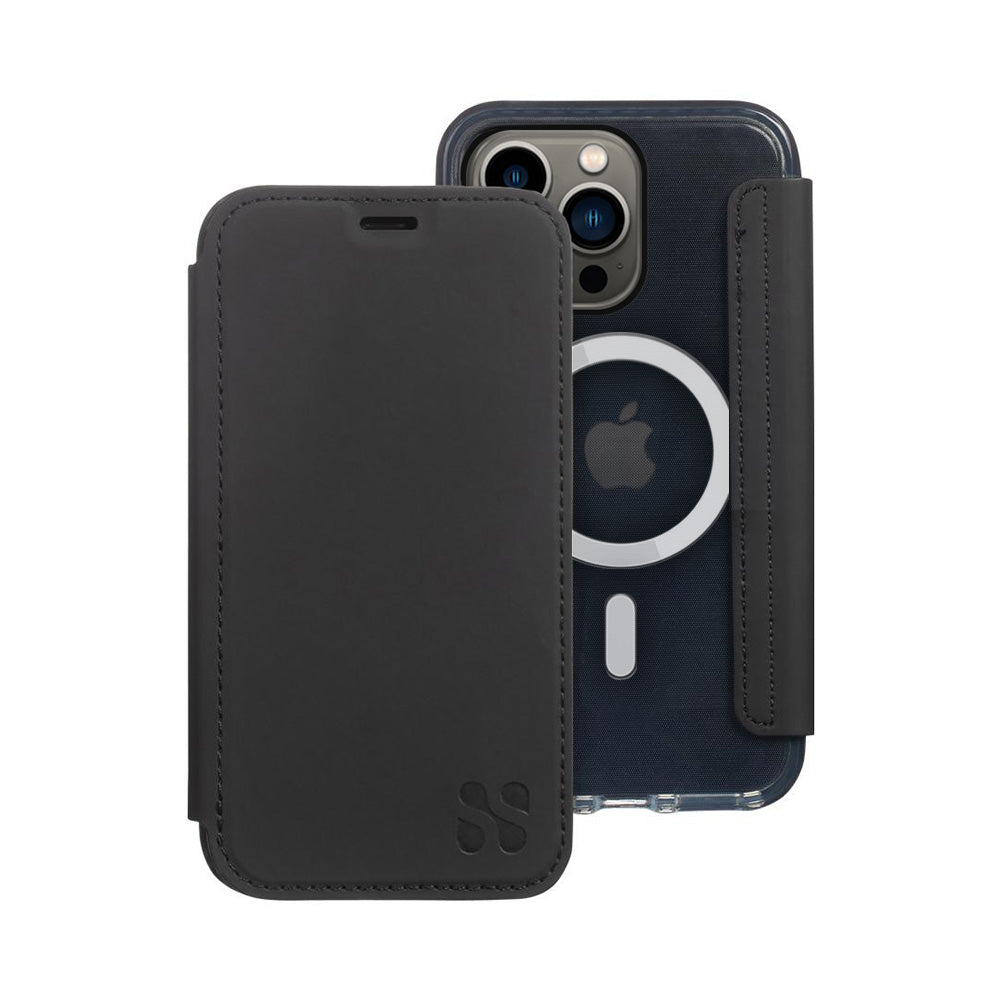
SafeSleeve offers the same idea as DefenderShield, a folio case with conductive shielding in the flap, usually for less. It’s the value choice if you specifically want a case rather than a sticker, and it covers phones, tablets and laptops.
Like DefenderShield, SafeSleeve markets up to 99% RF and ELF reduction in the shielded flap, with phone cases often landing around $40 to $60. It’s a wallet-style case too, so it doubles as somewhere to keep a couple of cards.
The same two caveats apply: the reduction figure is the brand’s own, and the shielding only covers the flap side when it’s closed. As a budget way to get a physical barrier in a case you’d carry anyway, though, it’s the sensible cheaper pick, and it’s a step up in plausibility from any sticker.
See SafeSleeve on the official site
How to choose an EMF blocking product
Start with the honest question: are you buying physical shielding, or reassurance? Both are fine to want, but they’re different products, and knowing which you’re after makes the choice easy.
Prefer a physical mechanism when you can. A conductive flap in a case or a metal pouch has a testable basis for blocking some signal on the side it covers. A sticker’s mechanism isn’t measurable with standard EMF equipment, so it’s the reassurance end of the scale. Neither has independent proof of a health benefit.
Match the form factor to your life. A sticker is cheap, invisible, and changes nothing about how your phone works. A shielding case is bulkier and pricier, but you can feel the barrier and it covers more area. Pick the one you’ll actually keep using.
Buy from a real company with a guarantee. This category is full of anonymous drop-shippers. Stick to registered brands, and lean on the refund window. In a space with no independent proof, the money-back guarantee is the single most valuable spec, because it’s what lets you try something at no real cost.
Ignore the percentage unless it’s independent. Every brand here cites an impressive reduction number, and every one of those numbers is self-commissioned. Treat them as marketing, not measurement, and weight the price and return policy instead.
The verdict
For most people, the ODIN SafeWave sticker is the best EMF blocking product of 2026, because it’s the cheapest, least intrusive way to act on the worry, it leaves your phone working exactly as before, and its 30-day refund means trying it costs you nothing.
Choose WaveBlock if you want a sticker cut for a specific device, DefenderShield if you want a premium case with a physical shielding flap, and SafeSleeve if you want that same case idea for less. The evidence across this whole category is thin, so the smart move is to buy for peace of mind and lean on the money-back guarantee that lets you try any of them at no real risk. For the call side of exposure, our best anti-radiation headphones roundup covers air-tube options, and more everyday picks live in our health hub.
See today's ODIN SafeWave price