
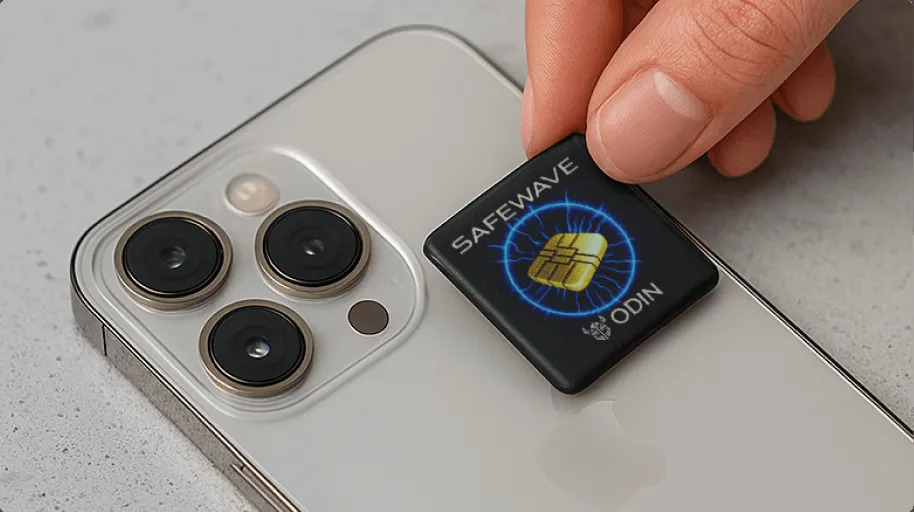
You hold a phone to your head for hours a day, it lives on your nightstand all night, and at some point you start wondering whether all that invisible signal is doing anything to you. That low-grade worry is exactly what EMF stickers like the Odin SafeWave are sold against: a cheap, stick-it-and-forget-it way to feel you’ve taken a sensible step.
We researched what the Odin EMF sticker actually claims, what independent evidence exists, the real price, and the guarantee, and we’re going to be straight about all of it. For context on other options in this space, we also cover phone cases and shielding gear in the Odin vs WaveBlock comparison.
Here’s the honest read: what it is, what’s proven and what isn’t, and who it’s actually for.
Why people choose the Odin sticker
What we liked
- A $39.99 peel-and-stick accessory that applies to any device, phone, tablet, laptop or router, in under five minutes
- The brand states it doesn't interfere with Wi-Fi, Bluetooth, cellular signal or battery, and reviewers confirm connectivity keeps working
- A 30-day no-questions money-back guarantee, so trying it carries no real financial risk
- Sold by a US-registered company with a one-time price and no subscription to cancel
What we didn't
- Only available online
Who the Odin sticker is for
Buy the Odin sticker if phone and device EMF is something you think about and you want a low-cost, low-effort way to feel you’ve addressed it. At $39.99 with a 30-day refund, it’s the least-committal product in the category, and it won’t cost you your Wi-Fi or your tap-to-pay.
The one thing to be clear on is what you’re buying: a peace-of-mind accessory, where the 30-day money-back guarantee is the real protection. If it doesn’t sit right with you, the sticker goes back and so does your money.
Try it with the 30-day money-back guaranteeWhat’s claimed vs what’s actually verified
Here’s the element the brochure pages leave out, laid out plainly so you can decide for yourself. On one side is what Odin says. On the other is what independent evidence actually supports.
| What Odin claims | What’s independently verified | |
|---|---|---|
| EMF reduction | 18 to 45 percent SAR reduction in testing Odin commissioned | Not independently replicated; measures lab SAR, not health |
| Technology | A “layered, field-disrupting” shielding layer | Not described in testable detail |
| Signal impact | No effect on Wi-Fi, Bluetooth or calls | Reviewers confirm connectivity is unaffected |
| Buyer protection | 30-day money-back guarantee | Verifiable on the official store |
The honest bottom line is that the efficacy evidence is brand-commissioned and hasn’t been independently validated. The US Federal Trade Commission has said for years that for cell-phone radiation shield products, “there is no scientific evidence that their products work as they claim,” and it has taken action against sellers making unqualified radiation-reduction claims. So the smart way to read the Odin is as a reassurance accessory backed by a real refund, not as a verified safety device. On price, that reassurance is cheap: the Odin is $39.99 (down from $79.98) with a 30-day refund, and like rival stickers such as WaveBlock, it sits in an inexpensive category where none of the options has independent proof of effect.
What the Odin sticker actually is
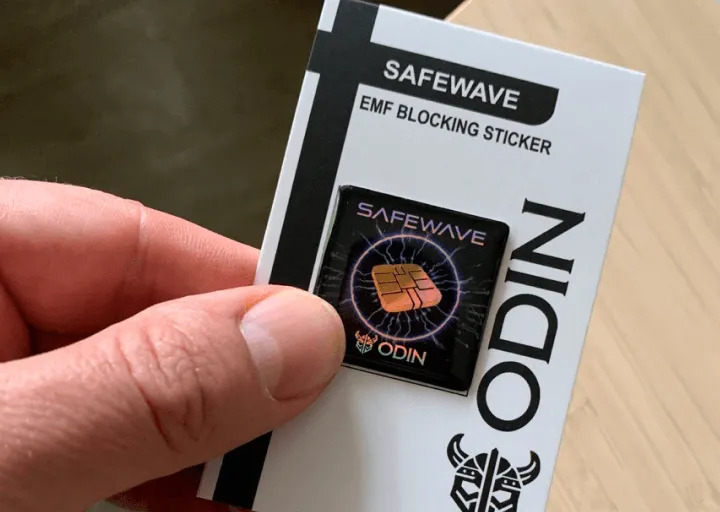
The Odin SafeWave is a small, square adhesive chip you stick to the back of a device. It’s not a case and not a signal blocker, it’s a thin sticker that the brand says carries a built-in shielding layer meant to disrupt part of the field a device emits.
The practical appeal is how little it asks of you. One sticker covers one device, it can live inside a phone case out of sight, and it’s a one-time $39.99 purchase (listed down from $79.98) with no subscription. Odin is a US-registered company, which is worth noting in a category full of anonymous drop-shippers.
What it specifically does not do is get in your way. The brand is clear that it doesn’t touch your Wi-Fi, Bluetooth, cellular connection or battery, and that lines up with what reviewers report after sticking one on.
How you apply it
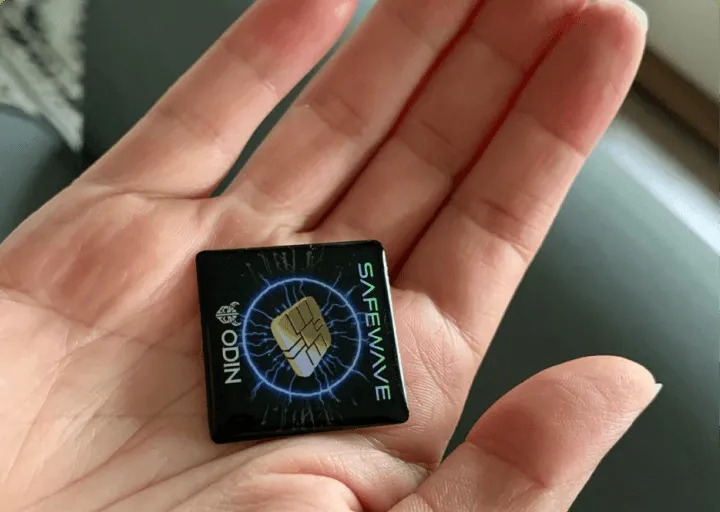
Setup takes a couple of minutes. Clean the back of the device with a little mild soap and water, dry it, then press the sticker firmly in place for about two minutes so the adhesive sets. That’s the whole process.
Because one sticker handles one device, a household that wants to cover a couple of phones, a tablet and a laptop needs a multi-pack, which is why Odin sells the bundles at a lower per-sticker price. The beyond-the-brochure tip: put it where it won’t peel, flat on the back under your case, not on a curved edge, and it’ll stay put for months.
Does it belong on your devices?
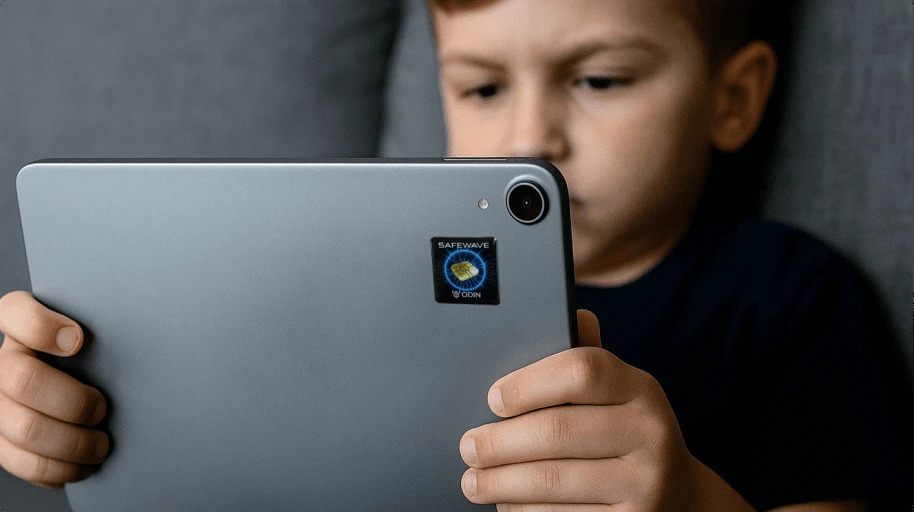
This is where honesty matters most. If you want a product with published, independent proof that it reduces your exposure, no sticker in this category can give you that today, and we won’t pretend otherwise. What the Odin offers is a cheap, non-intrusive way to act on a worry a lot of people share, especially about kids’ tablets and bedside phones.
Plenty of smart buyers treat it exactly that way: a small step that costs little, changes nothing about how the device works, and comes with a refund if it doesn’t feel worth it. If that framing sits right with you, it’s an easy thing to try. If you need measured proof, this isn’t the product for you, and that’s a fair place to land.
What buyers say

Odin’s site shows a 4.8 out of 5 rating from more than 21,364 customers, which we read as a brand-collected signal rather than independent verification, especially since the exact figures vary across the company’s own marketing. There’s no third-party review aggregate for the sticker to cross-check it against.
The on-site testimonials lean on feel rather than measurement, which is exactly why we’d read the glowing numbers with care rather than lean on any single one. The checkable facts are the ones that matter: it’s cheap, it doesn’t interfere with your phone, and you can send it back within 30 days.
How it compares
The named alternative most people weigh against it is WaveBlock, a shielding sticker that markets itself as a patented, lab-tested 5G shield. Neither product has published, independent attenuation data a reader can check, so the honest contrast is simple: both sit in the same inexpensive, unproven-but-low-risk category, and the refund policy matters more than the marketing claims.
Phone cases with shielding built into the flap, like the ones in our SafeSleeve vs DefenderShield comparison, are a different, pricier form factor, and our best anti-radiation headphones roundup covers the call side. For more everyday wellness picks, see the health hub.
Verdict
The Odin EMF sticker is best understood for what it is: a $39.99 reassurance accessory, not a proven radiation-safety device. We’d be doing you a disservice to claim otherwise, because the independent evidence for this entire category isn’t there.
What’s genuinely in its favor is concrete. It’s cheap, it installs in two minutes, it leaves your Wi-Fi, Bluetooth and calls completely alone, and it’s backed by a 30-day no-questions refund. If EMF is a worry you’d like to quietly act on, the Odin is the lowest-risk way to do it, and the guarantee means you can decide on your own terms with nothing to lose.
See today's Odin SafeWave price