
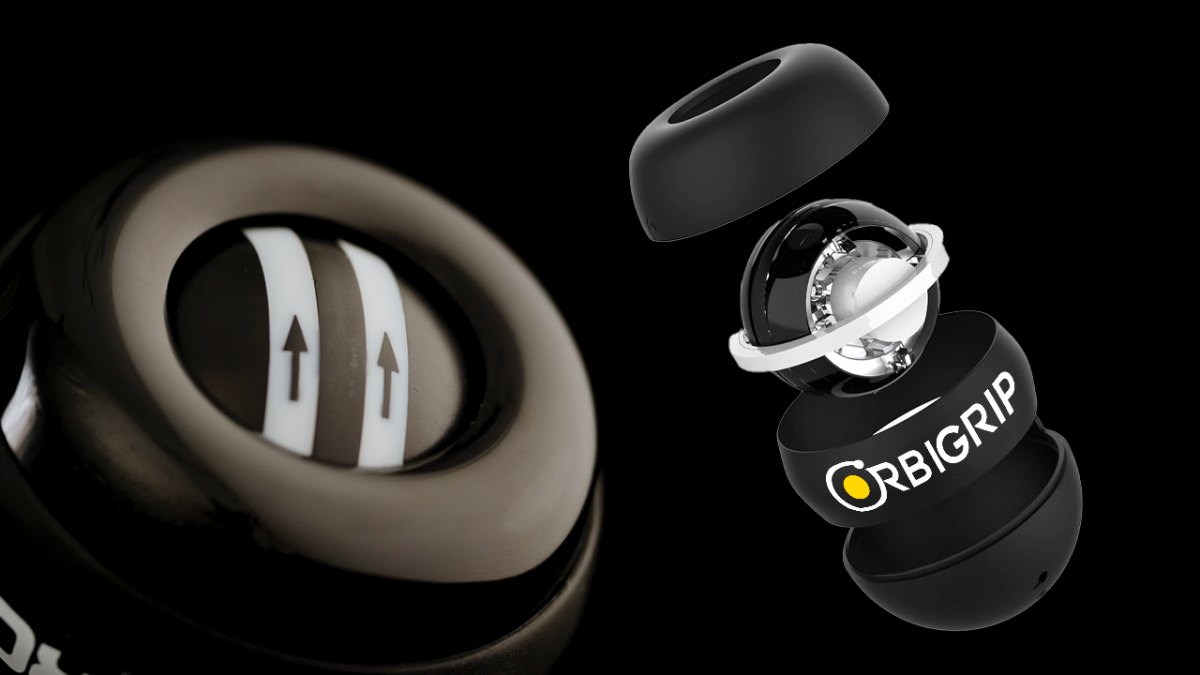
Grip is the strength you only notice when it’s gone, the jar that won’t open, the bag that needs two trips, the racquet that slips by the third set. A gyroscopic wrist exerciser trains it in a few quiet minutes a day, fighting back harder the faster you spin it.
We compared the gyroscopic wrist balls people actually buy on start method, resistance, price, and the guarantee behind each. Our top pick is the Orbi Grip, the battery-free ball that auto-starts from a flick instead of a pull cord.
One honest note up front. This is a small, crowded category where a handful of real names sit above a pile of near-identical no-brand torque balls. So we rank the two trainers worth knowing by name, then cover the honest budget option.
For this roundup we read owner feedback and third-party coverage, checked specs and return terms off the official stores, and weighted what buyers report over brand-collected five-star counts.
The best gyroscopic wrist exercisers at a glance
- Orbi Grip: Best overall, auto-start and a 90-day guarantee ($69.99)
- NSD Powerball: The most proven name (~$30 to $35)
- XMALL Torque Ball: Honest budget pick (~$15 to $20)
1. Orbi Grip: the best gyroscopic wrist exerciser overall
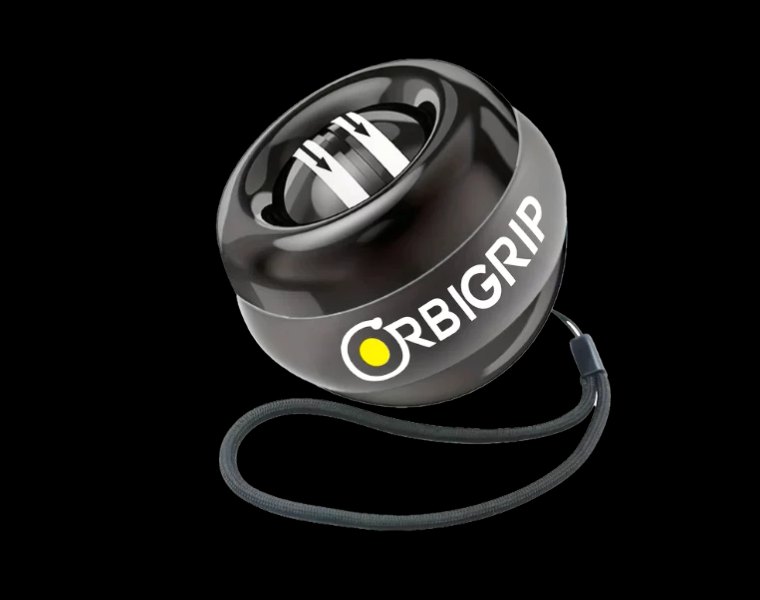
The Orbi Grip takes the top spot because it fixes the one thing that makes people quit a gyro ball: starting it. It’s auto-start, so a quick flick of the wrist catches the rotor, with no cord to thread and rip.
It’s a battery-free, cord-free ball about 2.8 inches across, with a weighted rotor in a zinc alloy core. The brand lists a top speed of up to 18,000 RPM, and one review site measured the push-back at over 40 pounds of torque at full tilt. Your wrist sets the resistance, so it’s gentle for mobility and brutal for forearm work on the same device.
Here’s the useful part the product page downplays: the resistance isn’t a setting, it’s your speed. That’s why the Orbi Grip suits two crowds who rarely share gear, lifters and racquet players warming up, and older hands keeping stiff joints moving. It ships with a 90-day money-back guarantee, the longest trial window here, which is the reassurance that matters for a gadget you’re not sure you’ll stick with.
What we liked
- Auto-starts from a flick, no pull cord to fumble
- Battery-free and quiet, powered entirely by your own motion
- Resistance scales with your wrist speed, gentle for rehab or intense for training
- A 90-day money-back guarantee, the longest trial window in this roundup
What we didn't
- Only available online
2. NSD Powerball: the most proven name
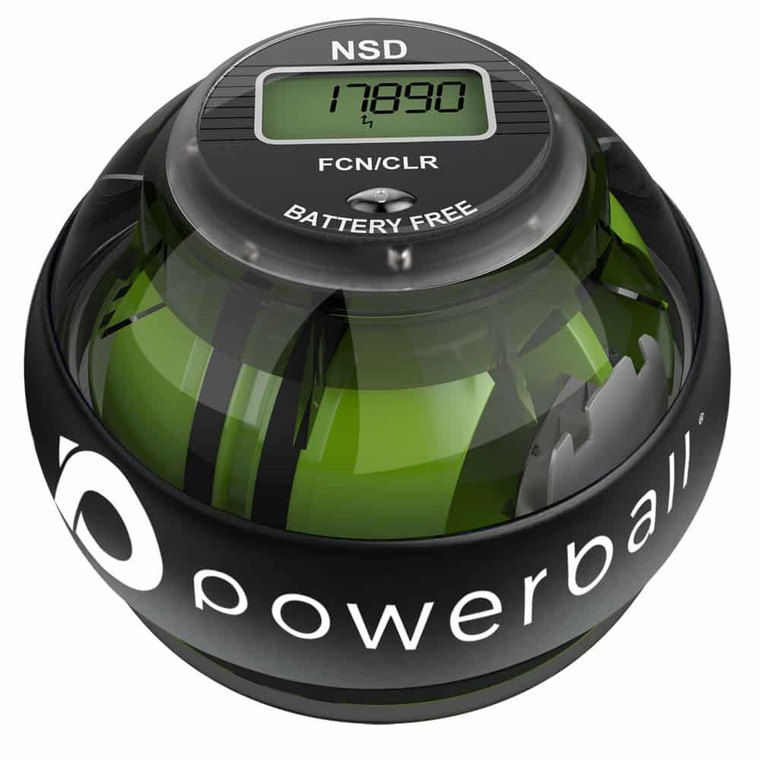
The NSD Powerball is the reference gyroscopic ball, the one most people picture, and it earns its place on a long, deep track record. It’s a battery-free trainer that also reaches around 18,000 RPM, with about 16 kg of resistance at speed and a compact 70mm, 263-gram body. Some models add an LCD counter that tracks your RPM.
The reason it lands at number two rather than the top is the start. The classic Powerball is cord-start: you thread and pull a little string to spin the rotor up, and that’s the step beginners fumble most. NSD does sell an auto-start version, but it costs more, closing the price gap with the Orbi Grip.
On value it’s strong. A cord-start classic often runs $30 to $35, and it’s sold widely with a huge base of reviews behind it. Pick it if you want the most proven name and the lowest entry price, and you don’t mind mastering the cord. We put the two head to head in our Orbi Grip vs Powerball comparison.
3. XMALL Torque Ball: the budget pick
The honest budget option is the kind of no-name auto-start torque ball sold under labels like XMALL, usually around $15 to $20. Mechanically it’s the same idea: a spinning rotor you keep going with wrist circles, often with an auto-start so there’s no cord.
What you trade for the low price is consistency and support. These marketplace brands come and go, the build quality varies between sellers, and there’s rarely a real guarantee or company to stand behind it if the ball seizes or the bearing wears. Reviews skew positive on the ones that work, but you’re buying on price, not a track record.
It’s a fair pick if you just want to try a gyro ball cheaply and aren’t fussed about longevity or a return window. For something you’ll keep using, the build and guarantee on the Orbi Grip are worth the step up.
How to choose a gyroscopic wrist exerciser
Start with the start. The single biggest difference between these balls is whether they auto-start from a flick or need a pull cord, and the cord is what frustrates beginners into quitting. If you’re new to gyro balls, an auto-start model like the Orbi Grip removes the one real learning curve.
Then think about resistance and use. All of these top out around 18,000 RPM, and on every one, your wrist speed sets the load, so you don’t need to chase the highest number. What matters is whether you want the ball for gentle wrist mobility, grip endurance, or an all-out forearm burn, and all three handle the range.
Finally, weigh guarantee and support. A gyro ball has moving parts that can wear, so a real money-back window and a company behind the product are worth paying a little more for. Buy from the official store, keep your confirmation email, and skip the cheapest no-name seller if you want it to last.
The verdict
For most people who want stronger hands and forearms without a gym, the Orbi Grip is the best gyroscopic wrist exerciser of 2026: a battery-free, auto-start ball that spins up from a flick, scales from gentle to brutal with your wrist, and backs it with a 90-day money-back guarantee. It’s the one to start with.
The NSD Powerball is the cheaper, more proven name if you don’t mind the cord-start classic, and a no-name torque ball will do if you only want to try the idea for the price of lunch. If you liked the motion-powered concept, our Orbi Boomerang Ball review covers the brand’s throw-and-return toy, our full Orbi Grip review digs into the top pick, and there’s more at-home gear in our home hub.
Check today's Orbi Grip price