
Grip strength is the one thing that quietly fades and nobody trains until a jar lid wins. It’s the muscle behind a steady handshake, a carried-in-one-trip grocery haul, and a golf or tennis swing that doesn’t tire by the back nine.
The problem with most grip tools is that they’re boring springs you squeeze and put down. For this Orbi Grip review we looked at a different kind of trainer, a gyroscopic ball that fights back harder the faster you spin it, and compared its specs, price, and guarantee against the ball people already know, the Powerball.
The short version: the Orbi Grip is the one I’d hand a beginner, because it auto-starts from a flick instead of fiddling with a pull cord, and it’s backed by a 90-day money-back guarantee. Here’s what holds up.
Orbi Grip at a glance, and the one number that matters
Before the deep dive, here’s the honest frame most review pages skip, read straight off both brands’ own stores. The Orbi Grip and the classic Powerball do the same job, but they differ on the two things a first-time buyer actually cares about: how you start it, and what happens if you don’t like it.
| Orbi Grip | Classic NSD Powerball | |
|---|---|---|
| Start method | Auto-start, flick of the wrist | Cord-start on classic models (auto-start version exists) |
| Power | Battery-free, no cords | Battery-free, no cords |
| Price | About $69.99 single, cheaper in bundles | Roughly $30 to $35 for cord-start classic |
| Money-back | 90-day guarantee | Varies by retailer |
That 90-day window is the standout. A gyro ball is the kind of gadget people worry they’ll give up on in week two, and the longer guarantee takes that risk off the table.
What the Orbi Grip is and how it works
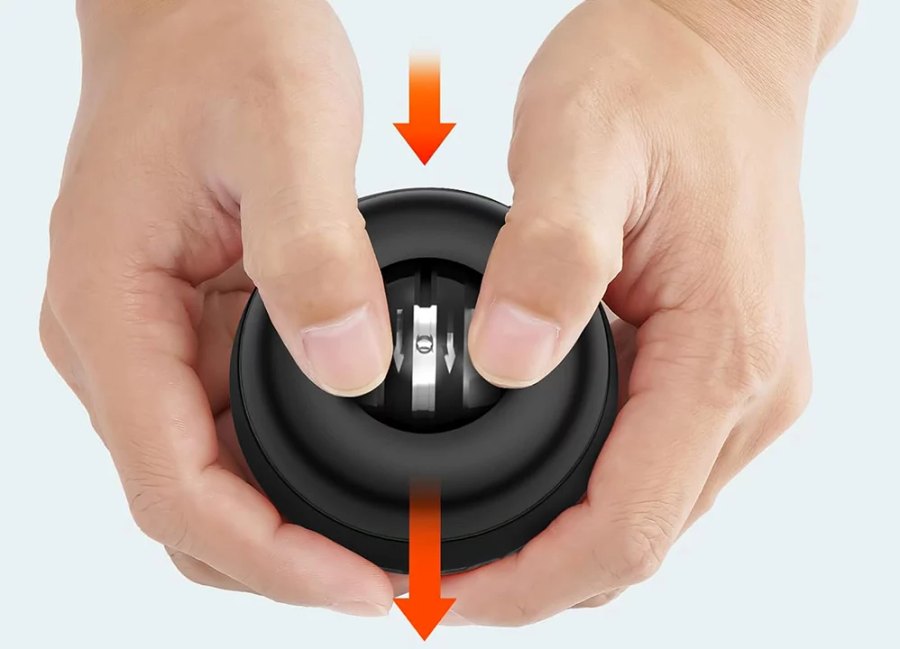
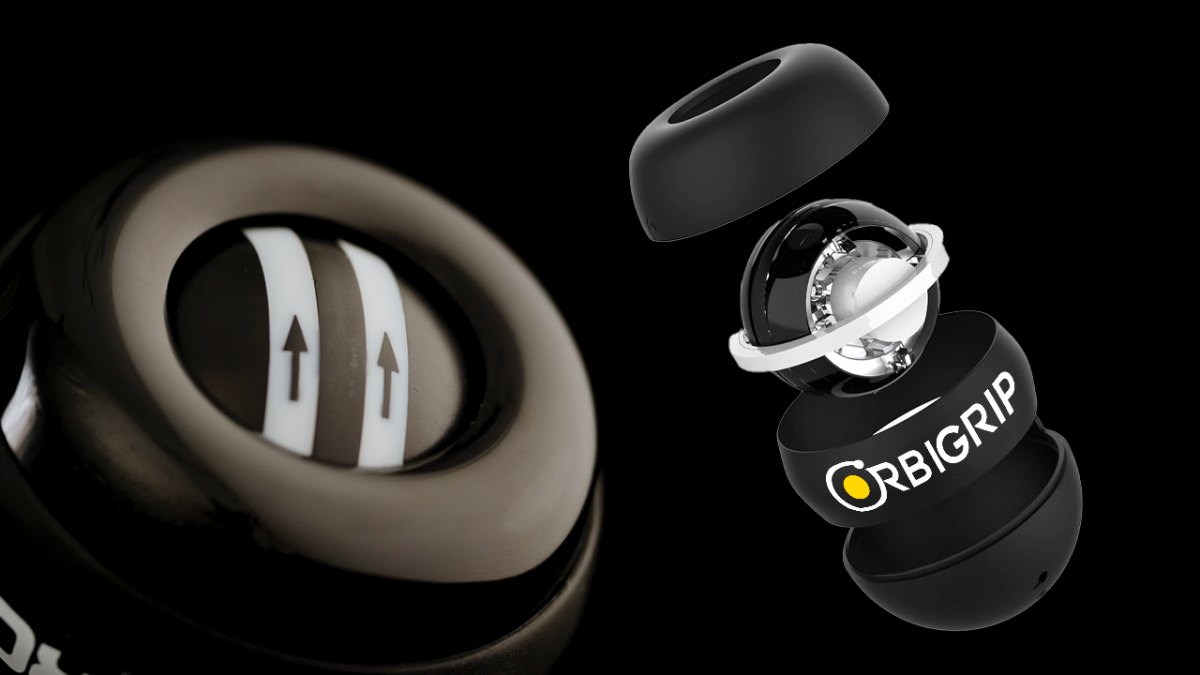
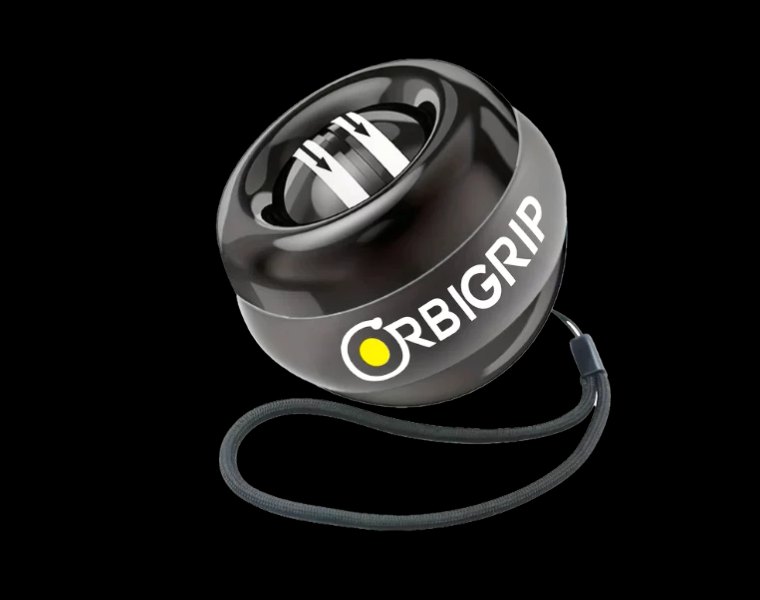
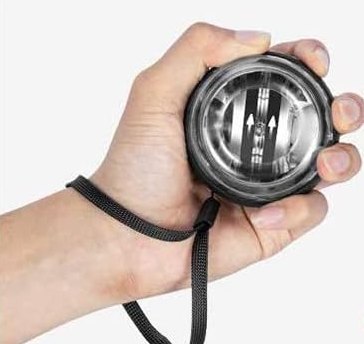
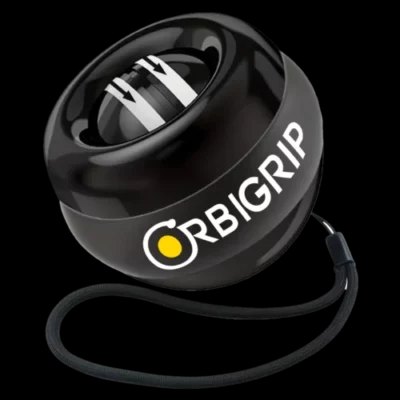
The Orbi Grip is a palm-sized gyroscopic trainer, a roughly 2.8-inch ball with a weighted rotor spinning inside a zinc alloy core. You start the rotor, then move your wrist in small circles to keep it going. The faster it spins, the harder it pushes against your hand.
That push is the whole mechanism. The gyroscope resists the change in direction your wrist keeps forcing on it, so your hand, wrist, and forearm have to work to control it. No batteries, no cords, nothing to plug in, the energy comes entirely from your own motion.
Here’s the part that separates it from older balls. The Orbi Grip is auto-start: you give it a quick flick and it catches, instead of threading and yanking a little pull cord to get going. For anyone who’s fumbled a cord-start gyro, that’s the friction that used to end the habit, gone.
It’s a strength and mobility tool, not a medical device. Think grip work, forearm endurance, and gentle warm-ups, not a fix for an injury.
The specs that matter
| Spec | Detail |
|---|---|
| Type | Auto-start gyroscopic hand, wrist, and forearm trainer |
| Size | About 2.8 inches, palm-sized |
| Core | Zinc alloy housing, weighted internal rotor |
| Top speed | Up to about 18,000 RPM (brand figure) |
| Resistance | Over 40 lbs of torque at high speed (review-site figure), set by your wrist speed |
| Power | Battery-free, cord-free, self-powered by motion |
| Price | About $69.99 single, cheaper in bundles |
| Guarantee | 90-day money-back |
Two numbers do the talking. The brand lists a top rotor speed of up to 18,000 RPM, and an independent review site measured the push-back at over 40 pounds of torque when it’s really moving. Treat both as the ceiling, not your Tuesday session, but they tell you the headroom is real.
The useful thing the product page glosses over: the resistance isn’t a setting, it’s your wrist. Spin slowly and it’s a light mobility drill. Spin hard and it becomes a genuine forearm burner. One ball covers rehab-gentle and athlete-tough, which is why a single device suits such different buyers.
What makes it stand out
The headline feature is the auto-start. Classic gyro balls make you wind a cord and rip it to spin the rotor up, and getting that right on the first few tries is the exact thing that frustrates beginners. The Orbi Grip skips the cord entirely, so you flick and go.
The second is how quiet and self-contained it is. There’s no motor, no app, no charging, and no noise beyond a soft whir, so you can spin it at a desk, on the couch, or waiting on a call without anyone noticing.
And because your wrist sets the pace, it’s genuinely gentle when you want it to be. You can keep the circles slow and the load light for stiff or arthritic hands, rather than fighting a fixed-tension spring that’s either too easy or too much.
Honestly, the travel strap feels like a small thing until you realize it’s what keeps an 18,000-RPM ball from launching across the room when your grip slips. Loop it on.
The rating, and who it suits
On its own store, the Orbi Grip carries a high rating: the brand reports a 4.9 average across about 8,258 reviews. That’s the company’s own tally rather than a large independent base, so weigh it as a brand figure.
The design points at two very different users: the lifter or racquet player warming up and building forearm endurance, and the person with stiff or arthritic hands keeping them moving. The one-dial-is-your-wrist setup is what lets it serve both, since each simply spins it at the speed that suits them.
Two honest notes, drawn from the design rather than a complaint pile: the very first spins take a little practice even with the auto-start, and the Orbi Grip is sold online only rather than off a shelf.
Pros and cons
What we liked
- Auto-starts from a flick of the wrist, no pull cord to thread and yank
- Battery-free and cord-free, powered entirely by your own motion, and quiet enough for a desk
- Resistance scales with your wrist speed, so it's gentle for rehab or brutal for forearm training on the same ball
- 90-day money-back guarantee, a long window to decide it's a habit that sticks
What we didn't
- Only available online
The online-only point deserves a straight answer. You buy the Orbi Grip direct from the official store rather than off a shelf, and the 90-day money-back guarantee is what makes trying it at home risk-free. For a gadget you’re not sure you’ll stick with, three months to change your mind is the part that turns the catch into the reassurance.
Who it’s not for
If you want a quiet, portable way to build grip and forearm strength, or to keep stiff hands moving at your own pace, the Orbi Grip is an easy yes. It’s the warm-up tool that lives in a jacket pocket.
If you specifically want the longest track record and the lowest entry price, the cord-start classic Powerball is cheaper up front, and we put the two side by side in our Orbi Grip vs Powerball comparison. For the full field of spinning wrist balls, our best gyroscopic wrist exercisers roundup ranks them, and if you liked the idea of a motion-powered ball, the Orbi Boomerang Ball review covers the brand’s throw-and-return gadget. There’s more at-home gear in our home hub.
For most people who just want stronger hands without a gym, though, the auto-start, the self-set resistance, and the 90-day guarantee make the Orbi Grip the gyro ball to start with.
Check today's Orbi Grip price