
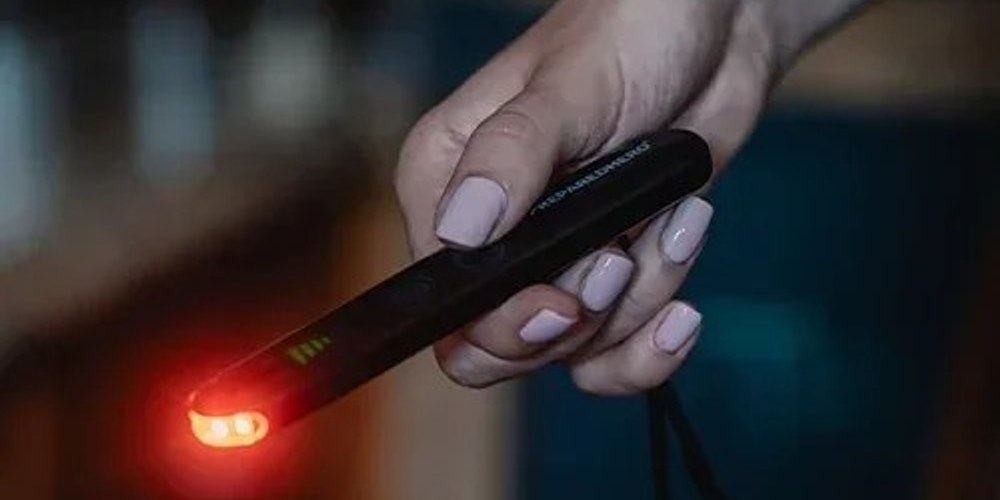
Stories of hidden cameras turning up in Airbnbs and hotel rooms stopped being urban legend a while ago, and a pocket hidden camera detector is the cheapest way to check before you settle in. The tricky part is that the category is full of look-alike gadgets and inflated promises.
Here’s the honest frame up top: no consumer detector is foolproof. RF scanners only catch cameras that are actively transmitting, optical lens finders take patience, and a powered-off wired camera can hide from both. The best answer is a good tool plus a disciplined visual sweep.
With that in mind, we compared the detectors people actually buy on the things that matter, detection modes, size, ease of use and price. Three are worth recommending, and the Hero Privacy Pen is the one we’d pocket first.
The best hidden camera detectors of 2026 at a glance
- Hero Privacy Pen: Best overall, pocket-sized ($59.99)
- JMDHKK K18: Best for a thorough multi-mode sweep (~$56)
- Sherry K68: Best analog-dial detector (~$40)
1. Hero Privacy Pen: best overall
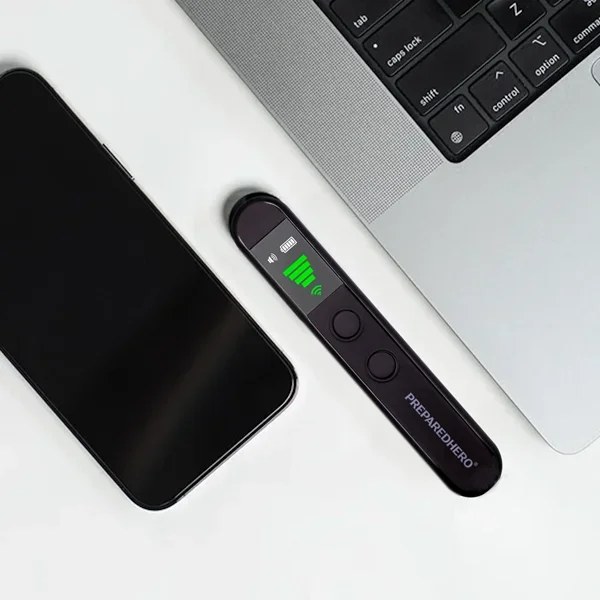
The Hero Privacy Pen earns the top slot by being the detector you’ll actually have on you, and by doing the two core jobs simply.
It’s a marker-sized pen at 5.31 inches that runs two detection modes plus a bonus. An RF sweep picks up active wireless signals from Wi-Fi cameras, bugs and trackers, and a red-LED lens finder makes a hidden camera lens glint back when you scan a room. Then it adds a trick the bigger units skip: a door and bag alarm that sounds if someone disturbs it.
The honest catch, and it’s the single most useful line here, is the 45-minute battery per USB-C charge. That’s short, but a real room sweep takes five minutes, so one charge covers several hotel rooms or a rental. And RF detection finds signals, not cameras, so a phone or router can trip it too, which is why the lens finder is the half that confirms what you found.
At $59.99 with a 30-day money-back guarantee, it’s a low-risk, pocket-sized privacy check. It won’t map every camera automatically, no $60 device does, but as a fast first-line screen it’s the best of the bunch. Our full Hero Privacy Pen review covers exactly what it catches and misses.
What we liked
- Two real detection methods in one pocket tool: RF for live signals, a red-light lens finder for cameras
- Doubles as a door and bag alarm, with a silent mode for discreet sweeps
- $59.99 with a 30-day money-back guarantee, far below professional RF detectors
- No app, no subscription, USB-C charging, genuinely pen-sized
What we didn't
- Only available online
2. JMDHKK K18
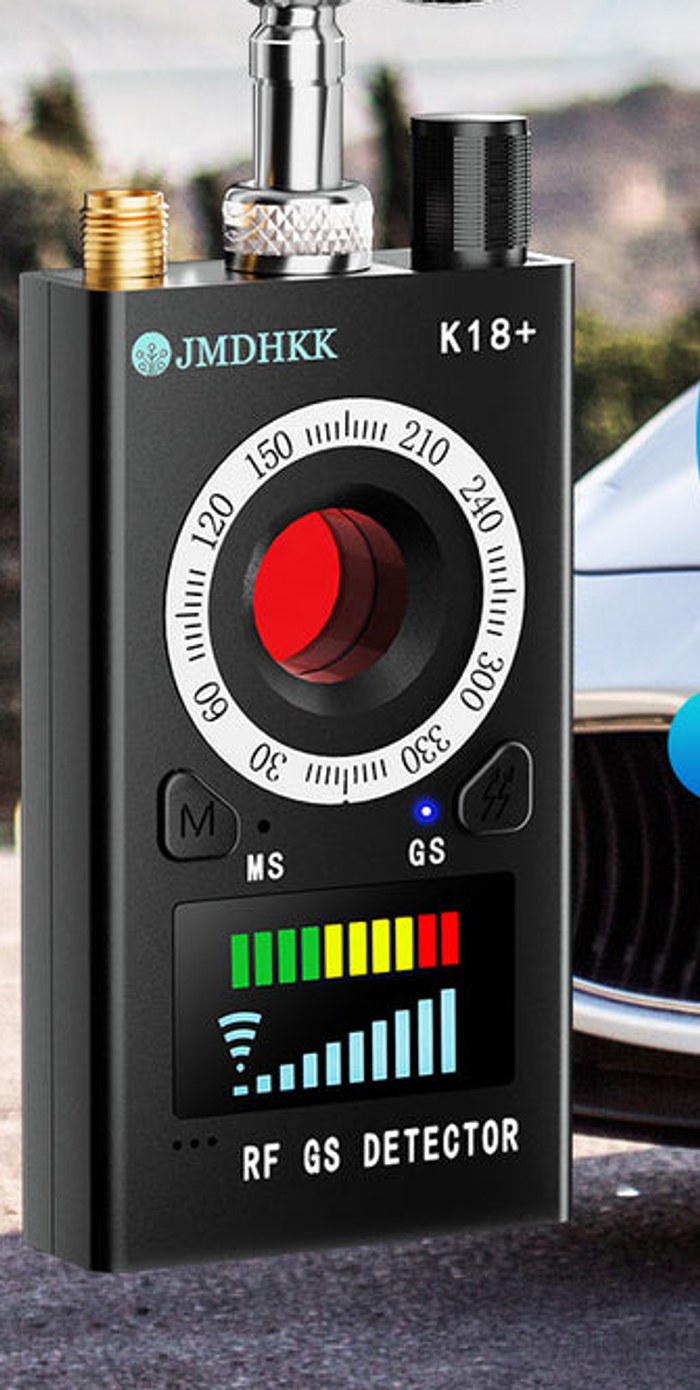
The JMDHKK K18 is the pick when you want the most thorough sweep and don’t mind a bigger, busier device. It’s one of the most established budget detectors out there, with a huge review base.
Where the pen runs two detection modes, the K18 runs four: RF and optical like the pen, plus magnetic detection and a laser-assisted lens sweep. The magnetic mode is the standout, it can flag a powered-off magnetic GPS tracker stuck under a car or in a bag, which RF alone can’t catch. It also has an adjustable signal dial for controlling sensitivity.
The trade-offs are real: it’s a handheld unit rather than a pen, there’s a learning curve, and like every RF detector it throws false positives. Aggregated ratings sit around 3.8 out of 5, praised for value and range of modes, dinged for the fiddliness. At roughly $56, it’s the choice for a careful, methodical sweep. We put it head-to-head with our top pick in Hero Privacy Pen vs JMDHKK K18.
3. Sherry K68
The Sherry K68 is the option for people who like a simple analog readout over a digital light bar. It’s a long-running 4-in-1 detector that shows up on serious buying guides, and it’s built around a classic signal-strength dial you watch as you sweep.
It covers the familiar ground, RF signal detection, a red-LED lens finder, magnetic detection and an audio mode, in a compact body that’s easy to travel with. The analog dial makes homing in on a signal source feel intuitive once you get the hang of reading it.
At around $40 it’s the value play of the three, though it asks a little more patience than the pen. If you want a no-frills, dial-driven detector and don’t need the pen’s door alarm, the K68 is a sensible, well-reviewed choice.
How to choose a hidden camera detector
Start with the truth that most listicles skip: no single method catches everything. RF finds cameras and bugs that are actively transmitting. An optical lens finder catches a lens by its reflection, even one that isn’t transmitting, but only if you scan slowly in a dark room. Magnetic mode helps only for trackers. So the real skill is combining methods with a careful visual sweep, not trusting one beep.
Then match the tool to the user. If you want something you’ll always have and can use in two minutes, a pen-sized, simple detector like our top pick wins. If you want the most thorough possible sweep and don’t mind a learning curve, a multi-mode handheld like the K18 is the better fit. Look for rechargeable power, a one-button interface, and both an RF mode and a lens finder at minimum.
Finally, do the manual part right. Darken the room and hold the red LED near your eye to scan smoke detectors, vents, alarm clocks, chargers and mirrors for that telltale glint, then run the RF sweep, then check the Wi-Fi network for unfamiliar devices. A detector is a force multiplier for your own eyes, not a substitute. The same small-insurance logic runs through our best personal safety alarm guide and, for the home itself, our Home Defender Cam vs Ring comparison.
The bottom line
The Hero Privacy Pen is the one to pocket first: a pen-sized RF and lens detector that adds a door alarm, backed by a 30-day guarantee at $59.99, the fastest no-fuss privacy check for a hotel or rental.
Step up to the JMDHKK K18 if you want the most thorough multi-mode sweep, or the Sherry K68 for a simple analog-dial detector. Whichever you choose, remember the golden rule: pair it with a slow visual sweep, because no detector at this price finds everything on its own.
Check the current Hero Privacy Pen deal