
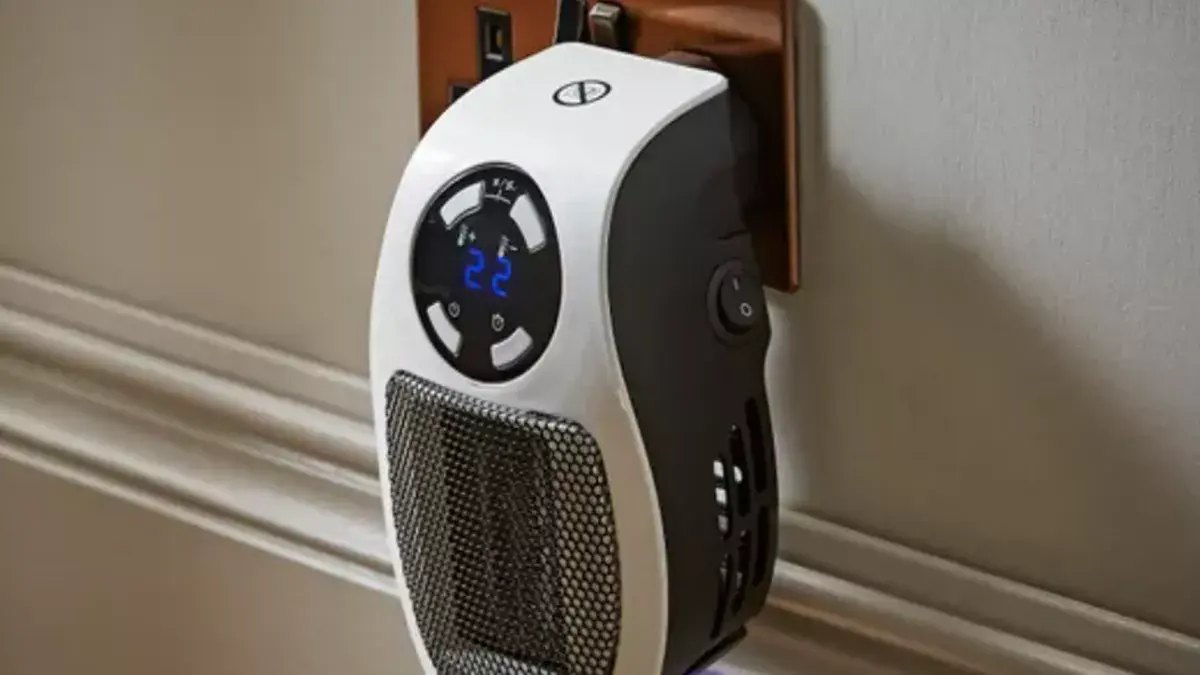
It’s the cold-bathroom problem that sells a heater like this: tile floor, bare feet, and a furnace that won’t warm one small room without heating the whole house. You don’t need another floor tower for that. You need warmth in one spot, fast.
That’s the gap the Heat Space portable heater aims at. It’s a palm-size ceramic unit that plugs straight into a wall outlet, warms the pocket of air in front of it, and moves from room to room without a cord to trip over.
For this Heat Space portable heater review, we read the maker’s spec pages, checked the current price and guarantee, cross-referenced the specs against our own Lasko comparison, and weighed how buyers actually use these plug-in heaters. We didn’t heat a room with one ourselves, so every figure below traces to Heat Space or to specs for the rivals it’s up against.
What the Heat Space portable heater actually is
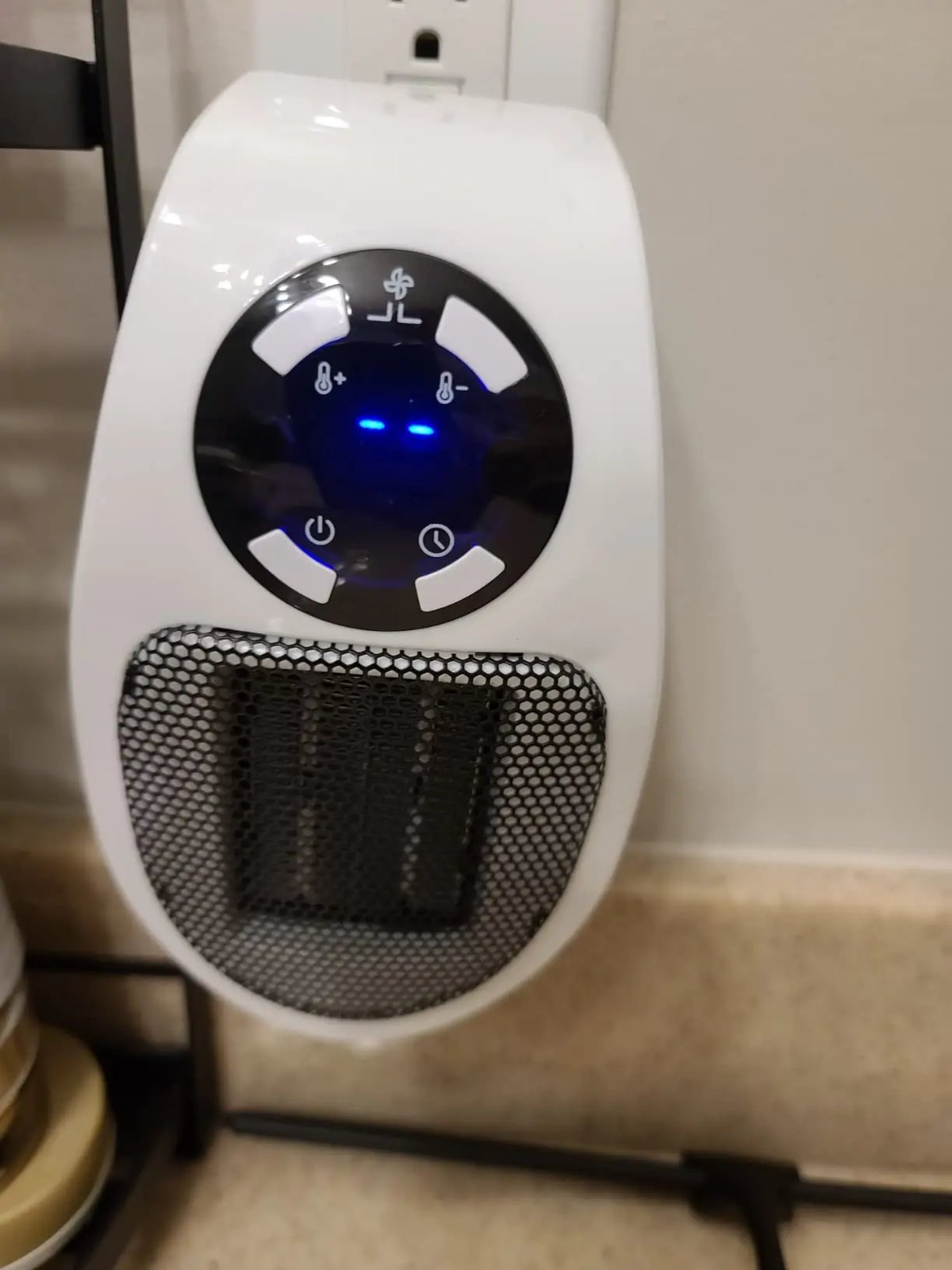
The Heat Space is a PTC ceramic plug-in heater that sits flush against a wall socket, no stand and no floor cord. Press the power pad and a ceramic element heats up, while a small fan pushes that warmth into the space right in front of it.
It’s a personal heater, and that word does a lot of work. This whole class of plug-in runs low wattage, roughly 350 to 500W (the commonly reported figure is around 445W on 110 to 120V), which is exactly why it’s cheap to run and why it’s meant for a bathroom, a desk, or a bedside instead of an open living room.
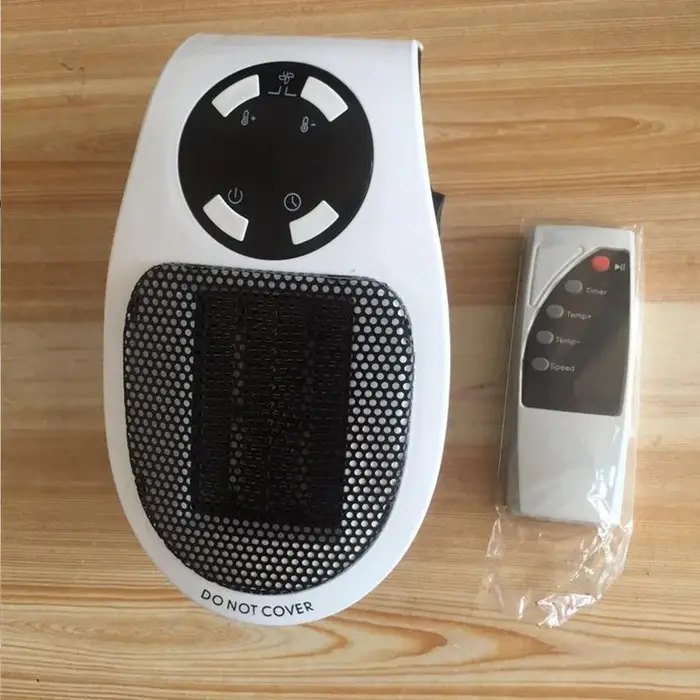
On the front you get a digital thermostat with an LED display, a fan speed control, a 1 to 12 hour timer, and a matching remote. Set a target temperature and the heater cycles itself to hold it, so it isn’t blasting at full tilt the whole time.
How it heats, and what the specs really mean
Ceramic PTC is the right tech for a small heater. It converts electricity straight to heat, warms up in under a minute, and the element self-limits its own temperature, which is part of why these units stay cool to the touch on the housing.
The thermostat is the feature that earns its keep. You set the display to a target, say 75°F, and the Heat Space holds it by switching the element on and off rather than running flat out. That’s what keeps the hourly cost down against a 1500W tower that’s always drawing its full load.
Here’s the beyond-the-brochure detail worth knowing: the display toggles between Celsius and Fahrenheit, and units often arrive reading in Celsius, so a “22” that looks wrong is really about 72°F. Flip it to Fahrenheit on day one and the temperature readout stops confusing you. The remote covers timer, temp, and fan speed from across a small room, which matters more than it sounds for a bedside setup.
Size, placement, and the move-anywhere trick
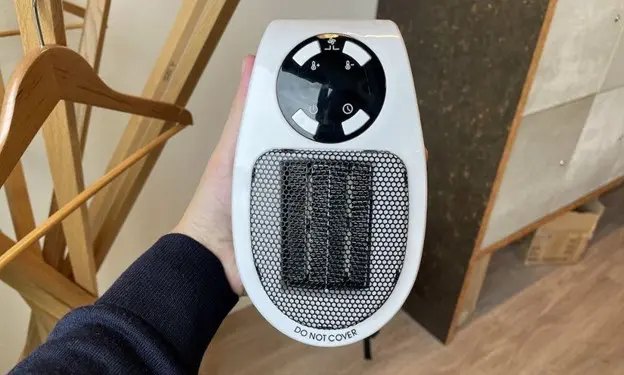
This is where the Heat Space earns its spot over a floor heater. It’s palm-size and plugs directly into the outlet, so there’s no cord pooling on the carpet and nothing standing on the floor to knock over.
That shape makes it the one you actually move. Unplug it from the bathroom after your morning routine, plug it in under the desk by nine, carry it to the bedside at night. Try that with a six-pound tower and its trailing cord, and you’ll leave the tower where it is.
The honest limit is coverage. It points heat where you plug it in, with no oscillation, so it warms your patch of air rather than sweeping a whole room. For one person in a small space, that’s the point, not a flaw.
Safety, buyer feedback, and the fine print
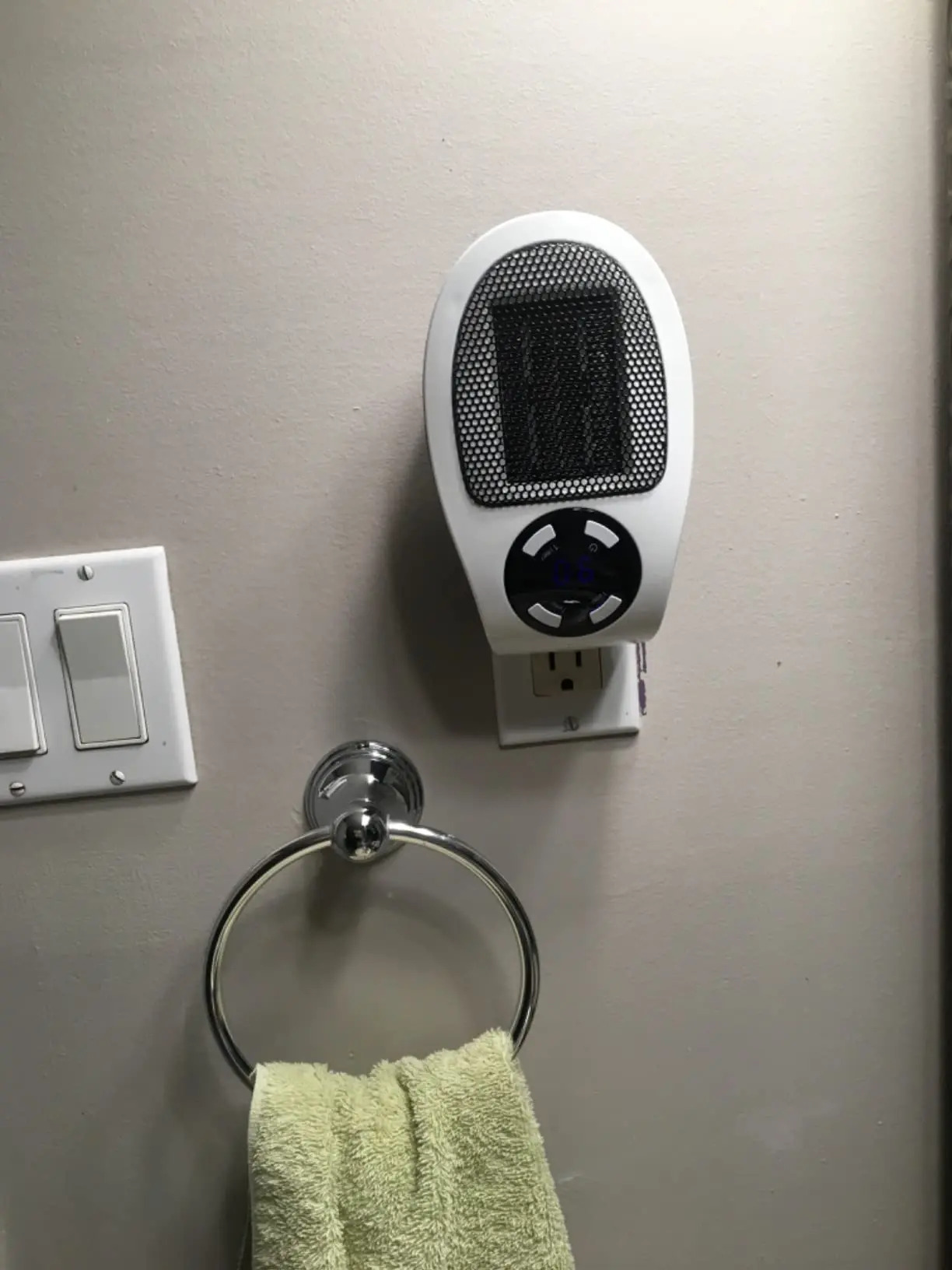
The safety basics are all here: a tip-over cutoff, overheat protection, and a cool-touch housing, plus a molded “DO NOT COVER” reminder right on the body. The pairing that keeps any small heater happy is simple and worth doing: plug it straight into a wall outlet rather than a power strip, and give the vent clear air so it breathes.
On buyer feedback, the official store leans on verified-buyer reviews and a wall of 5-star photos, which per our sourcing policy we take at the brand’s word. The recurring note from owners is the one you’d expect: fast warm-up and a low running cost in a small space, with the fair caveat that it’s a spot heater, not a furnace.
The buying terms are straightforward. The Heat Space is an online-only order from its official site at around $49.95, backed by a 30-day money-back guarantee and a one-year warranty. That return window is the reason a first cold-snap purchase is low risk.
Check today's Heat Space priceHow it compares to a Lasko tower
The fair benchmark is a full-size room heater, and the one we put it against is the Lasko CT22850. That’s a 1500W oscillating ceramic tower that lists around $69.99 and is rated to warm a room of roughly 150 to 300 square feet, sweeping heat side to side. For a cold living room, the tower is the right machine and it isn’t close.
The Heat Space plays a different position. It’s cheaper to buy, far cheaper to run, and it follows you around the house, but it heats one person’s space, not the whole floor. We lay out the full head-to-head in our Heat Space heater vs Lasko comparison.
If you want other compact heaters in the mix, our HexaHeat review covers a similar plug-in, and the HexaHeat vs Dreo matchup pits one against a well-known brand. For the warm-weather flip side of plug-in comfort gear, there’s our WunderCool light socket fan review.
Pros and cons
What we liked
- Plugs straight into the wall, so there's no floor cord, no stand, and nothing on the carpet to knock over
- Low wattage, around 445W, so it's cheap to run for a small space, well under a 1500W tower's hourly cost
- Digital thermostat, 1 to 12 hour timer, and a remote let you set a temperature and walk away
- Around $49.95 with a 30-day money-back guarantee and a one-year warranty
What we didn't
- Only available online
How to choose a personal plug-in heater
Start with the space, not the heater. If you’re warming one person in a bathroom, a home office, or at a bedside, a low-wattage plug-in like the Heat Space is sized right and cheap to run. If you’re taking the chill off a living room, you want a 1500W tower instead, and no personal heater will stand in for it.
After that, look for the three features that make a small heater livable: a thermostat so it holds a temperature instead of cooking you, a timer so it shuts off on its own, and a tip-over and overheat cutoff for peace of mind. The Heat Space has all three, which isn’t a given at this palm-size.
Finally, weigh how you’ll buy it. A plug-in from an official site with a money-back window lets you try it through a cold snap and send it back if the coverage doesn’t suit your room. That’s a softer landing than a final-sale box off a shelf.
Verdict
The Heat Space earns a 9.1. It does the one job it’s built for well: fast, low-cost personal warmth from a unit that plugs into the wall, holds a set temperature, and moves from bathroom to desk to bedside without a cord to manage.
Buy it for a small space and it’s a genuinely smart little heater. For a whole cold room, size up to a tower like the Lasko, and we spell out that call in the Heat Space heater vs Lasko comparison. At around $49.95 with a 30-day money-back guarantee, a first try through the first cold week is an easy yes.
See today's Heat Space price