
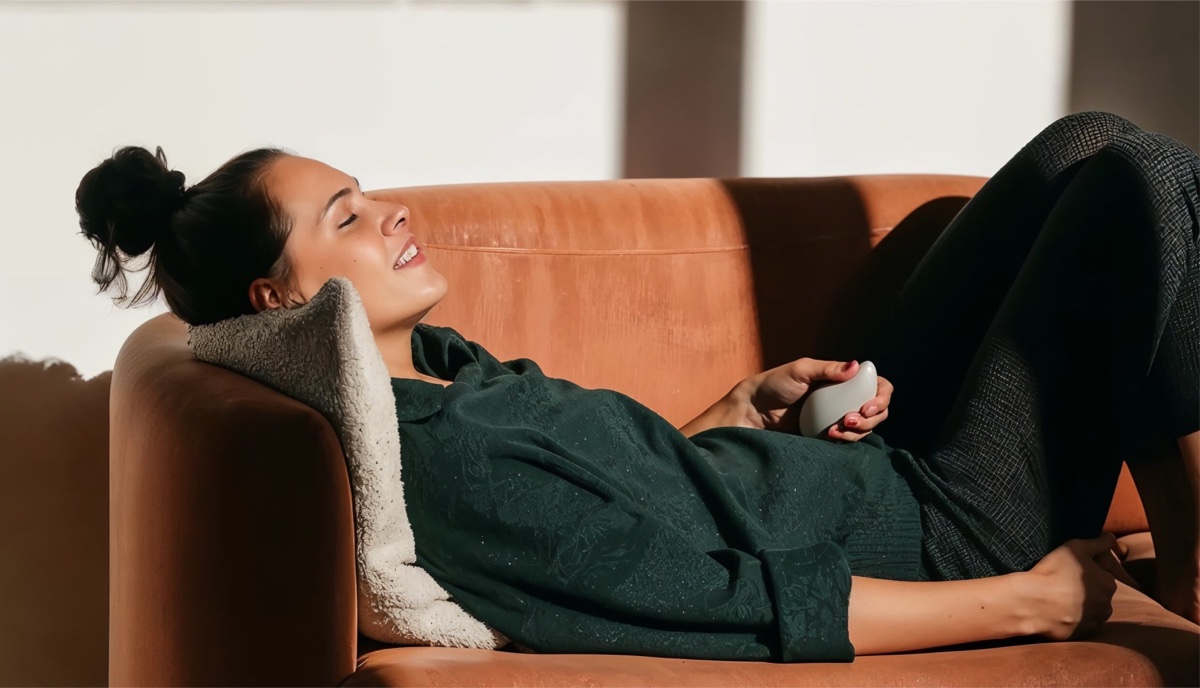
The parts of travel that wreck you aren’t in the itinerary: the white-knuckle takeoff, the 3 a.m. hotel ceiling, the wired exhaustion of a new time zone. No amount of packing cubes fixes a nervous system stuck in the red.
A few pocket-sized gadgets target exactly that, by slowing your breathing or your mind on demand. They aren’t magic and they aren’t medicine, but for a lot of travelers they’re the difference between white-knuckling a flight and actually resting.
We compared the best travel wellness gadgets on evidence, hassle, packability, and price, and split them by the moment you’d reach for each. Three earned a spot, and the Moonbird won as the do-anything all-rounder.
The best travel wellness gadgets of 2026 at a glance
- Moonbird: Best all-rounder for flight nerves and travel calm ($199)
- Pulsetto: Best hands-off pick for jet-lag stress ($269)
- Dodow: Best budget pick for hotel-room sleep ($59)
1. Moonbird: the best all-rounder for calm on the move
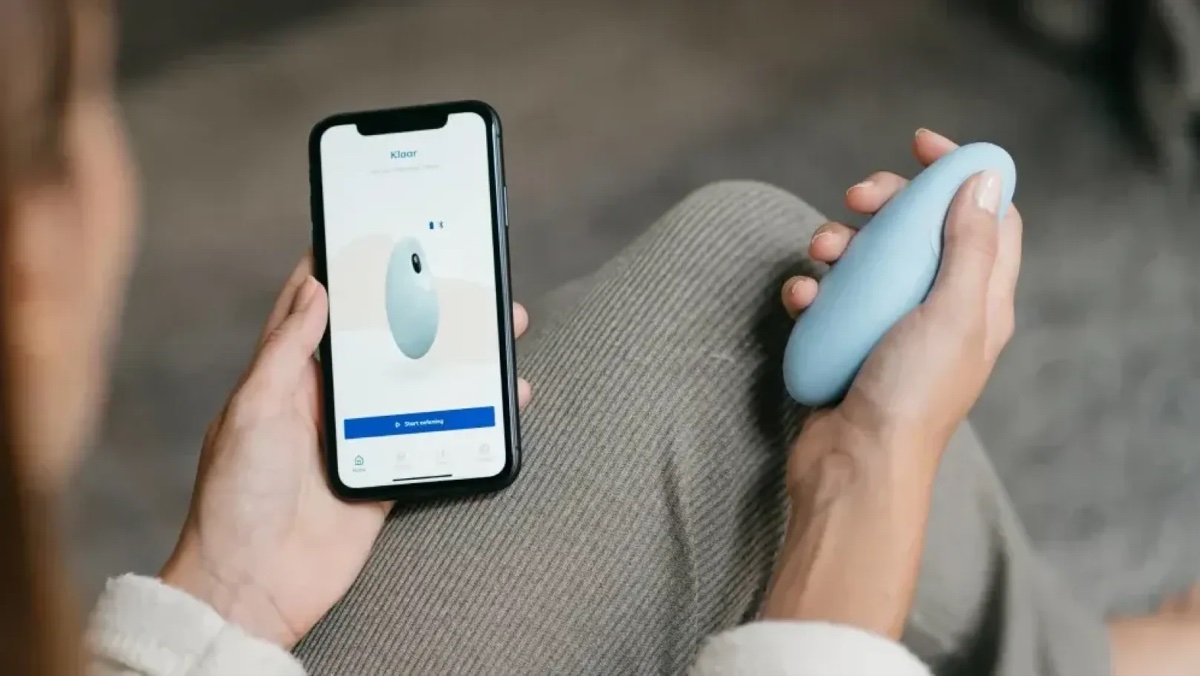
The Moonbird is the pick that travels best, because it needs nothing a plane or a hotel can’t give it. It’s a palm-sized breathing coach that physically expands and shrinks in your hand. You breathe in as it grows and out as it falls, which paces you toward roughly six breaths a minute, the rate that reliably nudges your nervous system toward calm.
The reason it wins for travel is what it doesn’t need. No screen, no gel, no electricity, and nothing to plug in mid-trip. You can use it eyes-closed at the gate or in seat 24B, and a thumb sensor shows your heart rate and HRV settling in the app when you want the feedback.
A 2025 peer-reviewed study of 36 highly stressed adults found breathing rates dropped during sessions and stayed lower afterward, and owners average 4.3 out of 5 across roughly 800 Trustpilot reviews. It comes with a travel case, runs about two hours of guided breathing per charge, and is backed by a 30-day money-back guarantee and a 2-year warranty.

Honestly, the quiet advantage is that it teaches you something: breathe with it enough and you carry the skill onto the next flight without the device. One quirk from owner reviews is that it can switch itself on in a bag, so cap a trip by tucking it in its case.
What we liked
- Works anywhere with no screen, gel, or electricity, ideal on a plane
- Paces you to about 6 breaths a minute, backed by a 2025 peer-reviewed study
- Live heart rate and HRV feedback in the app, rated 4.3/5 across ~800 reviews
- Packs in its travel case and teaches a breathing skill you keep
What we didn't
- Only available online
We go deeper on the evidence and the battery quirk in our full Moonbird review.
Check today's Moonbird price2. Pulsetto: best for hands-off jet-lag stress
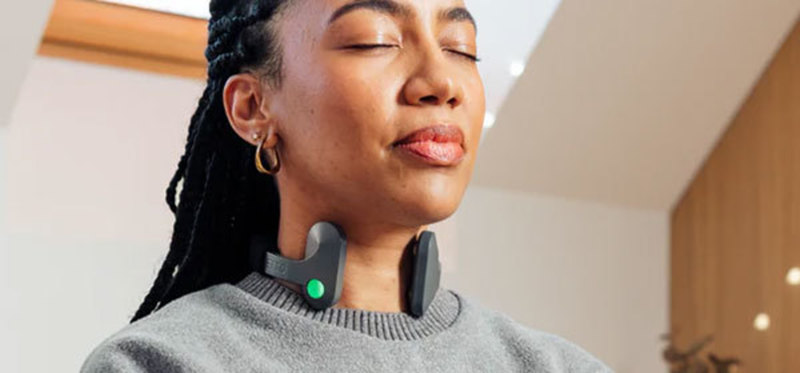
The Pulsetto is the pick for the traveler who’d rather do nothing while a device does the work. It’s a soft neck collar that stimulates the vagus nerve with a gentle electrical current, in 4 to 10-minute hands-free sessions you take sitting still.
For the wired, can’t-switch-off feeling of a new time zone, that passive route has real appeal. There’s nothing to learn: add a little conductive gel, settle the collar, pick a program, and sit back. A 2025 sham-controlled study found real sessions produced more alpha-wave activity and lower blood pressure than a dummy device, which is a genuine signal rather than a testimonial, and it averages 4.2 out of 5 across more than 3,000 Trustpilot reviews.
The trade-offs for travel are honest ones: it’s the priciest here at $269, you need the gel each session, and some guided programs sit behind an app subscription.
It’s a wellness device, not a treatment, and anyone pregnant or with a heart condition, epilepsy, or an implant should check with a doctor before vagus nerve stimulation. For the hands-off crowd, it’s the most effortless calm on this list, backed by a 30-day money-back guarantee.
We compare it head-to-head with our winner in Moonbird vs Pulsetto.
See today's Pulsetto price3. Dodow: best budget pick for hotel-room sleep
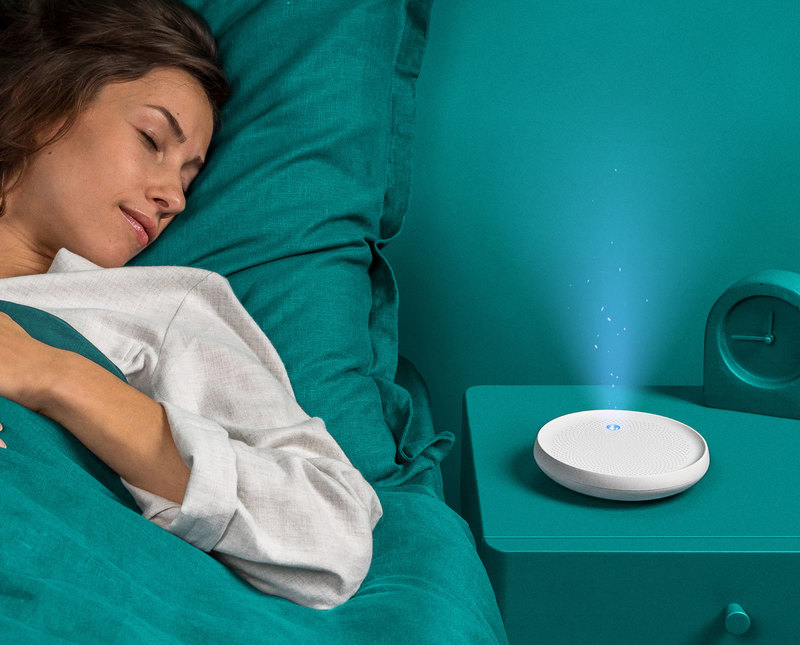
The Dodow is the cheapest way to fix the specific problem of an unfamiliar bed. It’s a bedside disc that projects a soft blue light onto the ceiling, and you breathe in as the halo grows and out as it shrinks, with the pace slowing from 11 down to 6 breaths a minute over a session.
For hotel-room sleep, its simplicity is the whole point. No app, no charging, no subscription: tap once for 8 minutes or twice for 20, and it shuts itself off. It runs on 3 AAA batteries that come in the box, so there’s nothing to plug in at a strange nightstand.
At about $59 it’s a third of the price of the others, and it’s backed by a 100-night money-back window when bought direct. Its aggregate sits around 4.0 to 4.1 out of 5 across a large review base. The one catch for travel: it needs a clear view of the ceiling, so it suits back-sleepers, and a stubborn minority say the light never becomes hypnotic. As a low-risk experiment, few are this sensible.
Our full Dodow review covers who it helps and who should skip it.
Check today's Dodow priceHow to choose a travel wellness gadget
Start with the moment you most need help, because these split cleanly.
If it’s flight nerves or general travel stress, a breathing pacer you can use anywhere is the most flexible tool, which is why the Moonbird tops the list. If it’s the wired, can’t-relax feeling of jet lag and you’d rather sit passively, a vagus nerve device like the Pulsetto fits. If it’s falling asleep in a hotel bed, the Dodow does that one job for the least money.
Then weigh three things. Packability matters on a trip: a device with a case and no consumables travels easier than one that needs gel. Evidence is worth checking, and here the honest picture is that each leans on a 2025 study plus large owner-review bases, not decades of independent trials. Hassle is the last one, since the calmest gadget is the one you’ll actually use, so match the effort level to how much you’ll do on the road.
One reminder for all three: these calm and support, they don’t cure. If stress or sleeplessness is genuinely disrupting your life, that’s a conversation for a professional, and vagus nerve stimulation deserves a doctor’s okay if you’re pregnant or have a heart condition or an implant.
The bottom line
The Moonbird is the one to pack first: it’s the most versatile calm tool here, works on a plane or in a hotel with no screen or electricity, and teaches a breathing skill you keep, all backed by a 30-day money-back guarantee.
Get the Pulsetto if you want hands-off stimulation for jet-lag stress, and the Dodow if you want the cheapest way to fall asleep in an unfamiliar bed.
For the rest of a comfortable trip, our best travel seat cushion for long flights covers the seating side, and for downtime in the hotel our Projector Go review looks at a pocket projector that turns a blank wall into a movie screen. The wider travel gear hub rounds out the kit.
See the current Moonbird deal