

A decent pair of prescription hearing aids can cost more than a used car, which is exactly why a $99 rechargeable pair gets a second look. That gap is the entire reason the Oricle hearing aid exists, and the honest question is what you actually get for the price.
The Oricle Hearing Aid is a rechargeable, in-the-ear over-the-counter device you fit yourself, no clinic visit and no audiogram required. It’s aimed at adults with mild-to-moderate hearing loss who mostly want conversations, phone calls, and the TV to come back into focus.
For this Oricle review we read the maker’s specs and return terms, checked the pricing against the OTC field, and set the marketing next to what a budget self-fit aid can honestly do, using established rivals as a reality check. The short version: for the right buyer, it’s a low-risk and genuinely useful first step back into clearer everyday hearing.
What the Oricle hearing aid actually is
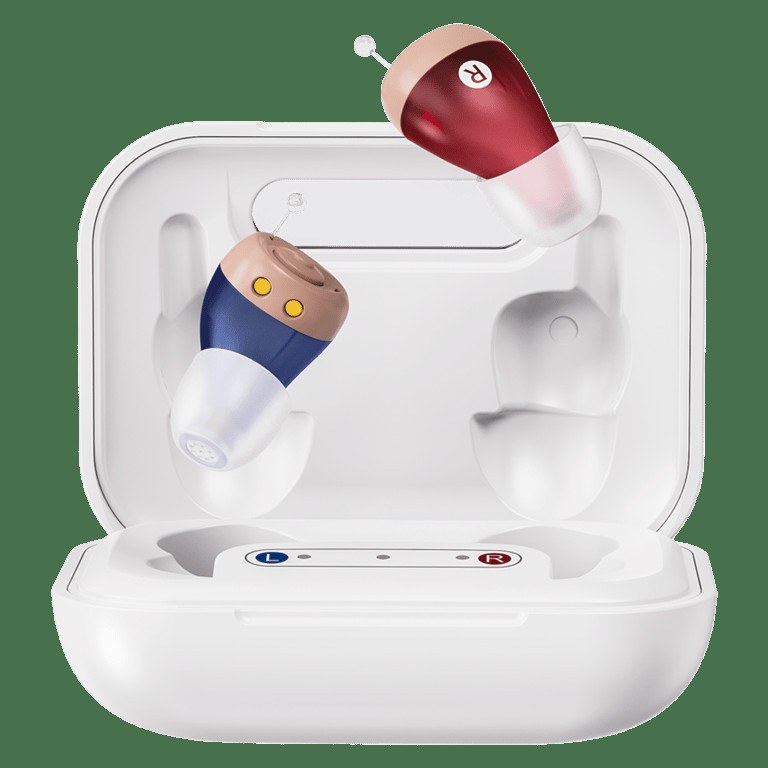
The Oricle is a rechargeable, self-fit OTC hearing device that lives at the affordable, amplifier-forward end of the category. It’s a small in-the-ear pair, marked L and R, that you tune yourself with a simple volume control rather than a clinician’s software.
The honest way to read it is as a hearing booster for everyday situations, not a programmable prescription aid. It makes speech and ambient sound louder and clearer, which is genuinely what a lot of people with early hearing loss need, without the fitting appointments or the four-figure price.
That framing sets the limits too. Because it amplifies rather than finely separating speech from noise, it shines in quiet, one-on-one settings and does less in a loud restaurant. Match it to the situations you actually struggle in and it delivers.
Features and specs
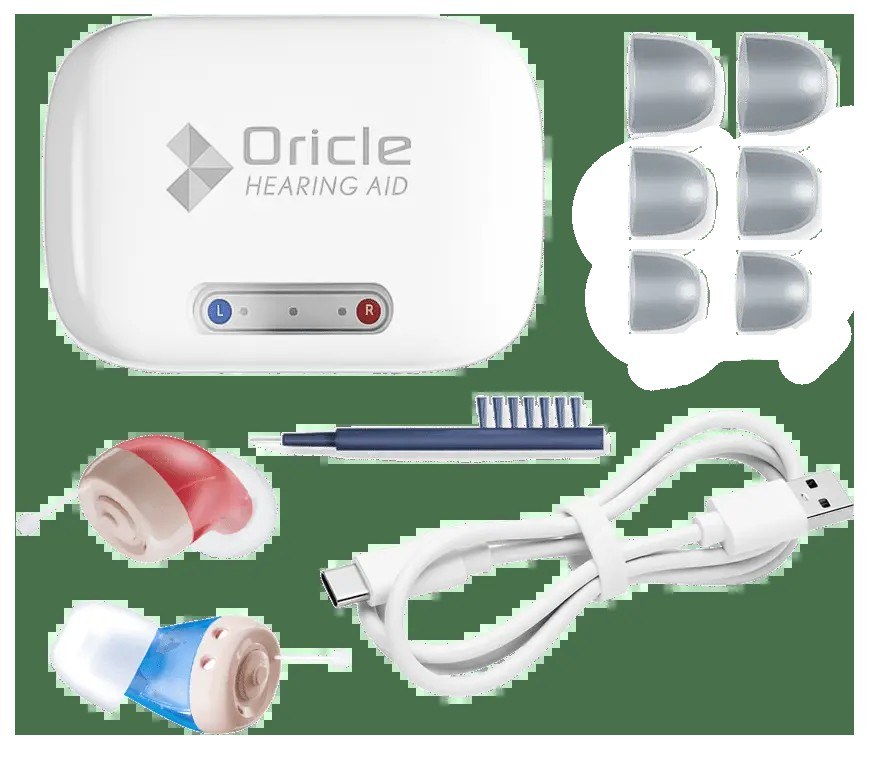
It’s a rechargeable pair with a charging case, three ear-tip sizes, and manual volume control, all in a kit that costs a fraction of a clinic fitting. There are no disposable batteries to fuss with: you drop the aids into the case the way you would wireless earbuds.
The maker lists around 20 hours of use per charge, with the case holding extra charges for a day out, plus an analog chip with background-noise reduction and a design meant to sit nearly invisibly in the ear.
| Spec | Detail (per the maker) |
|---|---|
| Type | In-the-ear OTC hearing device, self-fit |
| Power | Rechargeable, charging case + USB-C cable, no disposable batteries |
| Battery life | Around 20 hours per charge (claimed) |
| Sound | Analog amplification with background-noise reduction, manual volume |
| Fit | Three ear-tip sizes, L/R marked, discreet in-ear profile |
| In the box | Pair of aids, charging case, USB-C cable, ear tips, cleaning tool |
| Guarantee | 30-day money-back guarantee |
One honest note on the numbers: the battery-life and noise figures come from the maker rather than an independent lab, so read them as vendor claims. What’s not in question is the format, a rechargeable self-fit pair at an entry-level price.
What it’s like to actually use
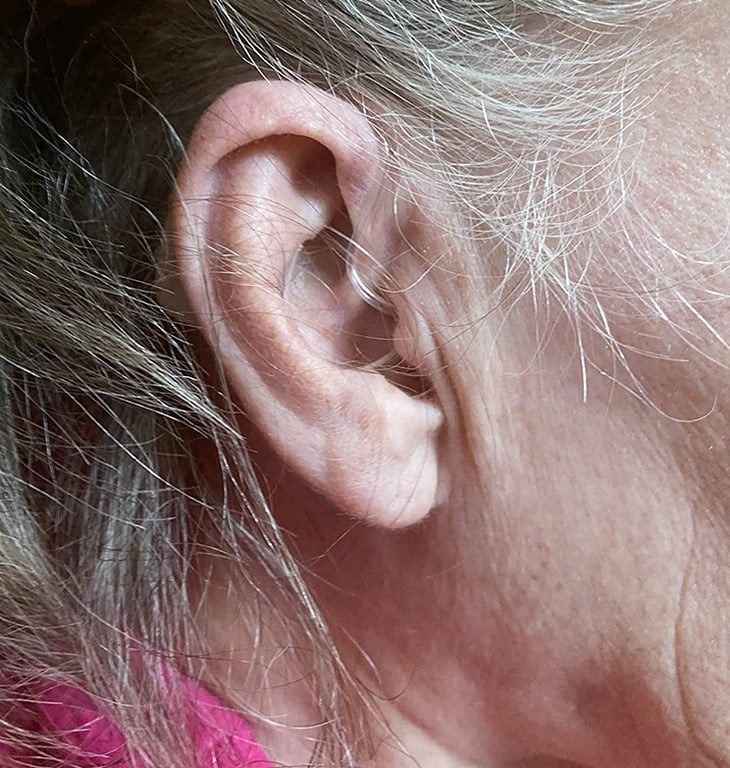
The appeal is how little standing between you and hearing better: charge the pair, pick the ear tips that seal comfortably, set the volume, and you’re going. No appointment, no waiting on a fitting, which for a lot of first-time users is the whole reason they finally try something.
Where it earns its keep is the everyday stuff: catching more of a conversation across the kitchen table, following the TV without cranking it, hearing a phone call clearly. In those calm, close-range moments it does the job people buy it for.
Set the expectation honestly and you’ll be happier with it. Start the volume low and raise it only as needed, and give your ears a few days to adjust to amplified sound. Treat it as a helpful first step, and it’s a genuinely useful one.
The price, and how it compares
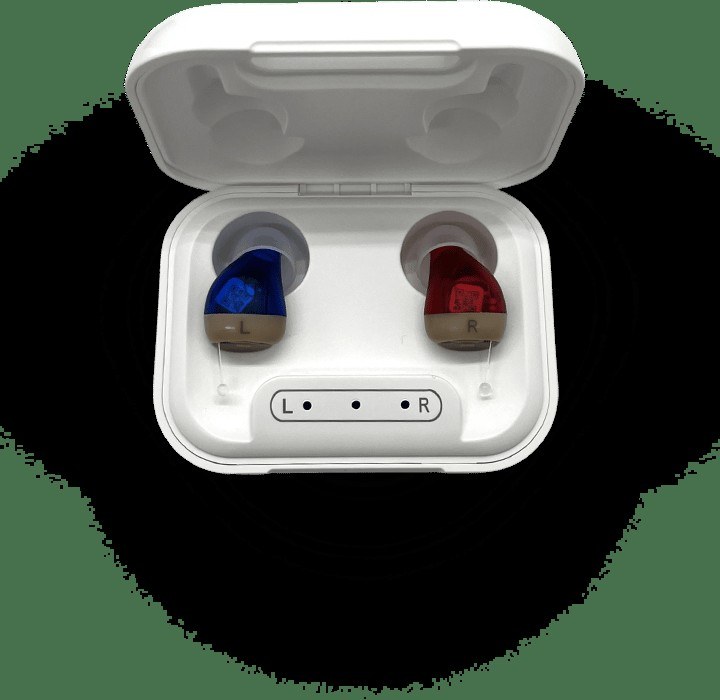
Oricle runs about $99 for the pair, with the per-unit price dropping in bundles, and it ships with a 30-day money-back guarantee. Set that against the $2,000-plus per pair that clinic-fitted hearing aids can command and the pitch is obvious: this is the low-commitment way to find out whether amplification helps you.
Oricle sells through its own site rather than a big retail-review base, so the fair yardstick is the OTC field. The closest rival is the Audien Atom 2, another ultra-budget rechargeable pair in the same tier that lists around $189, while step-up options like MDHearing (from roughly $297) add a real self-fit hearing test and more tuning. Oricle competes almost purely on price and simplicity, which is exactly what a cautious first-timer wants.
One insider detail worth knowing: the 30-day guarantee is real, but like most direct-to-consumer returns it carries a small return fee and asks that the item come back promptly and in its packaging, so keep the box until you’re sure. With that housekeeping handled, you can try it at home before you commit.
Check today's Oricle priceIs it a real hearing aid, and is it FDA approved?
Oricle is a real over-the-counter hearing device, and it’s FDA-registered, which is not the same thing as FDA cleared or approved. In 2022 the FDA created the OTC hearing aid category for adults with perceived mild-to-moderate loss, letting you buy a self-fit device without an exam or prescription. Oricle sits squarely in that lane.
So it’s a legitimate OTC aid, best understood as an amplifier-class device rather than a programmable prescription one. That’s the useful, honest distinction most sales pages blur, and it’s the difference between a happy buyer and a disappointed one.
A quick safety note, in the same spirit: keep the volume comfortable rather than maxed to protect the hearing you have, and if your loss is sudden, one-sided, severe, or comes with ear pain, see an audiologist or doctor first. Think of Oricle as a partner for everyday listening, not a replacement for a professional exam when something feels off.
Pros and cons
What we liked
- Rechargeable pair with a charging case and USB-C, so there are no disposable batteries to buy or fiddle with
- Self-fit at home in minutes, with three ear-tip sizes and simple volume control, no clinic appointment
- About $99 for the pair versus $2,000-plus for clinic-fitted aids, an easy entry point back into hearing
- A 30-day money-back guarantee, so you can test it in your own home before you commit
What we didn't
- Only available online
Who it’s for
If you’ve noticed conversations and the TV getting harder to follow and you want to try amplification without spending thousands, the Oricle is a smart, low-risk first step: rechargeable, self-fit, and cheap enough to just try. It’s happiest in quiet, close-range settings, which is where early hearing loss bites most.
Skip it, or step up, if you have severe loss or you spend your days in loud, crowded rooms where a finely tuned device earns its keep. There, a pricier programmable aid or a professional fitting is the right call.
For the wider field, our roundup of the best OTC hearing aids under $150 sorts the budget options, our Audien Atom 2 review covers the closest rival, and Audien Atom 2 vs Eargo weighs cheap-and-simple against premium-and-tuned.
Verdict
The Oricle hearing aid earns a 9.0. Judged as what it is, a rechargeable, self-fit OTC pair that brings everyday conversations and the TV back into focus for well under a hundred dollars, it delivers exactly where a first-time buyer needs help most.
Charge it, fit it, set the volume, and a quiet chat or a favorite show is easier to follow again, with a 30-day money-back guarantee standing behind the whole thing so you can decide at home before you commit.
See today's Oricle price