
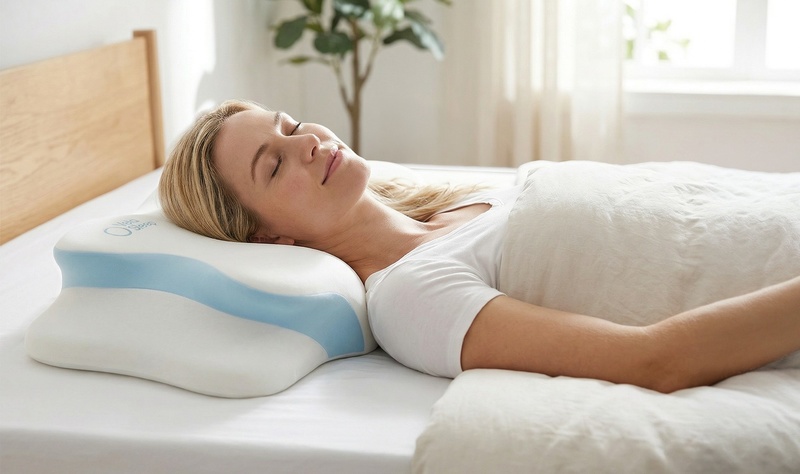
A stiff, cranky neck first thing in the morning is usually the pillow’s fault, not yours. Flat pillows let your head sag out of line all night, and you feel it the moment you sit up.
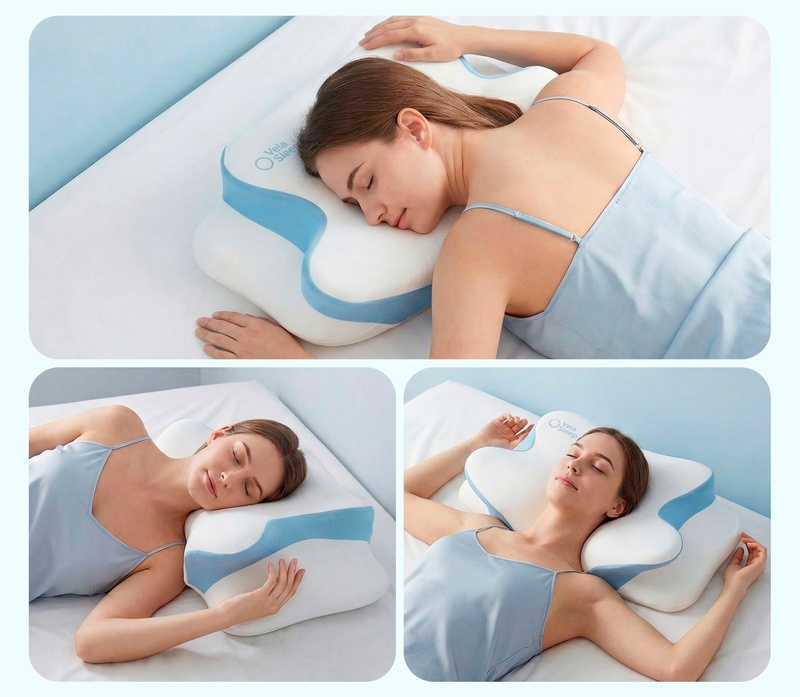
The VelaSleep is built around fixing that one problem. It’s a memory foam contour pillow with a four-zone shape the brand calls Cervical Decompression Design, meant to hold your head, neck and shoulders in a neutral line whether you sleep on your back, side or stomach.
For this VelaSleep review we read the brand’s published specs, the foam and cover construction, the return terms, and the buyer feedback on its own store and third-party sites. We didn’t sleep on it in a lab, so every number below is sourced to VelaSleep or to owners.
The short version: it’s a well-shaped, honestly comfortable contour pillow with one thing worth knowing about the trial wording. Here’s the detail.
What the VelaSleep pillow is
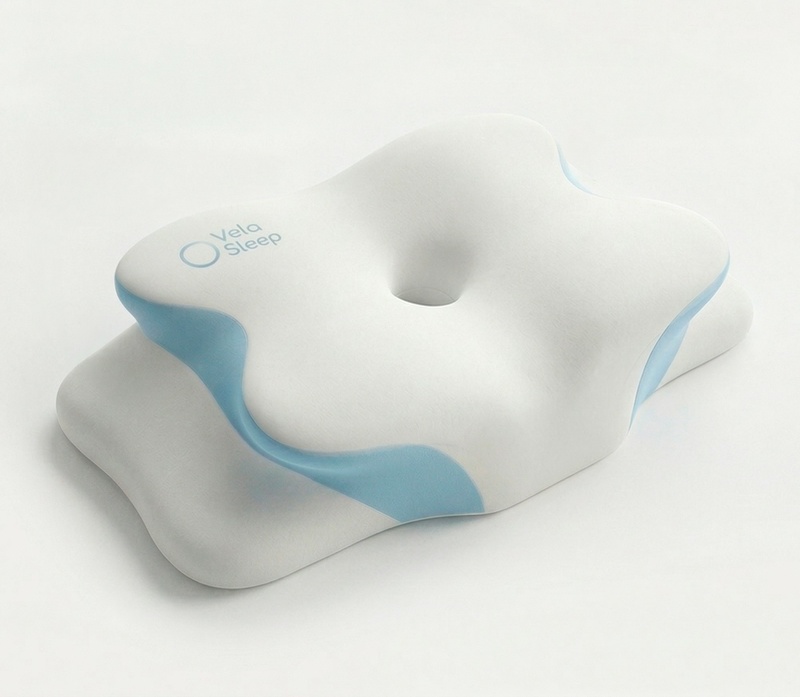
The VelaSleep is a single block of molded memory foam, roughly 23.6 by 15.7 by 5.5 inches and just under 2 pounds. Instead of a flat rectangle, its top surface is carved into four working areas rather than one even pad.
The foam is a high-density, slow-rebound memory foam, so it gives under the weight of your head and recovers when you get up. Over it goes a removable knit cover, listed as 95% polyester and 5% spandex, that’s machine-washable and carries an OEKO-TEX certification for tested materials.
It’s a fixed-shape pillow. You don’t add or remove fill, so the loft you see is the loft you sleep on.
The four zones, and what each one does
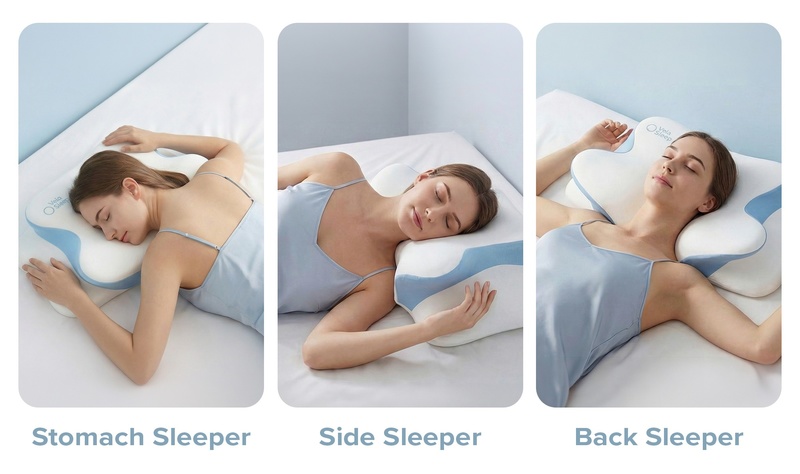
The whole pitch lives in that sculpted top. The center dips into a relief cavity so your head settles without tipping your chin up or down. Just above it, a raised cervical arc lifts the base of your neck, the spot a flat pillow leaves unsupported.
The side zones sit taller to fill the bigger gap between ear and mattress when you roll onto your side, so your neck stays level instead of bending toward the bed. Lower down, shallow arm cut-outs give your shoulder and forearm a place to go, which is the detail most contour pillows skip.
Here’s what the sales page glosses over: that shape is a commitment. It nudges you toward neutral alignment, which is exactly what you want if a soft flat pillow has been letting your head sag, and less what you want if you already sleep happily on something thin.
How the memory foam feels
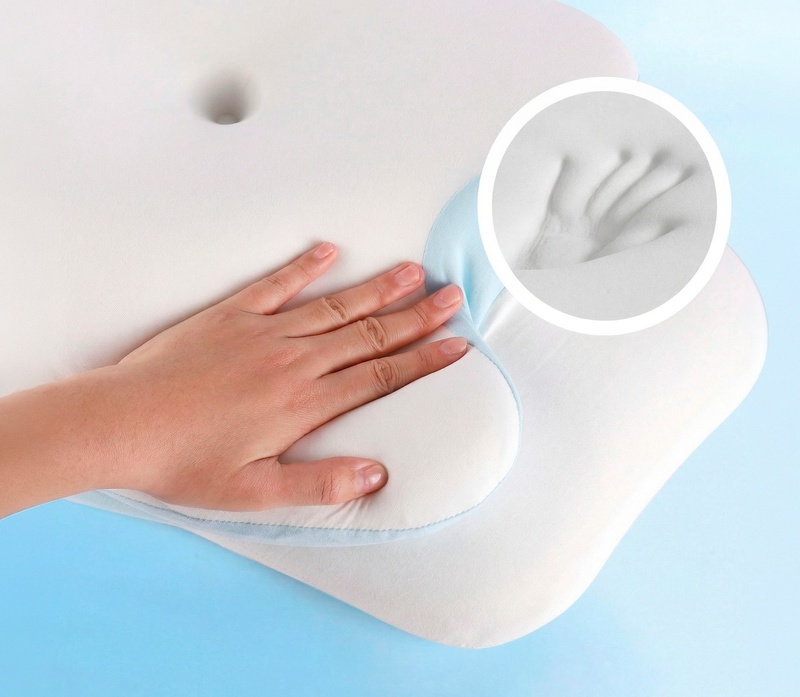
Press a hand into it and the foam sinks slowly, then rises back over a second or two. That slow rebound is what lets it mold to your head and neck rather than pushing back like a spring.
If you’ve only ever used fluffy pillows, the first two or three nights feel firm and unfamiliar. That’s normal for any molded foam. The people who give up in week one are usually the ones who expected it to feel like a cloud on night one, and it isn’t trying to.
At about 5.5 inches at the peak, the loft runs medium-high. That suits average and broad-framed sleepers well. If you’re very petite or you sleep mostly on your stomach, keep the trial in mind, because it’s on the taller side.
What owners say
On its own store, the VelaSleep carries a 4.5 out of 5 rating across 796 reviews, with the brand reporting that 94% of buyers noted less neck discomfort within a week. Those figures are manufacturer-hosted rather than from an independent platform, so weigh them as the brand’s own numbers, and read the detailed comments over the one-line raves.
“The contour design supports my neck from both angles, and I don't have to constantly readjust.”
“The quality is excellent, and it's noticeably improved my comfort and sleep quality.”
The recurring, specific theme is what you’d hope for: a neck that feels looser in the morning after the first week or two, most often from back and side sleepers. The honest counterweight is the loft. A minority of petite and stomach sleepers find it too tall, which is the same trade-off every high-contour pillow makes.
The one thing to check: the trial wording

VelaSleep backs the pillow with a 30-night trial and a one-year warranty, and it’s worth reading the wording precisely. The landing page frames it as “sleep on it for 30 nights,” which is the real, usable home trial, longer than the sealed-box windows some rivals offer.
The catch is small but fair to flag: review roundups often shorten it to a “30-day money-back guarantee,” and the brand’s satisfaction stats aren’t broken down by method. So take the trial at its plain meaning, a month of actual nights to decide, and keep your receipt and packaging until you’re sure.
For the money, that month of real sleep is the safety net that makes a contour pillow worth trying at all, since these always feel strange before they feel right.
Pros and cons
What we liked
- Four sculpted zones (neck arc, head cavity, taller side zones, arm cut-outs) that hold your head and neck in line on your back, side or stomach
- High-density slow-rebound memory foam that molds to you and holds its shape instead of going flat
- Removable, machine-washable OEKO-TEX certified knit cover
- A genuine 30-night home trial plus a one-year warranty, with bundle pricing down to about $36 a pillow
What we didn't
- Only available online
Verdict
The VelaSleep earns a strong recommendation as a contour pillow that actually thinks about the whole upper body, not just the back of your head. The four-zone shape, the slow-rebound foam and the washable OEKO-TEX cover are a genuinely good package at $59.99, and cheaper per pillow in the bundles.
It’s the right buy if you wake with a stiff neck and want firmer, sculpted support across any sleep position. The one thing to know going in is the loft: it runs medium-high, so very petite and dedicated stomach sleepers should lean on that 30-night trial.
Want to see how it stacks up against the other big contour name? Our VelaSleep vs Derila comparison breaks it down, and it tops our best 4-zone contour pillow for neck pain roundup. Our best butterfly pillow for neck pain guide and best sleep gadgets roundup cover the rest of the setup. There’s more in our home hub.
Check today's VelaSleep price