
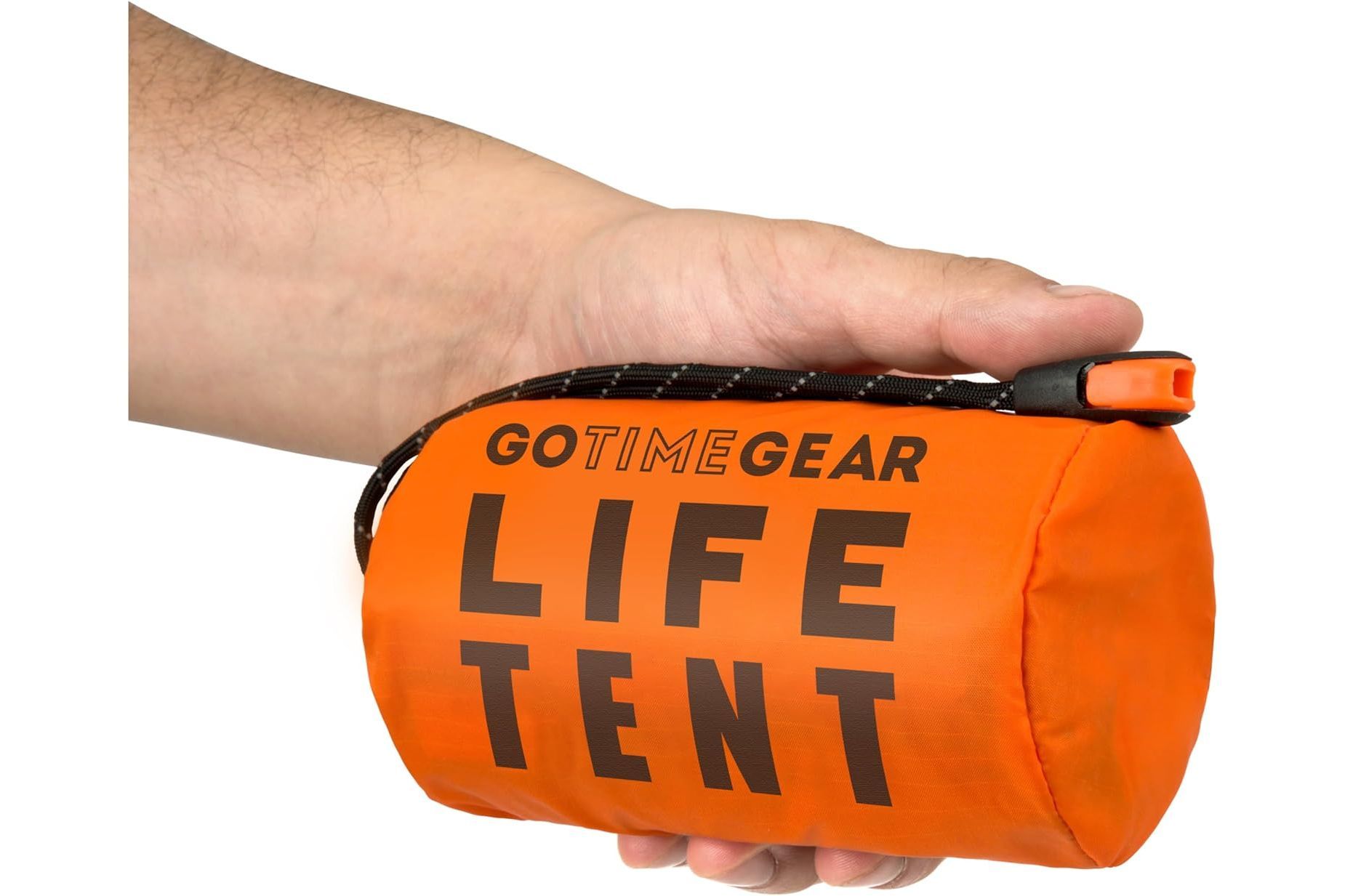
A LifeTent vs SOL Emergency Bivvy decision really comes down to one question: are you sheltering two people, or packing the lightest solo backup you can? Both are reflective emergency shelters that trap about 90% of your body heat. They just do it in very different shapes.
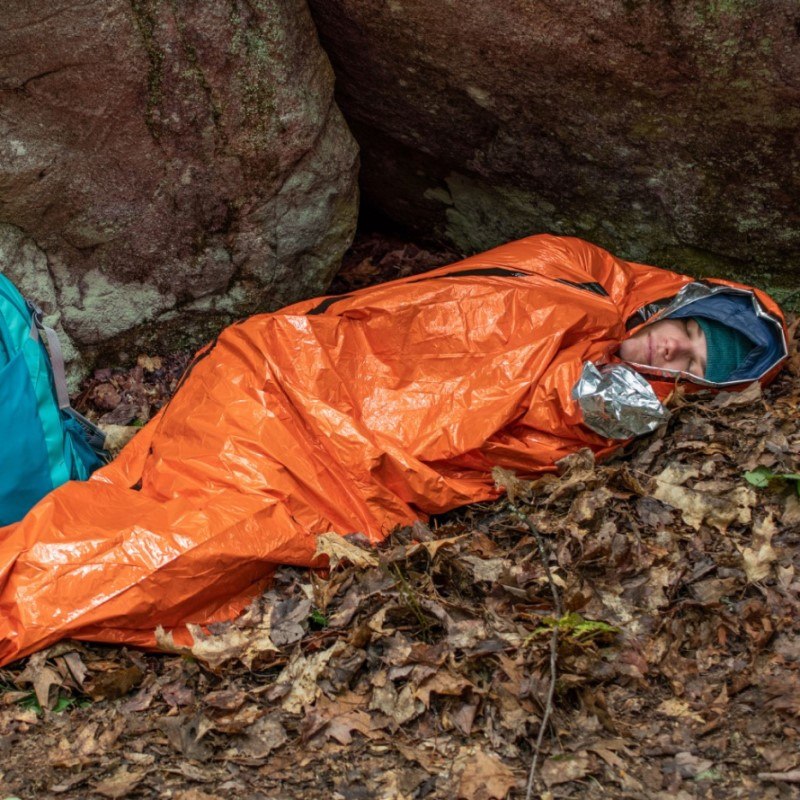
The LifeTent is a two-person tube tent. You string it between two trees or trekking poles, weigh the edges down, and crawl in with room to sit up and share warmth. The SOL Emergency Bivvy is a one-person sleeping bag you simply climb inside, no setup at all.
We compared them on warmth, weight, packed size, what’s actually in the box, and price. One is the lighter grab-and-go for a solo hiker. The other is the more complete shelter for a car kit or a family bug-out bag. Here’s the split, round by round.
LifeTent vs SOL Emergency Bivvy at a glance
| Feature | LifeTent | SOL Emergency Bivvy |
|---|---|---|
| What it is | Two-person tube tent (shelter) | One-person bivvy (sleeping bag) |
| Capacity | Room for 2 | 1 (XL version fits 2) |
| Heat reflection | About 90% of body heat | About 90% of body heat |
| Material | Coated polyethylene, reflective | Metalized-polyethylene Heatsheets |
| Weight | 8.7 oz | Under 4 oz |
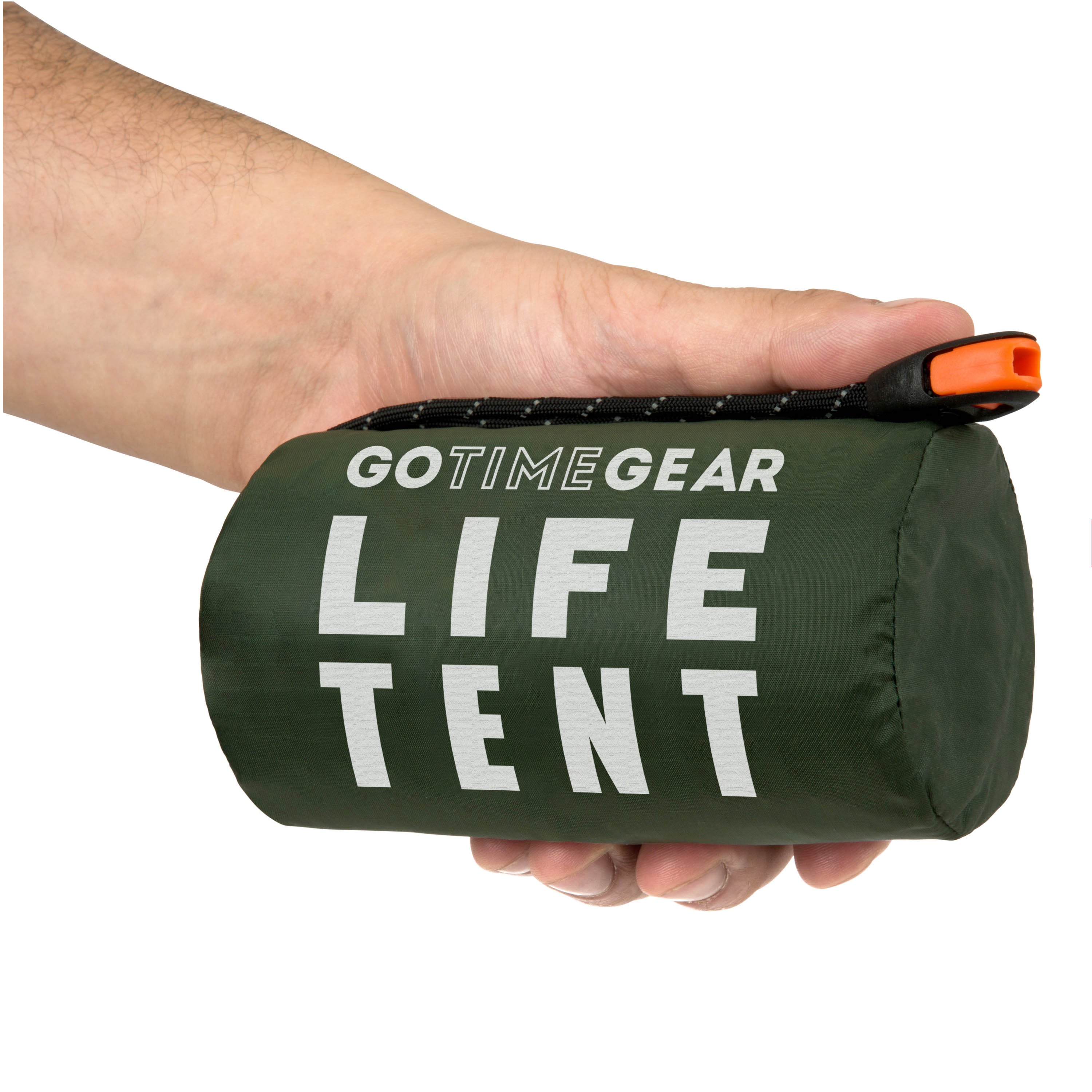
| Packed size | About a soda can (5.25 x 3.25 in) | Smaller, about 3 x 1.5 in |
| Setup | String between two anchors | None, climb in |
| What's included | 120dB whistle + 20 ft paracord | Whistle + tinder cord on that version |
| Price | About $35 direct | About $25 with whistle + tinder |
| Our score | 9.1 / 10 | 8.7 / 10 |
Two shapes of the same idea: trap your heat
Start with what they share, because it’s the whole point of both. Each one is made from a thin, reflective sheet that bounces your own body heat back at you, and both makers put that figure at about 90%. In a cold, wet night out, slowing that heat loss is what keeps a bad situation from turning dangerous.
The LifeTent does it as a tube tent: an 8-by-5-foot orange shelter you pitch overhead, with reflective walls all around two people. You sit up, keep gear dry, and wait out the weather with a partner.
The SOL Emergency Bivvy does it as a sleeping bag. It’s a sealed, metalized-polyethylene sack you slide into, so there’s nothing to rig and no anchors to find. One person, zipped in their own heat.
So the tools aren’t really doing the same job. The LifeTent is a small shelter for two. The SOL is a solo cocoon. Which one fits your kit decides most of this.
Buyers back both. The LifeTent averages 4.6 stars across roughly 10,000 Amazon ratings, and the SOL Emergency Bivvy holds 4.7 stars at REI, so you’re choosing between two well-liked shelters, not a safe bet and a gamble.
Round by round
Form factor: two-person shelter vs solo bag
Round winner: LifeTentThis is where the LifeTent makes its strongest case. It’s a genuine two-person tube tent, so there’s headroom to sit up, tend to an injured partner, keep a pack dry, and share body heat in the same space. For a family car kit or a bug-out bag meant to cover more than one person, that room matters.
The SOL Emergency Bivvy is a one-person bag. It’s brilliant at what it does, but two people means two bivvies, and there’s no sitting up or sheltering gear. The XL version fits two at a squeeze, though then you’ve given up its ultralight edge.
For covering two people in one shelter, the LifeTent takes this round.
Warmth and weather protection
Round result: TieCall this one honestly: it’s a wash on the number that matters. Both reflect about 90% of your body heat, the spec each brand leads with, and that reflection is the mechanism keeping you off the edge of hypothermia in either one.
The SOL’s sealed, welded seams make it a tight, windproof cocoon. The LifeTent’s tube shape sheds rain overhead and wraps reflective walls around two people. Different geometry, same core job, done well by both.
Neither pulls ahead on pure heat retention, so this round is a tie.
Weight and packed size
Round winner: SOL Emergency BivvyHere the solo bag wins, cleanly. The SOL Emergency Bivvy weighs under 4 ounces and packs down to roughly 3 by 1.5 inches, small enough to vanish into a jacket pocket and never think about until you need it.
The LifeTent is still genuinely packable at 8.7 ounces and soda-can size, which is tiny for a two-person shelter. But it’s covering two people, so it’s carrying more material, and a solo ultralight hiker counting every ounce will feel the difference.
For the lightest, smallest single-person backup, the SOL takes this one.
What's in the box, and value
Round winner: LifeTent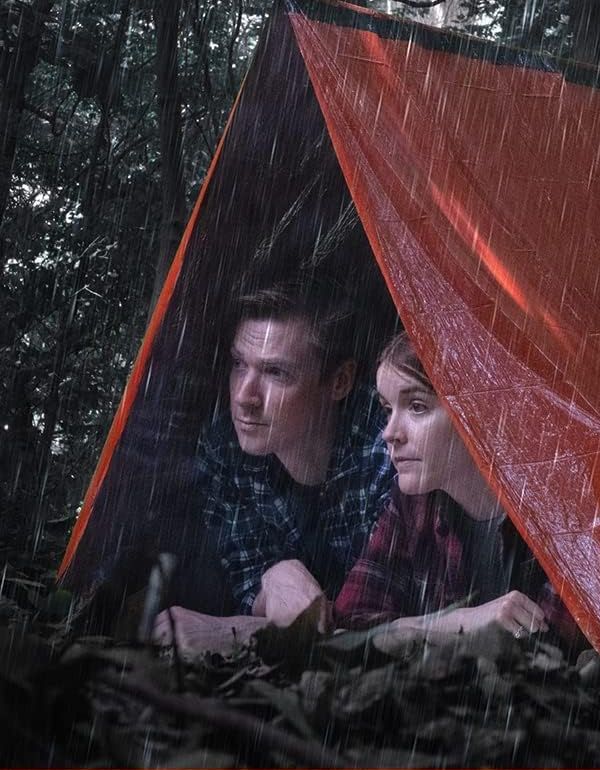
This is the round that seals it for a real emergency kit. The LifeTent comes with a 120-decibel rescue whistle to signal help and 20 feet of 550-pound paracord built into the drawstring, so the shelter and the two tools you’d reach for next are one purchase.
The SOL bivvy’s whistle-and-tinder version adds a whistle and cord too, and it’s a little cheaper at around $25. But you’re getting a solo bag, where the LifeTent is a two-person shelter with the same kind of extras, for around $35.
For a car or household kit measured by what it covers, the LifeTent gives you more shelter and more tools per dollar, so it wins here.
The honest scorecard
What we liked
- LifeTent: a two-person tube tent with room to sit up and shelter a partner and gear
- LifeTent: bundles a 120-decibel rescue whistle and 20 feet of 550-pound paracord
- SOL Emergency Bivvy: under 4 ounces and pocket-sized, the lighter solo backup
- SOL Emergency Bivvy: sealed, welded seams make a tight windproof cocoon
What we didn't
- Only available online
Who should buy which
Choose the LifeTent if your kit has to cover two people, or lives in the car or the front closet for a family. You get a real shelter with headroom, a rescue whistle, and paracord in one soda-can bundle, and it reflects 90% of your body heat while you wait out the weather. For most household and vehicle emergency kits, it’s the more complete buy and the one we’d pack first.
Choose the SOL Emergency Bivvy if you’re a solo hiker or minimalist who wants the lightest possible backup. At under four ounces it disappears into a pocket, and it’s a proven, welded-seam cocoon for one.
Either way you’re carrying real protection against a cold night out. If you’re building the rest of that safety layer, our best fire blankets for home 2026 roundup covers the kitchen, a loud personal safety alarm rides on your keys, and for the outdoors our Dr. Rover Tick Off review handles ticks. Browse the rest in the home hub.
Check today's LifeTent price