
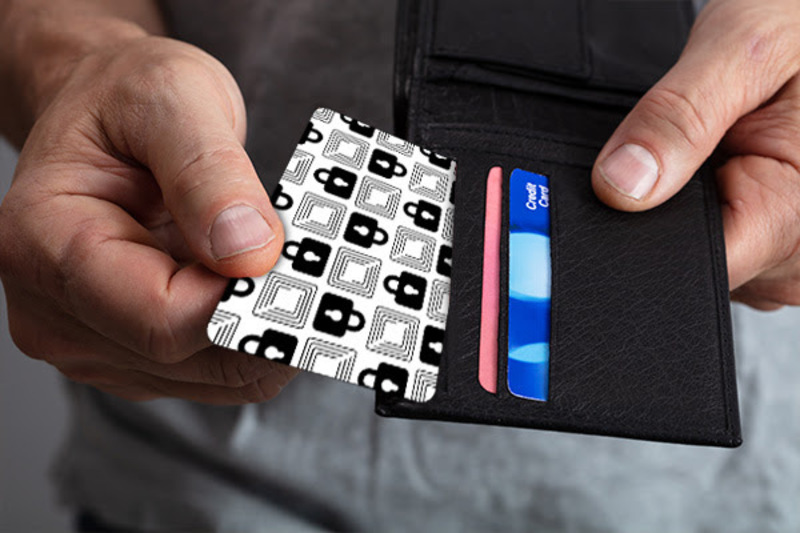
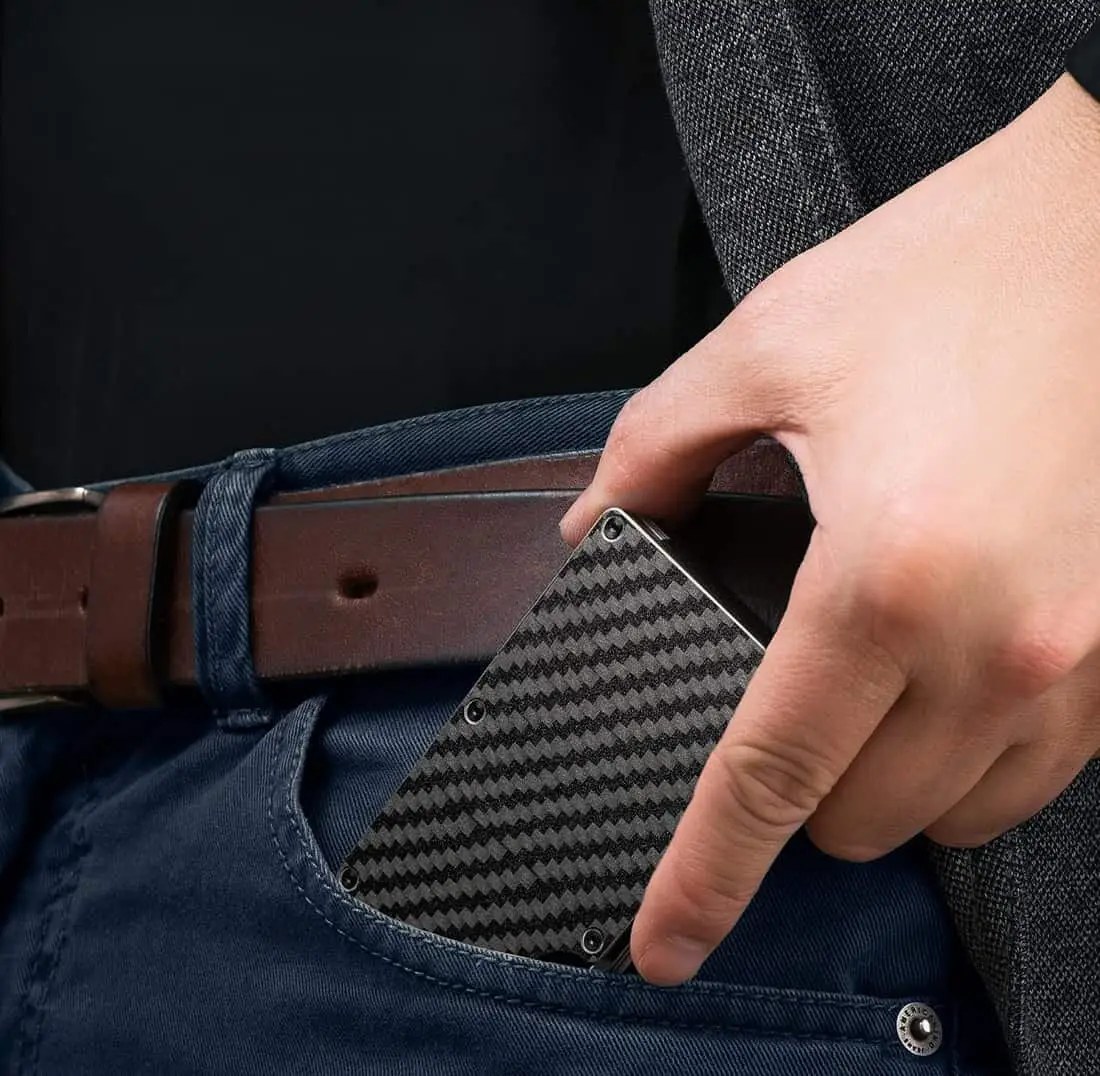
The real difference between Wallet Defender and CardShield isn’t how they block RFID, it’s whether you have to give up your wallet to do it. Both aim to stop contactless skimming of your cards. One does it as a slim add-on; the other does it by replacing your wallet entirely.
The Wallet Defender is a single passive card you slip into any wallet, where it shields the cards around it. It costs about $45 and needs no battery or setup.
CardShield is a carbon-fiber wallet that holds up to 22 cards and blocks RFID for the ones inside it. It’s slim and well-made, but it means switching wallets.
For this comparison we read both products’ listings, how each blocks RFID, the pricing, and the buyer feedback. We didn’t run a skimmer against them ourselves, so every claim below traces to the makers or to independent reporting.
One honest note up front, because it changes how you should shop: real-world RFID card theft is rare and largely theoretical. Consumer groups like AARP and security outlets like CSO Online have long pointed out there are essentially no documented cases, and chip cards already use one-time codes. So treat both of these as cheap peace of mind, not a fix for a crisis. Within that frame, here’s which one is the smarter buy.
Wallet Defender vs CardShield at a glance
| Feature | Wallet Defender | CardShield |
|---|---|---|
| Type | Insert card | Carbon-fiber wallet |
| What it protects | Every card in your wallet | Cards inside the CardShield |
| Keep your wallet | Yes, works with any wallet | No, it replaces your wallet |
| Power | Passive, no battery or setup | Passive carbon-fiber shielding |
| Price | ~$45 single, cheaper in multipacks | Whole new wallet |
| Guarantee | 30-day money-back | 30-day money-back |
| Our score | 9.2 / 10 | 8.6 / 10 |
What each one actually is
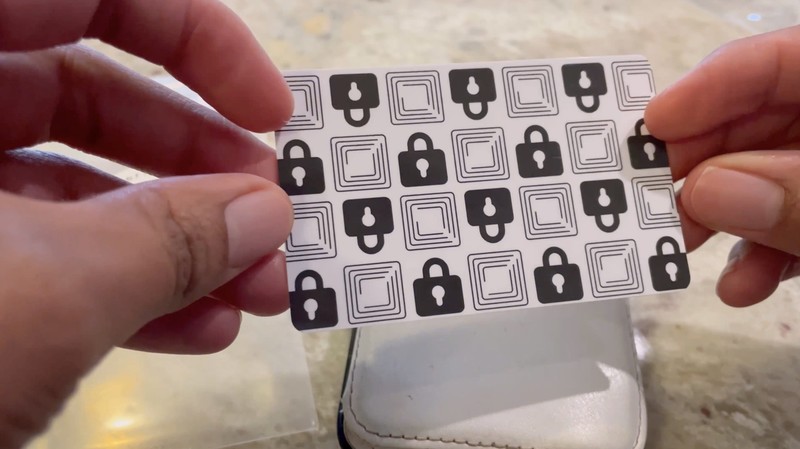
The Wallet Defender is a passive RFID and NFC blocking card, about the size of a credit card and thinner. You drop it into a card slot and it does its job with no battery, no app and no charging, generating a field that interferes with contactless reads of the cards near it. The casing is waterproof and crush-proof, and one card is meant to cover a whole wallet, as our full Wallet Defender review explains.
CardShield is a genuine carbon-fiber wallet: a slim, minimalist case with a push-slot that fans your cards, an integrated money clip, and a carbon-fiber core that shields the cards it holds. It’s a nice object, and it holds up to 22 cards, but it only protects what’s inside it, and using it means retiring your current wallet.
So the honest framing is this. CardShield is a wallet upgrade that happens to block RFID. Wallet Defender is a shield you add to the wallet you already like. That split decides the rounds.
Round by round
How they protect your cards
Round winner: Wallet DefenderBoth block RFID, but the Wallet Defender does it without asking you to change anything.
You keep your wallet, your bag, your passport pouch, whatever you already carry, and just add one card. CardShield only works if you move your cards into it, which means committing to a new wallet and its layout.

If you love the wallet you own, or you carry cards in more than one place, the add-on approach fits your life instead of rearranging it. On flexibility, Wallet Defender wins.
What actually gets shielded
Round winner: Wallet DefenderThis is the practical gap. The Wallet Defender is designed so one card shields the others around it in the same wallet, so your debit, credit, ID and transit cards are all covered at once.
CardShield shields only the cards inside the CardShield. Anything you keep elsewhere, a card in a jacket, a hotel key in a pocket, a passport in a bag, gets no protection from it.
For most people who spread cards across more than one spot, the insert card covers more of what they carry. On coverage of your everyday cards, Wallet Defender takes the round.
Do you even need it?
Round result: TieHere’s the round neither product wants to talk about, and it’s a tie because it applies to both.
The threat both are built for is largely theoretical. Reporting from AARP and CSO Online notes there are essentially no documented cases of RFID card skimming in the wild, and modern chip cards already generate one-time transaction codes that a skimmed static read can’t reuse.
So neither is a must-buy, and it would be dishonest to pretend otherwise. If the idea of contactless reads still bothers you, either one adds a cheap layer of reassurance. That’s a real, if modest, reason to own one, and it’s the same for both, so this round is a draw.
Price and commitment
Round winner: Wallet DefenderCost is where the Wallet Defender pulls clear.
It’s about $45 for a single card, with multipacks that drop the per-card price, and you spend nothing else because you keep your wallet. CardShield asks you to buy and switch to a whole new wallet, so the real cost includes giving up the one you have and adapting to a new layout.
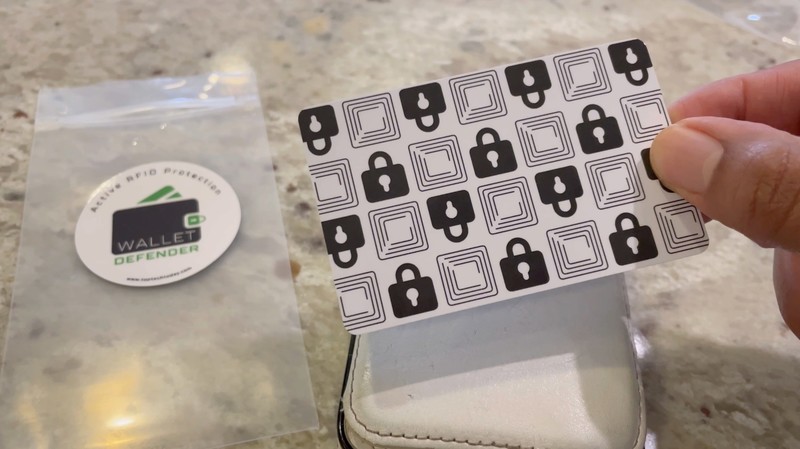
For a low-stakes, peace-of-mind purchase, spending less and changing nothing is the smarter play. Both back the buy with a 30-day money-back guarantee, so the trial risk is even, but on price and commitment, Wallet Defender wins the round and the match.
What buyers say
Neither product has a deep, independent review base, so read the numbers with that in mind. Wallet Defender’s own listing shows a 5-star rating from around 200 buyers, and affiliate coverage cites 4.8 out of 5 across 19,000-plus reviews, figures that come from the vendor rather than a verified platform. The recurring praise is the same thing that makes it appealing: it’s simple, it’s thin, and you forget it’s there.
CardShield’s coverage is similar in shape, mostly its own marketing and affiliate write-ups, with buyers drawn to the slim carbon-fiber feel in a front pocket. Both are marketed hard, so the sober takeaway is the honest one from above: these are inexpensive reassurance, and Wallet Defender delivers it with the least fuss.
Pros and cons of choosing Wallet Defender over CardShield
What we liked
- One thin passive card shields every card in the wallet you already own, no new wallet needed
- No battery, app or setup, and it works in a wallet, bag or passport pouch
- About $45 for a single card, with multipacks that lower the per-card cost
- A 30-day money-back guarantee, the same trial window CardShield offers
What we didn't
- Only available online
Who should buy which
Buy the Wallet Defender if you want to add RFID shielding to the wallet you already carry without changing anything, and you’d rather spend $45 than replace your wallet. For most people, it’s the simpler, cheaper way to get the peace of mind.
Choose CardShield if you were shopping for a new slim wallet anyway and like the carbon-fiber, front-pocket feel, and you’re happy for the RFID blocking to come built into it.
Either way, keep it in proportion: this is a low-cost reassurance, not urgent protection. For more everyday-carry picks, see our best RFID-blocking card roundup, our GuardX card review and Cardian SafeCard review, plus our KeySmart review for slimming down what you carry. There’s more in our home hub.
Check today's Wallet Defender price