

Hydrogen water bottle ads promise a lot: reversed aging, a stronger immune system, the antioxidant power of hundreds of apples in a single glass. Strip out the hype and a simpler question is left, which is the one this guide answers: which is the best hydrogen water bottle for the money?
Here’s the honest part up front. Molecular hydrogen research is early. Some small studies point to possible antioxidant or reduced-fatigue effects, but nothing is settled, and no bottle treats, cures, or prevents any disease. So we judged these on hardware, not miracles.
We compared the hydrogen water bottles people actually buy on four things: PPB output, build quality, battery life, and price. Three came out worth recommending, and the best hydrogen water bottle for most people in 2026 is the H2Next, mostly because it does the real work for a fraction of what the premium names charge.
The best hydrogen water bottles of 2026 at a glance
- H2Next: Best overall and value (~$69.99)
- Piurify Hydrogenator: Best premium display (~$130)
- Echo Flask: Best smart-app flask (~$240)
1. H2Next: best overall

The H2Next hydrogen water bottle is the pick because it uses the same core technology as the $200 bottles and asks a lot less for it. You press one button, wait for the short cycle, and drink.
Under the cap it runs SPE/PEM electrolysis, the cleaner method that separates the gases instead of dumping everything back into your water. H2Next says a single cycle produces 1,700 PPB of dissolved hydrogen, and running two back-to-back pushes it to 4,000 PPB, which lands right in the range most studies actually use.
The build is where it quietly beats the cheap crowd. It’s double-layer borosilicate glass, not the plastic or tritan you find on a lot of bottles at this price, so nothing leaches and it’s easy to keep clean. A built-in 1500mAh battery recharges over USB and lasts about 16 uses per charge, which is roughly a week of daily water for most people.

Here’s the detail the product page underplays. This bottle has an impurity valve that vents the chlorine and ozone electrolysis can create, so those byproducts leave rather than sit in your glass, and the H2Next ships with a universal adapter cap that screws onto other bottles you already own. That second part is genuinely handy if you’d rather carry your own flask and just add hydrogen to it.
On feedback, H2Next’s maker cites more than 29,311 reviews for the bottle, which is a large base even taking it as the seller’s own figure. And on price it’s not close: at around $69.99, it undercuts the Piurify below by roughly sixty dollars and the Echo Flask by well over a hundred, for output in the same league. Honestly, once you’ve seen how similar the internals are, paying triple for an OLED screen is a hard sell.
What we liked
- SPE/PEM electrolysis with 1,700 to 4,000 PPB output, the same range as premium bottles
- Double-layer borosilicate glass body, not plastic
- 1500mAh USB-rechargeable battery good for about 16 uses
- Around $69.99, far cheaper than the premium names for comparable output
What we didn't
- Only available online
2. Piurify Hydrogenator: the premium pick
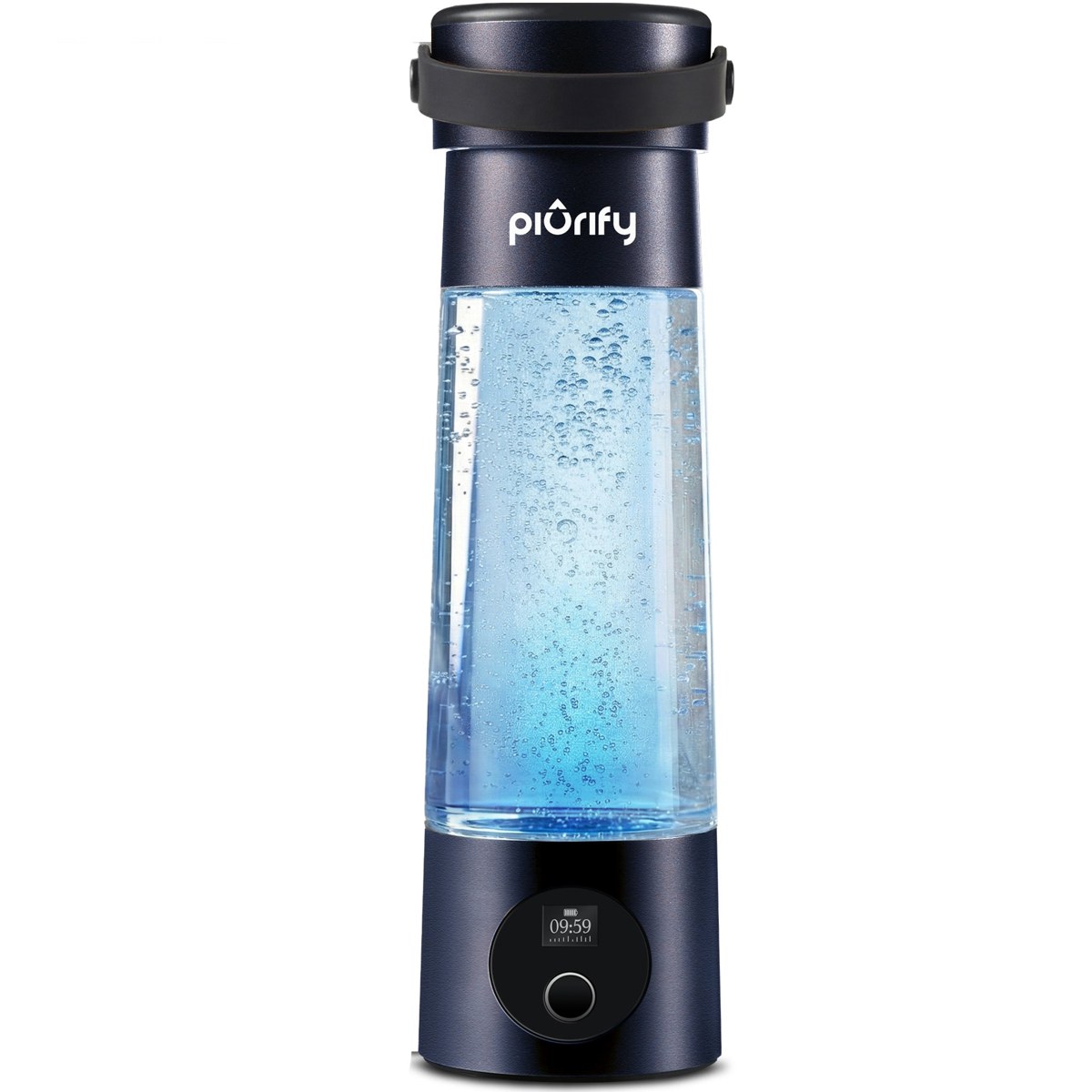
The Piurify Hydrogenator is the bottle to look at if you want the highest numbers and a screen that proves them. It runs SPE/PEM electrolysis with a manufacturer-stated DuPont membrane, and an OLED display shows the PPB reading in real time.
Its output climbs higher than most, reaching up to around 6,300 PPB on its strongest setting, and it runs an SPE/PEM membrane behind an OLED display. It also carries a lifetime warranty, which is rare in this market.
It lands second on price and practicality. It usually sells around $129.99, the capacity is on the small side, and that live OLED readout is the kind of thing you show a friend once and rarely check again. For the output and the display, though, it’s a legitimate premium option.
3. Echo Flask: the smart-app option
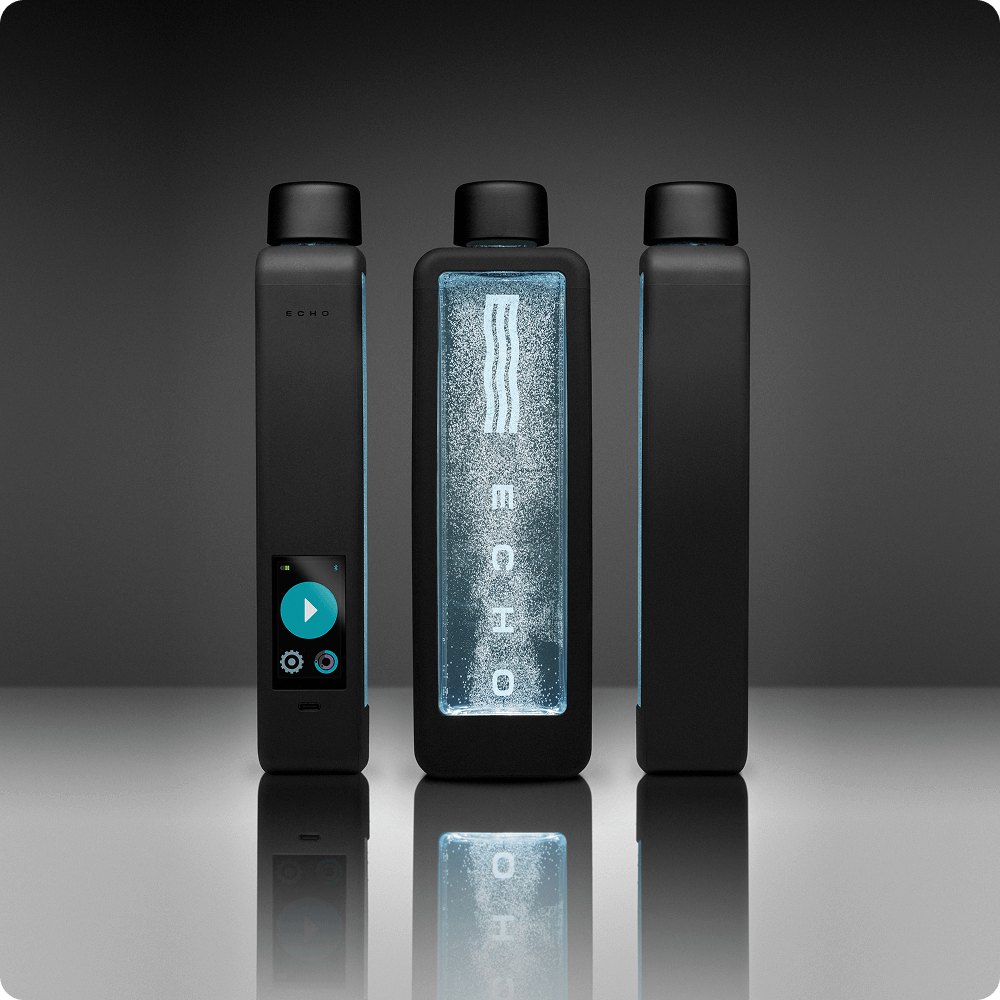
The Echo Flask comes from Echo Water, the hydrogen brand founded by Paul Barattiero, and it’s the most connected bottle here. It pairs over Bluetooth with the Echo app to track your intake, and it has an LCD touch screen on the bottle itself.
On specs, Echo markets the Flask at up to 8 PPM, or roughly 8,000 PPB, which is the highest claim of the three, in a 12-ounce BPA-free body. The trade-off is cost and materials: it runs around $240 even after the usual discount, making it the priciest pick, and it uses a food-grade plastic body rather than the glass on the H2Next.
If you want app-based hydration tracking and don’t mind paying for the brand name and the touch screen, the Echo Flask delivers that. For pure hydrogen water at a sane price, it’s more bottle than most people need.
How to choose a hydrogen water bottle
Start with concentration. Hydrogen is measured in parts per billion (PPB), and most bottles land somewhere between 1,000 and 5,000 PPB. Anything in that band is a solid amount, so don’t get pulled in by a single headline number. A bottle that reliably hits 1,700 to 4,000 PPB, like the H2Next, sits comfortably in that range.
Next, look at how it makes the hydrogen. Cheap bottles use simple electrolysis, which can leave chlorine, ozone, and stray metal ions in your water. SPE/PEM electrolysis uses a proton exchange membrane to separate those byproducts out, and the better bottles add a valve that vents them. This is the single biggest quality gap between a $25 novelty and a bottle worth drinking from daily.
Then the body. Glass beats plastic here: borosilicate glass won’t leach, holds no odor, and cleans easily, while cheaper flasks use plastic or tritan. If you drink from it every day, that difference adds up.
Finally, battery and price. A USB-rechargeable battery that lasts a week between charges, like the H2Next’s roughly 16 uses, is plenty for daily use. On price, output in the same PPB range costs anywhere from $70 to $240, so a screen or an app is often what you’re really paying extra for. The same wellness-gadget logic runs through our best joint supplements roundup and our best vagus nerve stimulator guide: buy the version that does the actual job, and skip the markup on the extras.
The bottom line
The H2Next is the one to buy first. It runs proper SPE/PEM electrolysis, hits 1,700 to 4,000 PPB, uses a double-layer glass body, and lasts about 16 uses per charge, all for around $69.99.
Step up to the Piurify Hydrogenator if you want the highest PPB and a live OLED readout near $130, or the Echo Flask if app-based intake tracking is worth roughly $240 to you. For daily hydrogen water without the premium markup, H2Next wins. If you’re torn between a budget bottle and a premium name, our HydroForge vs Echo Go+ head-to-head breaks that choice down. If keeping the bottle itself fresh is the next upgrade, our roundup of the best self-cleaning water bottles covers the UV-C options. And if you’re stacking small wellness habits, it pairs neatly with the calmer-energy switch in our best mushroom coffee guide, the breathing tool in our Moonbird review, and the rest of the health and wellness hub.
Check the current H2Next deal