
A security light only works if it’s actually on the dark corner where trouble starts, and that’s exactly where running mains power never reaches. The side gate, the back fence, the far end of the driveway. Those are the spots a wired floodlight can’t get to without an electrician and a trench.
Solar motion lights fix that by needing no wire at all, but the category is a mess of near-identical black rectangles, and the listings blur together on lumens and “LED counts” that don’t mean much on their own. Some are genuinely bright and last for years. Plenty are dim toys that quit by the second winter.
We compared the solar motion sensor security lights worth buying in 2026 on what matters after dark: brightness and coverage, how the motion sensor behaves, how you control it, and price. Three earned a spot, and the Loma Solar Lights are the pair we’d mount first.
The best solar motion sensor security lights of 2026 at a glance
- Loma Solar Lights: Best overall, remote control and sold in pairs
- Ring Solar Floodlight: Best for phone alerts (needs ~$50 bridge)
- LITOM 300 LED: Brightest budget single unit (~$35)
1. Loma Solar Lights: best overall
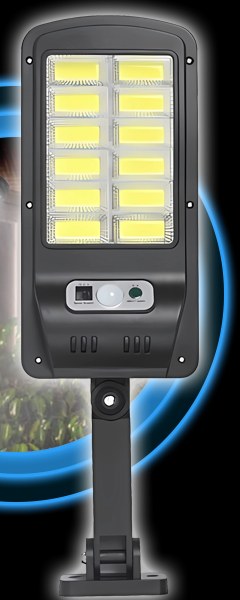
The Loma Solar Lights take the top slot because they get the boring parts right, and the boring parts are what make a solar light still useful two years in: even coverage, a sensible sensor, and controls you can actually reach.
The head packs 12 COB LEDs across a single panel. COB spreads a wider, smoother sheet of light than the same count of separate bulbs, so a wall lights up evenly instead of in bright dots with dark gaps between them. The motion sweep covers a wide 180 degrees, which is the difference between watching one narrow lane and watching a whole corner of the yard.
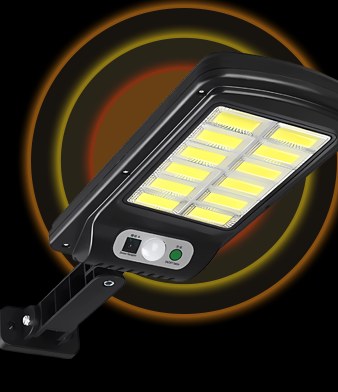
The real separator is the remote control. Most solar motion lights make you climb a ladder to change anything, so the settings you pick on day one are the settings you’re stuck with. The Loma gives you three brightness modes you switch from the ground, so you can run a soft always-on glow on the patio and a hard motion-triggered blast on the alley without touching the unit again.
Here’s the part the listing photos don’t sell well, and it’s the strongest reason to buy. There is no wiring, no trench, and no electrician. It mounts with the included bracket and screws in a few minutes, and because it’s solar it keeps working when the grid doesn’t, which is the exact night you most want a light to come on. The upgraded PIR sensor reacts to body heat and movement rather than raw brightness change, so it’s less prone to firing at every passing cloud.
Two things stand out on the spec sheet: how much light a 12-LED COB panel actually throws, and how little there is to install. The one honest caveat, since we don’t hide these, is that a compact solar head won’t out-throw a mains floodlight on a garage. It’s not trying to. It’s covering the corners the wired light was never going to reach.
They’re sold in pairs and routinely discounted around 50%, which is the quiet value play: two dark spots covered for close to what a single name-brand unit costs. Loma ships them from a US warehouse and backs them with a 30-day money-back guarantee, so a night or two of real-world testing on your own fence costs you nothing.
What we liked
- 12 COB LEDs spread even, gap-free light across a wall
- 180-degree motion sweep covers a whole corner, not one lane
- Remote switches three brightness modes from the ground
- Wire-free install in minutes, and it works when the grid is down
What we didn't
- Only available online
2. Ring Solar Floodlight
The Ring Solar Floodlight is the pick when you want the light to talk to your phone. It’s the only option here that plugs into a full smart-home ecosystem, and for a Ring household that connection is the whole point.
It puts out about 2,000 lumens across a 270-degree beam, with a separate solar panel on a 13-foot cable so you can mount the panel in the sun and the light in the shade. The motion sensor reaches roughly 30 feet and sends alerts to the Ring app, where you set detection zones and schedules. The catch is real and worth knowing up front: the smart features need a Ring Bridge, sold separately for around $50, so budget for that on top of the floodlight if notifications are the reason you’re buying. If you’re already in Ring’s world, that’s an easy yes. If you’re not, you’re buying a lot of app for a yard light.
3. LITOM 300 LED
The LITOM 300 LED is the brightness-per-dollar champion, and it’s the one to grab if you just want the most raw light for the least money and don’t care about apps or remotes.
At roughly 2,500 lumens with a 270-degree detection angle and an IP67 weatherproof rating, it’s the brightest single unit on this list, and it lands around $35. LITOM has been making these for years, so the build is proven. What you give up next to our top pick is control and coverage flexibility: there’s no remote to change modes from the ground, and you’re buying one head rather than the discounted Loma pair. For a single bright wash over a driveway, though, it’s hard to argue with the value.
How to choose a solar motion sensor security light
Start with brightness, because it’s the whole job. For real security aim for at least 1,000 lumens, and treat 1,500 to 2,500 lumens as the sweet spot where a light genuinely removes the shadows instead of just marking them. Under 1,000 you’ve bought a path light, not a deterrent. Big-listing names like AmeriTop and Tuffenough lead with huge LED counts, but even coverage and real lumen output matter more than a headline number of chips.
Then look at the motion sensor and coverage. A wider detection angle, up toward 180 or 270 degrees, watches a whole corner instead of a single approach, and a PIR sensor that reads body heat beats one that only reacts to changes in light. Range matters too: a sensor that reaches 20 to 30 feet gives an intruder nowhere to creep in unseen. Since these live outdoors year-round, check the weatherproof rating as well, an IP65 or higher, like the LITOM’s IP67, shrugs off rain and dust.
Control is the spec people forget until they’re on a ladder. A remote, like the one on our Loma pick, lets you change modes and brightness from the ground for the life of the light, which you’ll appreciate the first time you want to dial one down without a step stool. If you’d rather the light also record and alert you, that’s a camera decision, and we break down budget options in our Home Defender Cam vs Ring comparison and the detectors in our best hidden camera detector guide.
Finally, think about install and placement. Solar means no wiring, but the panel still needs direct sun, so a north-facing wall in permanent shade will starve any unit here. Mount the panel where the sun hits and, on models like Ring’s, run the light itself wherever you need it. Good outdoor lighting is one layer of a safer home, next to a loud personal safety alarm on your keys and clearer sightlines on the drive from night driving glasses, which we rate Drive Bright first among. The same even-lighting idea works indoors too: if you sketch, trace, or craft, our best light pad for tracing pick applies it at the desk. Browse the rest of our picks in the home hub and light up the corner that’s been dark too long.
FAQ
Are solar motion sensor security lights bright enough for real security?
Yes, once you clear about 1,000 lumens. For genuine security most buyers want a light in the 1,500 to 2,500 lumen range, which throws enough light across a driveway or side yard to remove the shadows an intruder hides in. Below 1,000 lumens you get accent lighting, not deterrence.
Do solar security lights work in winter or on cloudy days?
They do, with less runtime. A good panel banks enough charge on a short winter day to fire the motion light through the night, since a motion light only runs in bursts when it detects movement, not continuously. Cloudy stretches cut reserve power, so face the panel south and keep it clear of leaves and snow.
How do you install a solar motion security light?
Most mount with two or three screws or a mounting plate, with no wiring at all. You pick a spot that gets direct sun for the panel, aim the head at the area you want covered, and let it charge for a day before first use. The Loma lights include the bracket and screws and go up in a few minutes.
What is the difference between COB LEDs and regular LEDs?
COB stands for chip-on-board, where many LED chips sit packed together on one panel instead of as separate bulbs. That spreads a wider, more even sheet of light with fewer dark gaps, which is why COB panels like the Loma’s 12-LED array read as brighter and smoother across a wall than an equal number of individual LEDs.
What is the best solar motion sensor security light in 2026?
For most homes the Loma Solar Lights are the best overall, with 12 COB LEDs, a 180-degree motion sweep, and three remote-controlled brightness modes, sold in discounted pairs. The Ring Solar Floodlight is the pick if you want app alerts, and the LITOM 300 LED is the brightest single-unit budget option at around 2,500 lumens.
The bottom line
The Loma Solar Lights are the pair to mount first: 12 COB LEDs and a 180-degree sweep, a PIR sensor that reads real movement, and a remote that changes brightness from the ground, all wire-free and sold two to a box so both dark corners get covered.
Step up to the Ring Solar Floodlight if you want motion alerts on your phone and already run Ring, and grab the LITOM 300 LED if you just want the most raw brightness for the least money. Whichever you pick, the best light is the one covering the corner that’s been dark all this time. Automating the shades on those same windows is another easy wire-free win, covered in our best smart shades guide and RYSE SmartShade review.
Check the current Loma Solar Lights price