

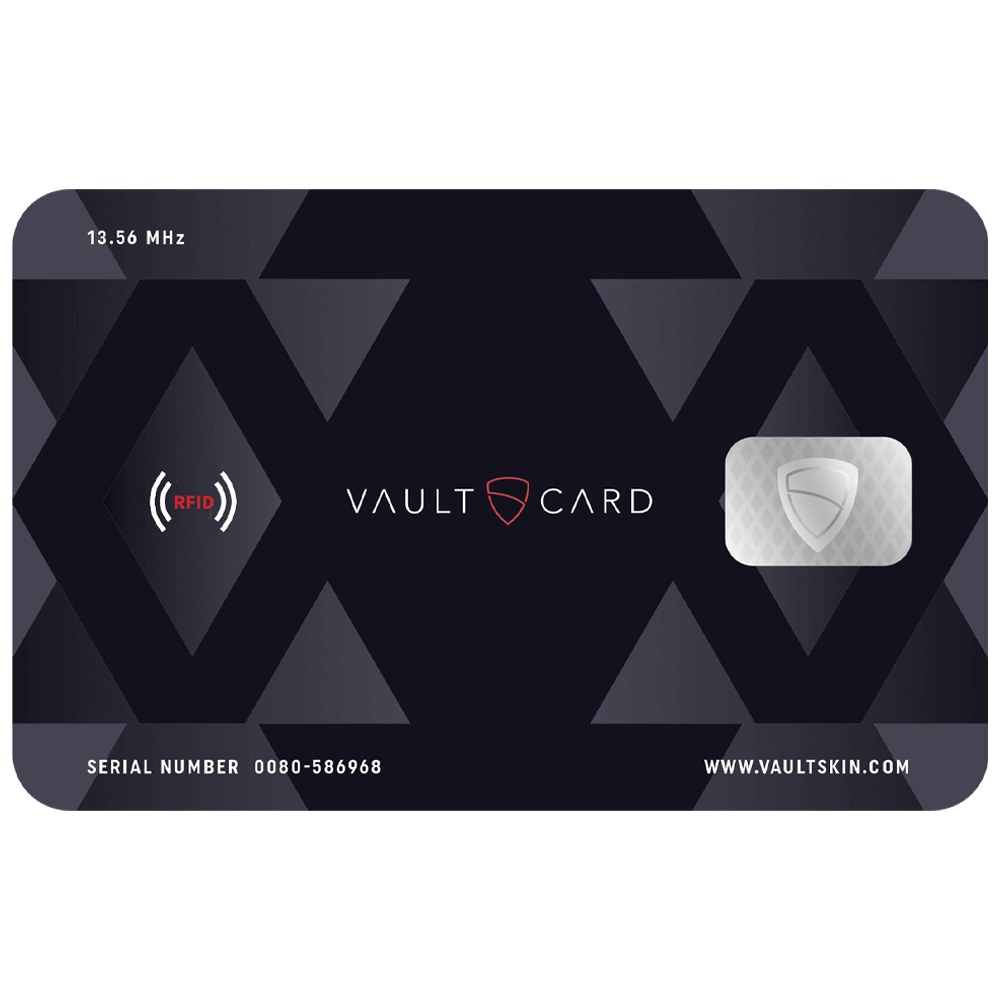
Cardian Safe Card vs VAULTCARD is a value-active-blocker-against-premium-jammer matchup. Both are single cards you drop into a wallet, and both quietly shield every card sitting near them the instant a scanner tries to read one. They sit at opposite ends of the price chart.
The Cardian Safe Card is an active RFID and NFC blocking card that sells for around $15 a card in a multipack and leans on a slim build and a 5cm shielding field. VAULTCARD is the premium name from Vaultskin, patented and Kickstarter-funded, with a stronger jamming field and a price that starts around $30 a card.
For this comparison we read both makers’ spec claims, checked current pricing, and weighed how active-jamming cards are known to behave. We didn’t test the shielding in a lab, so the technical figures below are the makers’, framed against the category.
The short version: if you want the strongest, widest field and you’ll pay for it, VAULTCARD is the premium pick. If you want the same active protection for a whole wallet at roughly half the price, the Cardian Safe Card is the smarter everyday buy, and here’s where it wins.
Cardian Safe Card vs VAULTCARD at a glance
| Feature | Cardian Safe Card | VAULTCARD |
|---|---|---|
| Price per card | ~$15 in a multipack | $30 and up |
| How it blocks | Active jamming, ~5cm field | Active jamming, 6cm+ range |
| Thickness | ~1.1mm, near a normal card | ~1.1mm, credit-card form |
| Battery | None, harvests from scanner | None, harvests from scanner |
| Coverage | Whole wallet near the card | Cards within 4cm, wallets to 8cm |
| Pedigree | Value active blocker | Patented, Kickstarter-funded |
| Lifespan (maker) | Works for years | Never expires |
| Best for | Everyday value | Maximum field strength |
| Our score | 9.1 / 10 | 8.6 / 10 |
What each one actually is
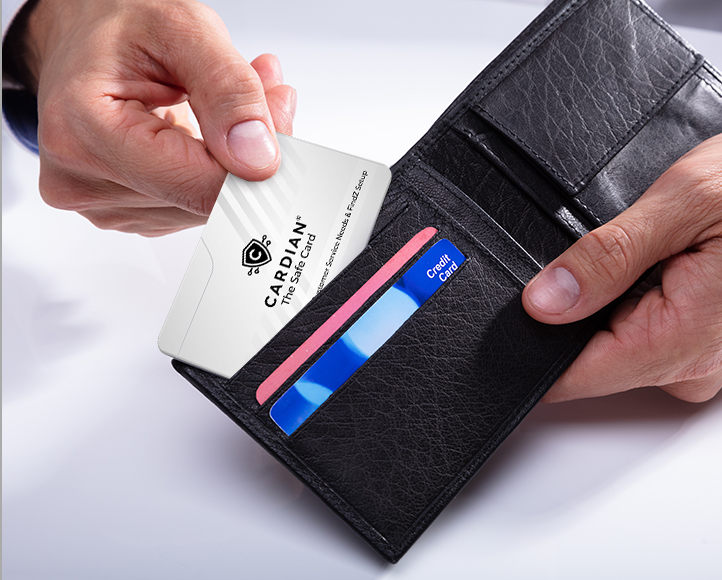
The Cardian Safe Card is an active RFID and NFC blocking card. Cardian says it creates a roughly 5cm shielding field that disrupts scanners trying to read the cards around it, so one card covers the whole billfold. It’s about 1.1mm thick, close to the height of a normal card, has no battery and no app, and sells for around $15 a card in a multipack.
VAULTCARD is the premium option from Vaultskin. It’s patented and Kickstarter-funded, and Vaultskin says it emits a jamming signal far stronger than typical rivals, with a range over 6cm that protects contactless cards within 4cm in wallets up to 8cm thick. Like Cardian, it runs with no battery, harvesting power from a scanner’s own signal, and it sells for $30 and up.
So the honest framing is this. VAULTCARD is the maximum-strength, longer-pedigree jammer. The Cardian Safe Card covers the same core job, a whole wallet on the same active principle, for roughly half the price. That gap decides the rounds.
Round by round
Price and value
Round winner: Cardian Safe CardNo suspense here, and value is the whole reason to compare these two.
The Cardian Safe Card comes to around $15 a card in a multipack. VAULTCARD starts near $30 a card.
That’s roughly double for VAULTCARD. Its price buys a stronger field and a patented name, but if you just want every card in your wallet covered, Cardian does that core job for half the outlay. This round is settled.
Shielding power and range
Round winner: VAULTCARDHere’s where VAULTCARD earns its premium, and it’s a fair, real win.
Vaultskin says VAULTCARD jams at a range over 6cm, describes its signal as far stronger than typical competitors, and rates it for wallets up to 8cm thick. Cardian lists a roughly 5cm active field.
For a normal billfold both cover every card inside, so the difference is headroom rather than everyday necessity. But on raw shielding strength and reach, VAULTCARD is the one with the bigger number, and this round is honestly its own.
Slimness and everyday carry
Round result: TieFor a card that lives in a slot every day, thickness counts, and here the two are evenly matched.
The Cardian Safe Card is about 1.1mm, close to the height of a normal credit card, so it slides into a slot and your wallet doesn’t gain a millimeter. VAULTCARD is a genuine credit-card form factor too, listed at 1.1mm and about 13.9 grams.
Both disappear into a card slot and both add no real bulk, so neither pulls ahead on everyday carry. This one is a straight tie, and where Cardian actually separates itself is the price, not the thickness.
Setup and upkeep
Round result: TieOn the maintenance side, these two are twins, and it’s a genuine tie.
Neither needs a battery. Both harvest energy from a scanner’s own signal and switch on only when a reader is near, so there’s nothing to charge and nothing to replace. Cardian says its card works for years; Vaultskin says VAULTCARD never expires.
Drop either into a wallet and forget it exists. That set-and-forget simplicity is the quiet appeal of active jamming cards in general, and here both deliver it equally.
Buying it
Round winner: Cardian Safe CardOn low-risk buying for a first-timer, Cardian is the easier way in.
The Cardian Safe Card sells in multipacks that make it about $15 a card, so trying it across your everyday cards costs little. Read the checkout and untick any optional add-ons before you pay, and the buying experience is clean.
VAULTCARD is sold widely and is a safe buy too, but at $30-plus a card the stakes of a wrong pick are higher. For a first try, a slim card near $15 is the lower-risk gamble, and Cardian takes the round and the matchup.
What buyers say
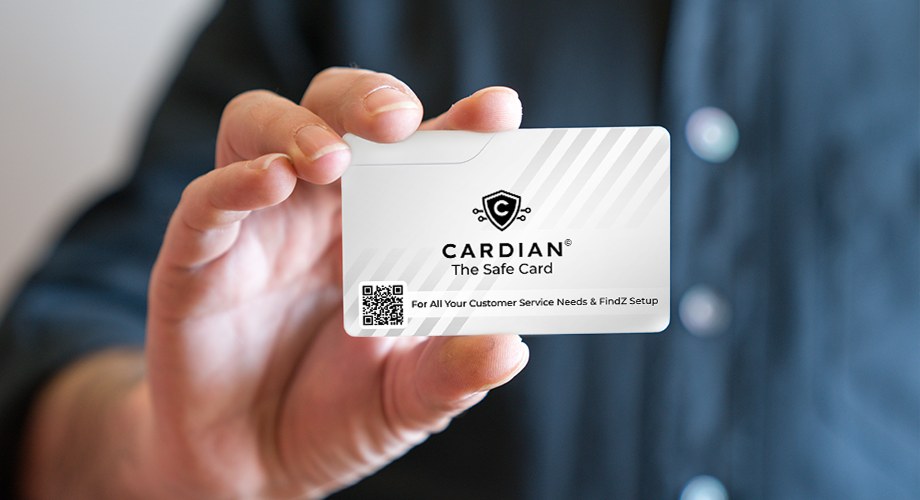
The two cards draw slightly different crowds. Cardian owners center on value and slimness, surprised that a card near $15 shields the whole wallet and disappears into a slot, with the honest note to read the checkout add-ons before paying.
VAULTCARD’s buyers praise its strength and the patented pedigree, and the brand’s Kickstarter history gives it a following among people who want the maximum-protection option.
With any active blocking card, the realistic expectation is quiet, always-on protection for the contactless cards, IDs, and hotel keys you carry, not a fix for a common crime, since modern chip cards already encrypt each transaction. Framed as low-cost insurance, both earn their place.
Why choose the Cardian Safe Card
What we liked
- The same active-jamming protection as a premium card for roughly half the price, around $15 a card
- Slim at about 1.1mm, close to a normal card, so it adds no wallet bulk
- No battery and no app, and Cardian says it works for years
- One card shields a whole wallet with a 5cm field, no sleeving each card
What we didn't
- Only available online
Who should buy which
Buy the Cardian Safe Card if you want whole-wallet protection that stays slim and costs about $15 a card, and you like set-and-forget simplicity with nothing to charge. For most everyday wallets, that’s the pick, and it’s why Cardian wins here. For the full breakdown on its own, read our Cardian Safe Card review, and to see how both stack up against a budget passive option, our best RFID blocking card of 2026 roundup.
Buy VAULTCARD if you specifically want the strongest, widest jamming field and the patented premium pedigree, and you don’t mind paying roughly double for it.
Either way, an RFID card is one piece of everyday carry. For more, our GuardX review covers a single passive card sold on its own, and our KeySmart review handles the slimmer-wallet side.
Check today's Cardian Safe Card price