
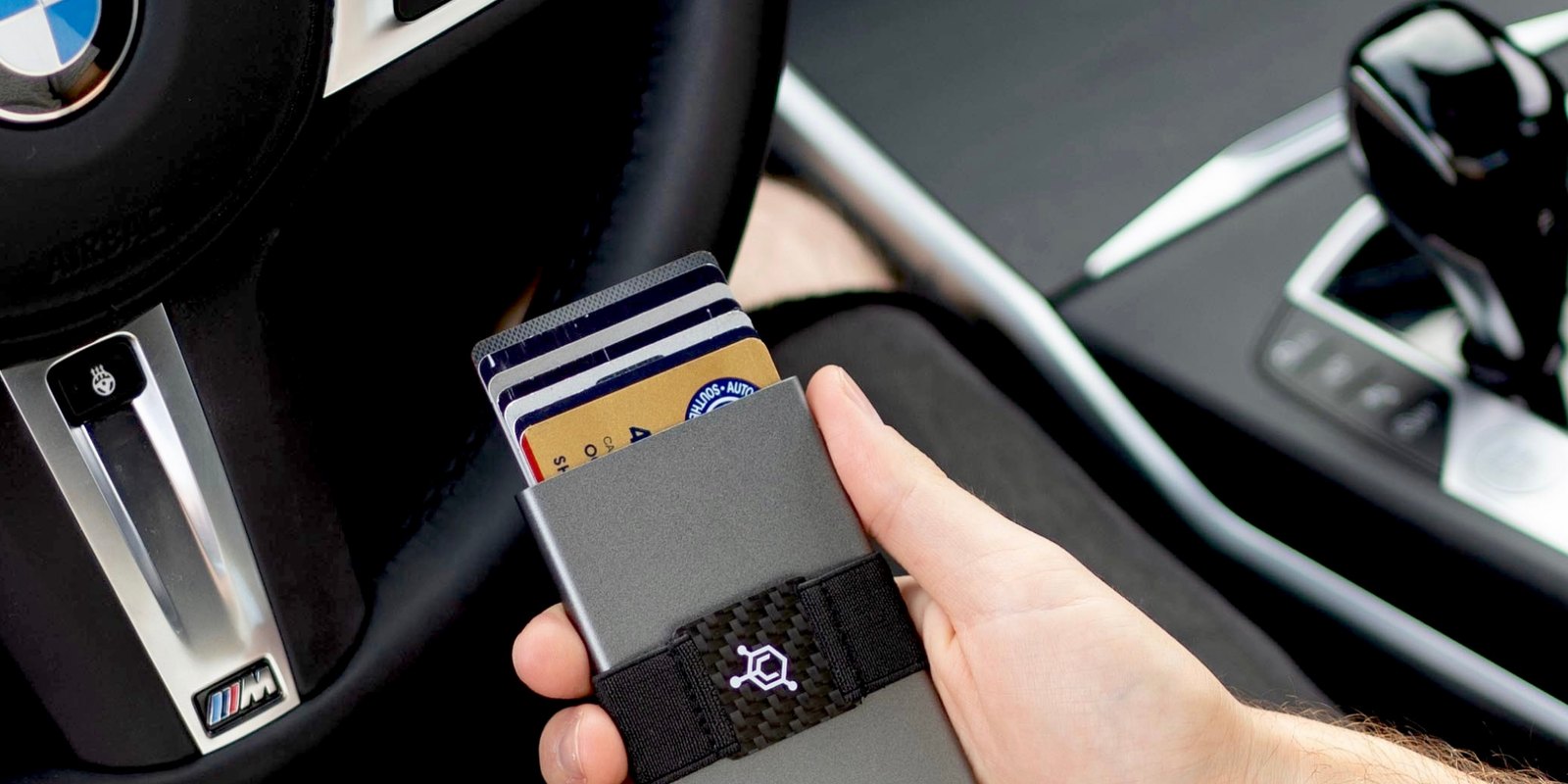
You sit on a folded brick of cards you never use, and every tap-to-pay terminal makes you wonder who else can read them. A good RFID blocking wallet fixes both at once: it shrinks your carry and shields the cards you keep, and the best one for most people does it with a single thumb push.
We compared the RFID wallets people actually buy on price, card access, build, and real customer feedback. Our top pick is the Code 118, the aluminum pop-up that fans your cards out and shields them in a metal chamber for about half the price of the famous names.
One honest thing up front. Whether card skimming is a real threat is genuinely debated, and many contactless payments have their own safeguards. But an RFID wallet costs little more than a plain slim wallet, so you get the shielding as a bonus on top of a smaller carry. For this roundup we read owner feedback, checked specs and return terms, and weighted verified reviews over brand-collected five-star floods.
The best RFID blocking wallets at a glance
- Code 118 Wallet: Best for fast one-push access ($49.99)
- Ridge Wallet: Best premium heirloom build (from ~$95)
- Ekster Parliament: Best leather quick-access (~$99)
- Bellroy Note Sleeve: Best classic slim bifold (~$89)
1. Code 118 Wallet: the best RFID wallet overall
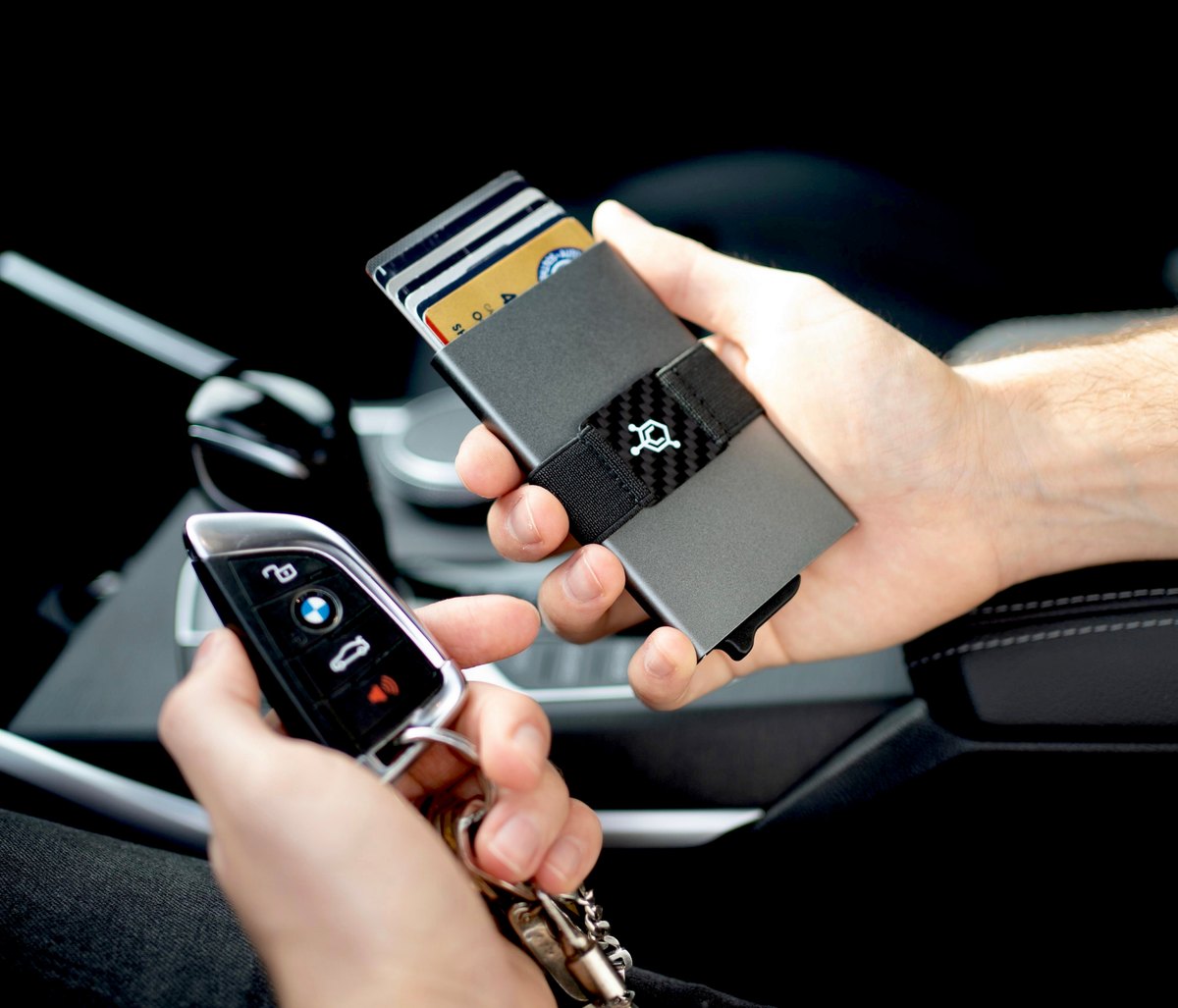
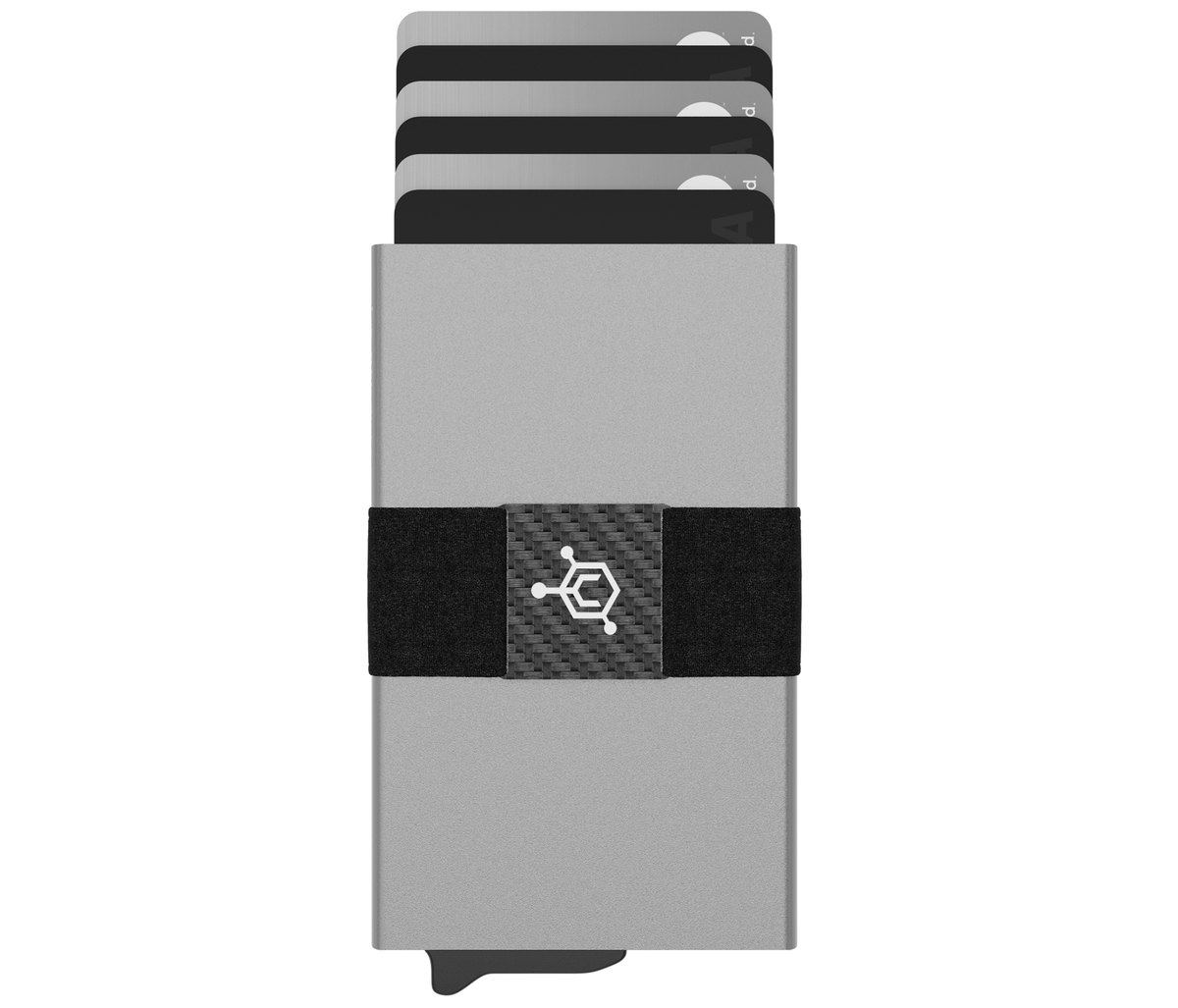
The Code 118 is the pick if you want the fastest, slimmest secure carry without paying premium-brand money. It’s an aerospace-grade 6061-T6 aluminum card holder with a party trick: push the side lever and your cards fan out in a stepped stack, so the one you want is already proud of the pile.
It takes the top spot because it nails the core job and undercuts the field. The solid aluminum chamber is the RFID shield, blocking the 13.56 MHz scanners used to skim contactless cards. It’s a quarter-inch thick, weighs about 4 ounces, needs no battery, and runs about $49.99 with free shipping and a 30-day return. A modular backplate lifts capacity toward 15 cards if you need it.
On the feedback that counts, the Code 118 holds a 4.9-star average across more than 12,000 reviews, with 97% of buyers saying they’d recommend it and the pop-up drawing the loudest praise. The one thing to know, straight from our full Code 118 wallet review: only cards in the metal chamber are shielded, so keep your contactless cards there and use the outer strap for a spare or cash. It does the most for the least money, and the reviews back it.
What we liked
- One-push pop-up fans your cards out instantly, faster than any band or slot wallet here
- Aerospace-grade 6061-T6 aluminum chamber physically blocks RFID and NFC skimmers
- Quarter-inch thin and about 4 ounces, with no battery and nothing to charge
- About half the price of the premium names, with free shipping and a 30-day return
What we didn't
- Only available online
2. Ridge Wallet: the premium heirloom pick
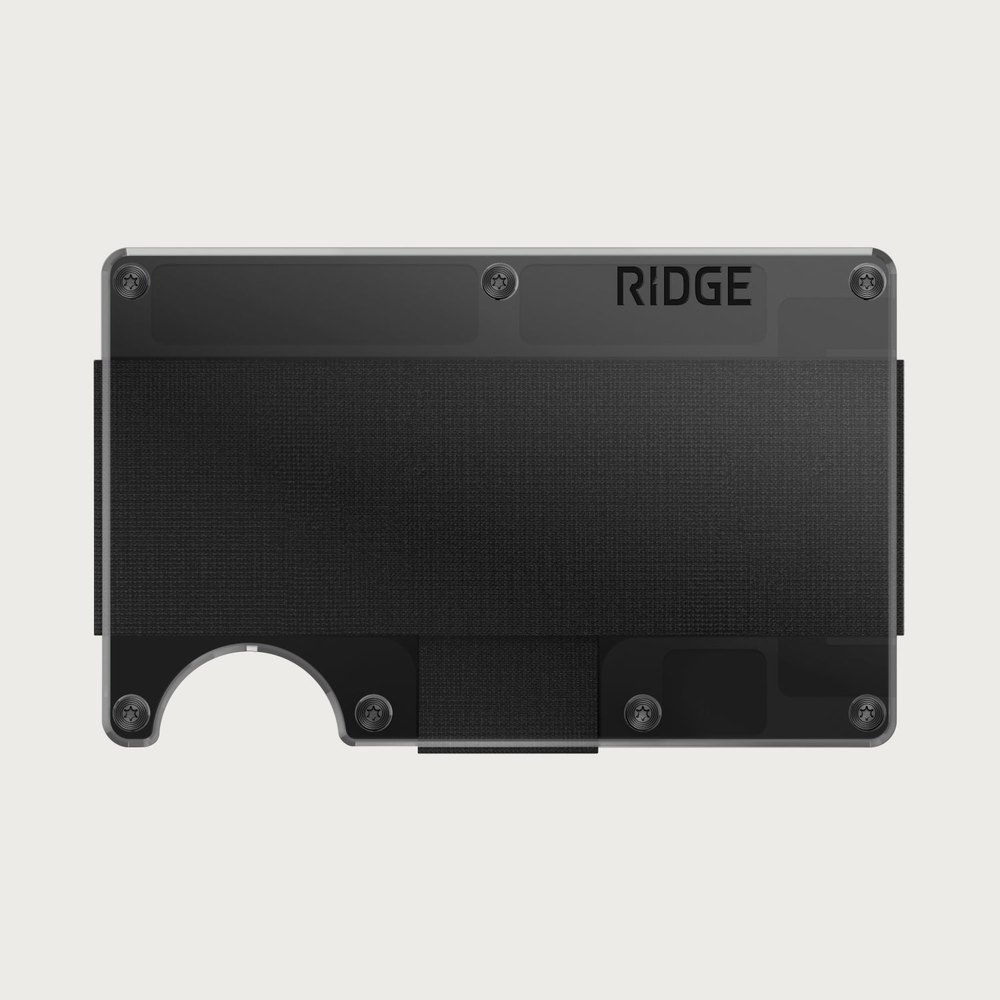
The Ridge Wallet is the one to buy if buy-it-for-life build matters more than price. It clamps your cards between two machined metal plates and an elastic band, and you fan them out with a thumb. There’s no mechanism, which is part of the appeal: fewer moving parts, and a wallet the brand backs for life.
It earns its spot on materials and warranty. The Ridge comes in aluminum, titanium, and carbon fiber, holds up to about 12 cards in its expanding band, blocks RFID through the metal plates, and carries a lifetime warranty with a 45-day trial. Prices start around $95 for aluminum and climb past $120 for titanium and carbon fiber.
The trade against our top pick is simple, and we lay it out in Code 118 wallet vs Ridge Wallet: the Ridge is the more premium object with the longer warranty, but it costs roughly twice as much and makes you thumb cards up yourself. If you want the heirloom build and the material choice, it’s worth the premium.
3. Ekster Parliament: the best leather quick-access wallet
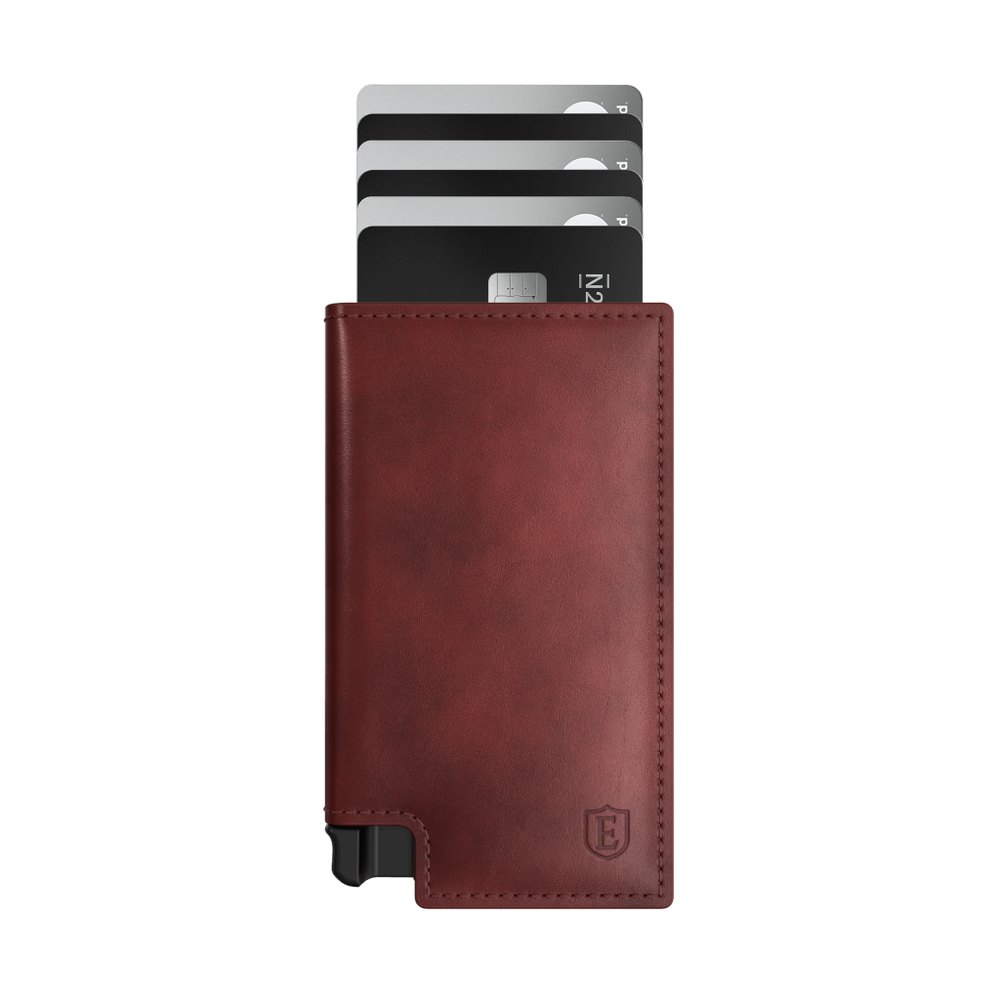
If you want the one-push convenience but prefer leather to bare metal, the Ekster Parliament is the pick. It wraps an aluminum cardholder in full-grain leather, and a trigger on the base fans your cards out in a stagger, the same fast access idea as the Code 118 in a dressier shell.
It’s a genuine RFID wallet with a few extras. The aluminum cardholder shields the cards inside, it holds up to about 12 cards with the strap, and Ekster sells an optional solar-powered tracker card so you can locate a misplaced wallet from your phone. It runs about $89 to $119 depending on leather, with a 45-day return.
The reason it lands here rather than the top is price and simplicity. You pay more than the Code 118 for the leather and the tracker option, and the leather adds a little bulk over a bare metal chamber. Pick it if you want quick-access cards with a premium, traditional look.
4. Bellroy Note Sleeve: the best classic slim wallet
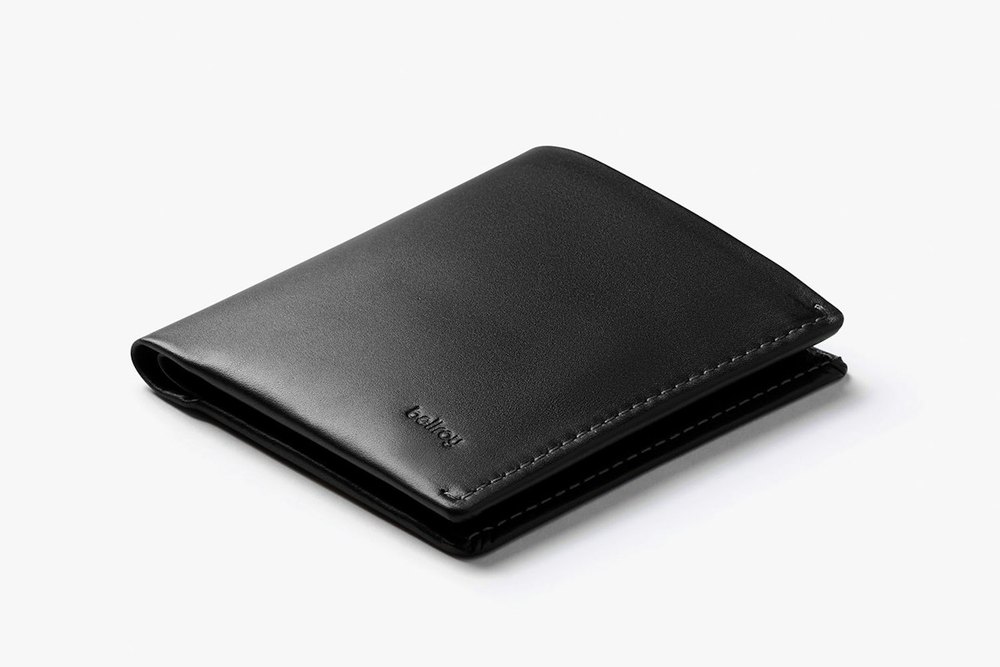
For anyone who doesn’t want a metal gadget at all, the Bellroy Note Sleeve is the classic answer: a slim leather bifold that still shields your cards. It’s the pick if you want a wallet that looks like a wallet, with a proper cash section and a familiar fold.
It’s made of premium leather, holds up to about 11 cards plus cash, and uses a pull-tab to lift your less-used cards into reach. Crucially for this list, the Note Sleeve version includes a tested RFID-protective layer rated for 13.56 MHz, so the shielding is real and not an afterthought. It runs about $89 and carries Bellroy’s multi-year warranty.
The trade is thickness and access speed. A folded leather wallet will never be as thin as a metal chamber or as fast as a pop-up, and you thumb cards out rather than fanning them. But if you want understated leather with genuine RFID protection, the Note Sleeve is the honest, well-made choice.
Want to keep your current wallet?
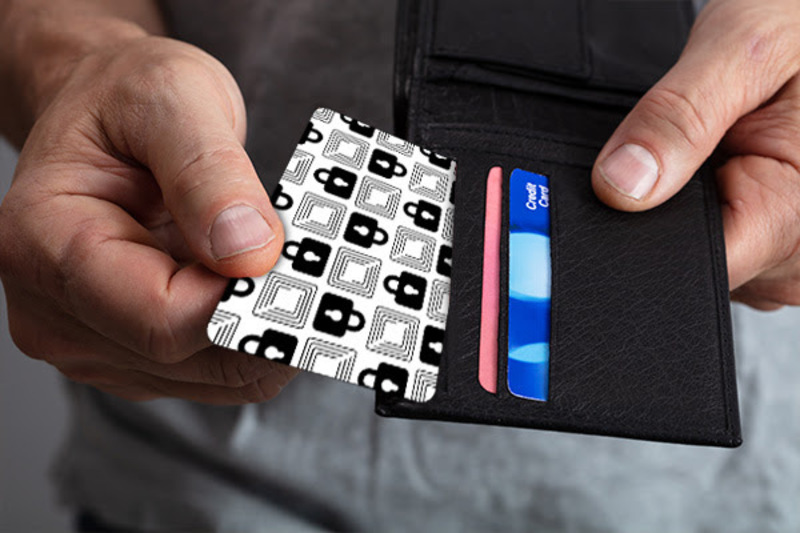
Not everyone wants to switch wallets just to get RFID shielding. If you like the one in your pocket, the Wallet Defender is the add-on route: one thin card you slip into any wallet that shields the cards around it.
It needs no battery, no app, and no charging, and the maker lists the casing as waterproof and crush-proof. It starts around $45 for a three-card pack with a 30-day money-back guarantee, so one order can cover a partner’s wallet or a passport pouch too.
Our full Wallet Defender review explains how it works and who it suits best.
Check today's Wallet Defender priceHow to choose an RFID blocking wallet
Start with the shielding, since that’s the whole category. A solid metal chamber, like the Code 118’s aluminum or the Ridge’s plates, blocks scanners on every side and never wears out. A good leather wallet uses a tested foil layer, which also works but relies on that lining. If maximum protection is the point, metal wins; if you want a traditional feel, pick a leather wallet that actually names a tested RFID rating rather than assuming it has one.
Then match the access to how you pay. Pop-up and trigger wallets, like the Code 118 and Ekster, fan your cards out for you, which you feel every day at a checkout. Band and bifold wallets, like the Ridge and Bellroy, ask you to thumb cards up yourself, which is fine if you carry only a few.
Finally, size the capacity honestly. Slim wallets are built for six to twelve daily cards plus a little cash, not a full binder of loyalty cards. Count the cards you truly use before you buy, and if it’s more than a handful, look at the ones that expand, like the Code 118 with its backplate or the Ridge’s stretching band. Weight and thickness follow from that: the fewer cards, the slimmer the carry.
The bottom line
For most people, the Code 118 is the RFID wallet to buy: an aluminum pop-up that shields your cards, fans them out with one push, and costs about half what the premium names charge. The Ridge Wallet is the heirloom upgrade if lifetime build matters most, the Ekster Parliament is the leather pick with the same quick access, and the Bellroy Note Sleeve is the classic slim bifold for anyone who wants leather with real RFID protection.
Whichever you choose, you end up with a smaller, tidier carry and cards that are harder to skim. For the deep version of our winner, read the full Code 118 wallet review, and if you’d rather shield a single card than switch wallets, see the best RFID blocking cards of 2026. There’s more everyday-carry gear in the best key organizers for EDC guide and the home hub.
See today's Code 118 wallet price