
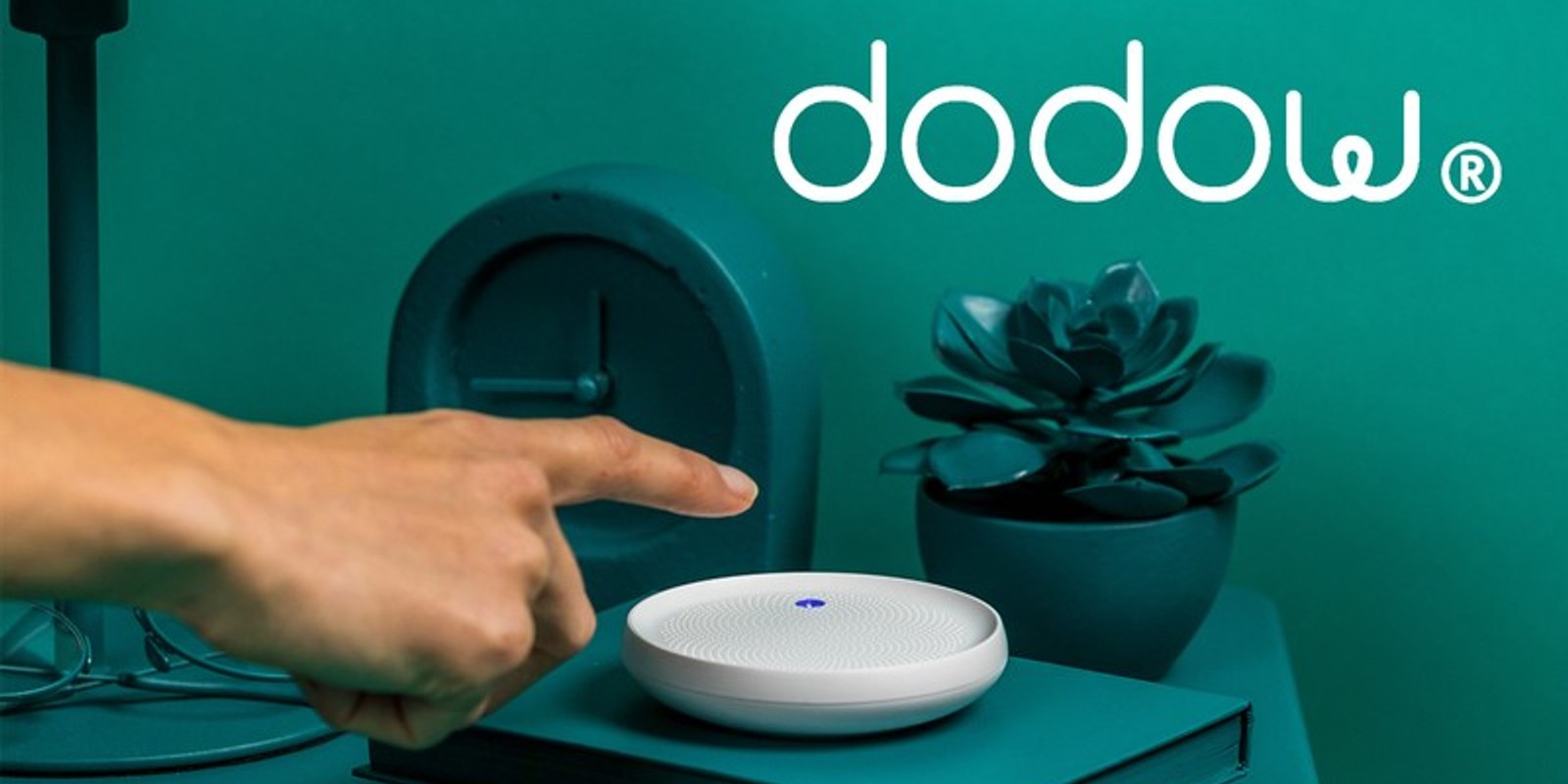
How does Dodow work? It turns falling asleep into one simple thing to follow: a light that breathes. Instead of lying there counting sheep or watching your thoughts spin, you sync your breathing to a soft glow on the ceiling, and the rhythm does the calming for you.
Dodow is a small disc that sits on your nightstand. Tap it and it projects a pulsing blue halo upward, expanding and shrinking at a set pace. That’s the whole interface: no screen, no app, no sound.
This guide walks through exactly what’s happening, mechanically and physiologically, and how you actually use it.
The mechanism: a light that paces your breath
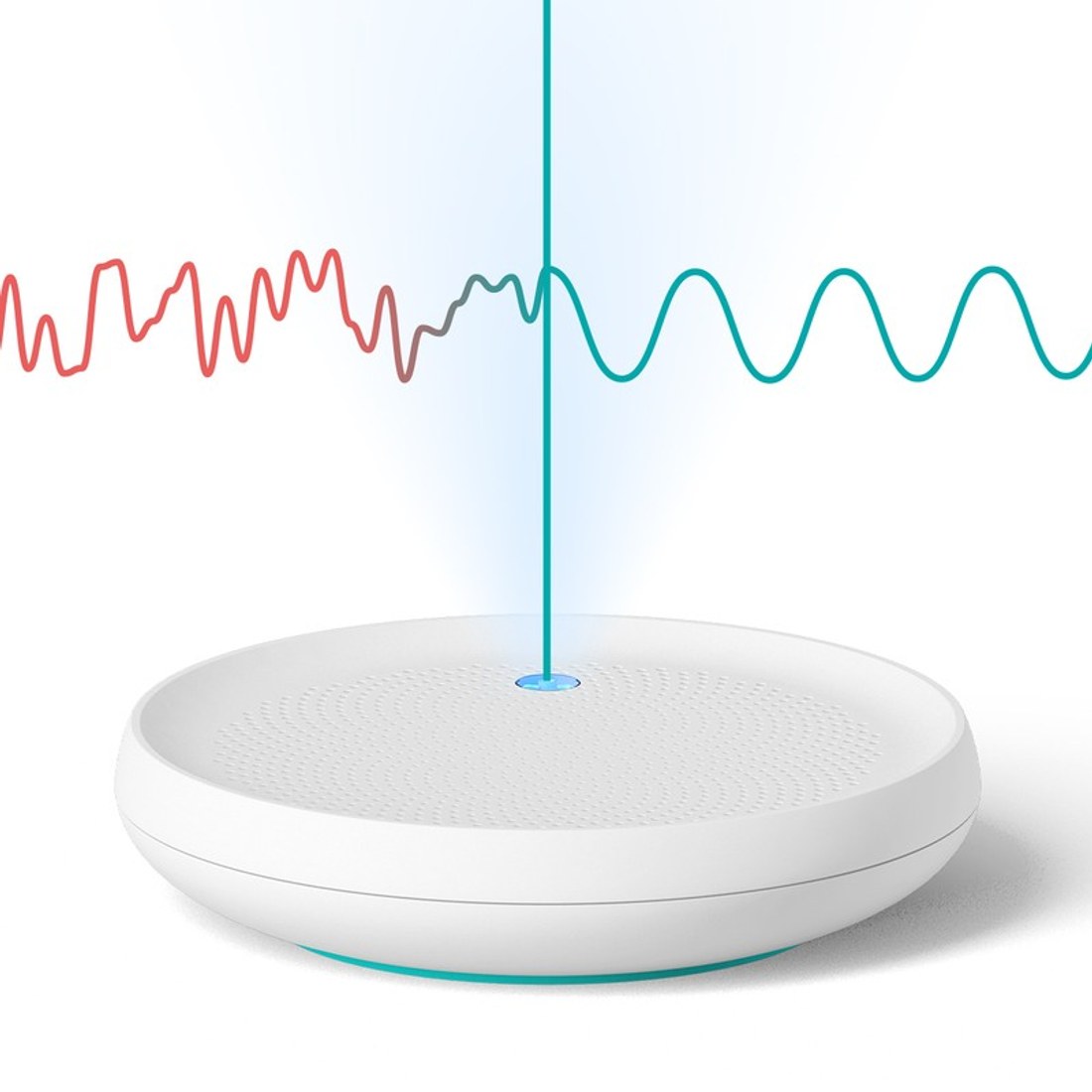
The core idea is simple. The blue halo on your ceiling grows and shrinks, and you match your breath to it: breathe in as the light expands, breathe out as it contracts. You’re not doing math or watching a timer. Your only job is to follow the glow.
Over the session the pace gradually slows, winding your breathing down from roughly 11 breaths a minute to about 6. That slowdown is the entire point, because 6 breaths a minute is the rate that flips a switch in your body.
At that pace you hit what researchers call the resonance or baroreflex frequency, which maximizes heart-rate variability and tips your autonomic nervous system toward its parasympathetic, “rest and digest” side. In plain terms: slow your breath to about 6 a minute and your body reads it as a signal to stand down. The longer exhale is the part that does most of the calming.
How to use it, step by step
Using it takes about ten seconds to learn:
- Place it on your nightstand, light facing the ceiling, and lie on your back where you can see the glow.
- Tap once for the 8-minute mode, or twice for 20 minutes. Start with 20 if your mind tends to race.
- Breathe with the light: in as it grows, out as it shrinks. Don’t force it; let the slowing pace pull your breath down with it.
- Let it finish. The light shuts off by itself at the end of the session, so you can drift off without watching a clock. There are three brightness levels if the glow feels too bright or too dim.
It runs on 3 AAA batteries (included), with no app, no pairing, and nothing to charge. That simplicity is deliberate: the less there is to fiddle with at bedtime, the less it wakes you up.
Is this the “Japanese trick to fall asleep”?
A lot of people who search for a “Japanese trick to fall asleep” end up looking at Dodow, so it’s worth clearing up: there’s no secret technique unique to one country. What all those methods share, the various named breathing tricks included, is slow, rhythmic breathing with a longer exhale.
That’s exactly what Dodow paces you through. It didn’t invent the technique; it just gives your breathing something to follow so you don’t have to count in your head. If you’ve tried 4-7-8 breathing or box breathing and lost track halfway, the light is the fix for that.
So the honest answer is that the “trick” is real, but it’s just paced breathing, and Dodow is one tidy way to do it hands-free in the dark.
How much does Dodow cost, and is it worth trying?
A single Dodow runs about $59.90 on the official site, with bundles lowering the per-unit price, and bought direct it comes with a 100-night money-back window. There’s no subscription and nothing to charge beyond the batteries, so the ongoing cost is zero.
It can help you fall asleep faster if your problem is a busy mind at bedtime, and it’s built on real physiology rather than a gimmick, though like any sleep aid results vary from person to person. For the full picture, our Dodow review digs into the 100-night guarantee, the owner sentiment across thousands of buyers, and exactly who it suits, and our companion guide on whether Dodow actually works weighs the evidence for and against.
If you want to see how it ranks against pricier options, our best sleep gadgets of 2026 roundup puts it in context, and for techniques you can try tonight for free, start with how to fall asleep faster tonight.