
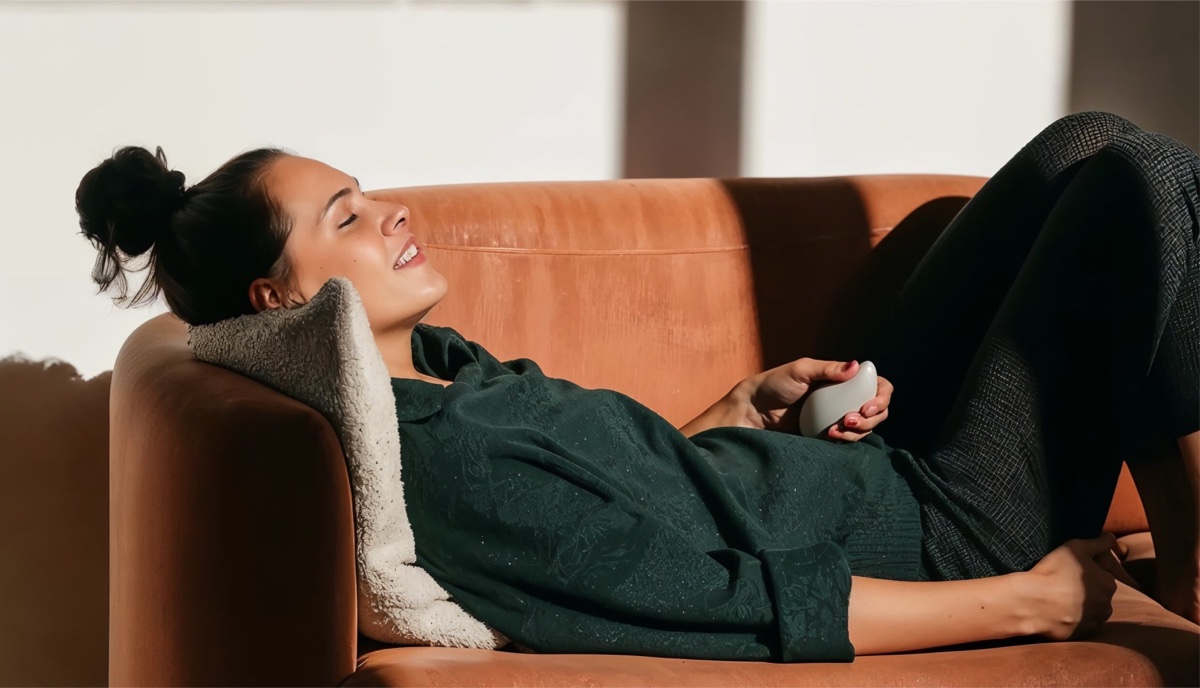
Moonbird works by turning slow breathing into something you feel in your hand instead of something you have to remember to do.
Everyone knows slow breathing calms you down. The problem is doing it. You start a 4-7-8 cycle, your mind wanders, and a minute later you’ve lost count and reached for your phone.
This guide explains exactly how the device solves that, what happens during a session, and what the research does and doesn’t show, so you know what you’re actually buying before you spend $199.
How does Moonbird work?
Moonbird is a handheld breathing pacer, a silicone-covered oval about the size of a computer mouse. Switch it on and it physically swells and shrinks in your palm. You breathe in as it expands and out as it contracts, and that’s the entire interaction.
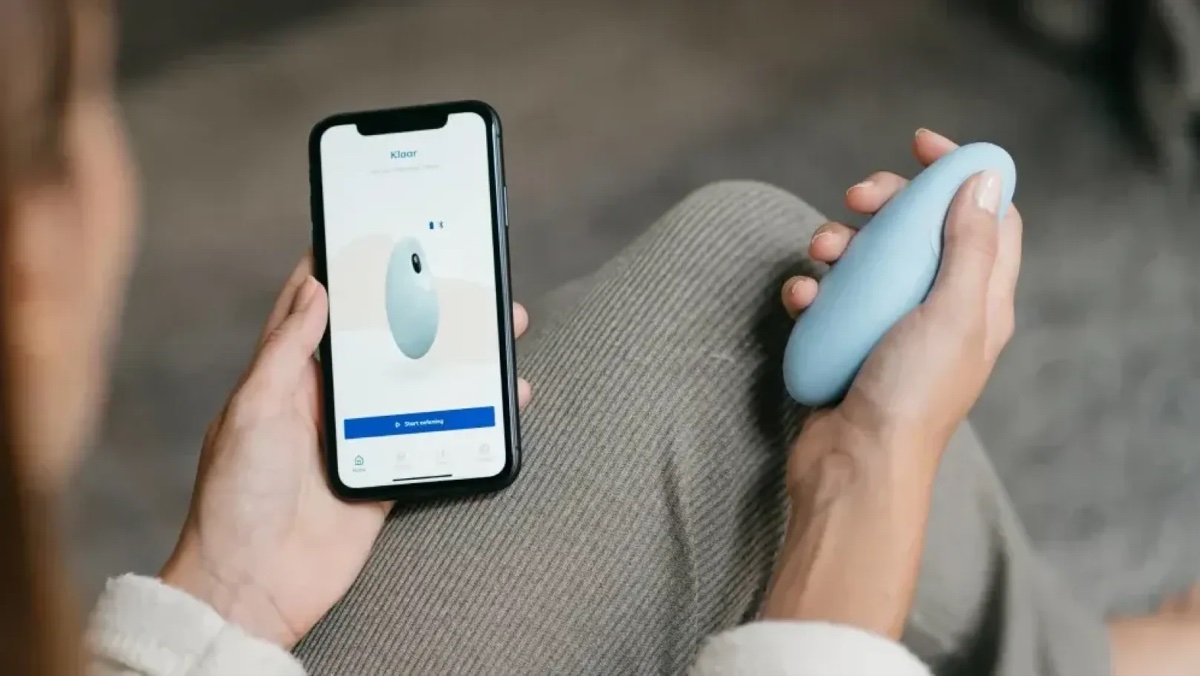
The tactile part is the whole trick. Your body syncs to a physical rhythm with far less mental effort than following a timer, a countdown, or an on-screen animation. There’s nothing to watch and nothing to count, so it works with your eyes shut.
That matters most at night. A screen-based breathing app keeps you staring at the thing that’s arguably keeping you awake. A device in your hand doesn’t.
There’s also a sensor in the thumb rest. Pair Moonbird with its app and it reads your heart rate and heart rate variability in real time, so you can watch your body downshift during a session. The device still paces you fine if you never open the app.
What happens during a session
A session is short and almost boring, which is the point. You hold the device, close your eyes, and match your breath to the motion for a few minutes.
The default pace guides you toward about six breaths a minute, with the exhale longer than the inhale. That slow, long-exhale pattern is the one most tied to the body’s rest response, and it’s the same target behind box breathing and 4-7-8, just without the counting.
Quick resets run 2 to 5 minutes. A proper wind-down before sleep runs 10 to 20. You can nudge the inhale and exhale lengths in the app if the standard pace feels too slow or too fast.
Most owners describe a heavier-limbed, calmer feeling by the end, building over a couple of weeks of regular use rather than hitting like a switch.
The science, kept honest
Two claims live inside “does Moonbird work,” and they deserve different answers.
The first is whether slow paced breathing does anything. That part is well established: breathing around six breaths a minute reliably nudges the nervous system toward its rest state. Moonbird doesn’t have to prove that.
The fair question is whether a $199 pacer beats a free phone app. There’s an actual study on that.
In 2025, researchers published a head-to-head trial in the International Journal of Clinical and Health Psychology. They put 36 highly stressed adults through sessions with both Moonbird and the Core meditation trainer while wired to EEG, ECG, and a breathing belt.
Breathing rates dropped with both devices. The effect held on more strongly after sessions with Moonbird, and participants preferred it for handling and guidance.
Be precise about what that buys you. It’s one small study on stressed-but-healthy adults, measured across sessions rather than months. It supports Moonbird as a relaxation and sleep-support tool with a mechanism you can see on lab instruments. It doesn’t make the device a treatment for anxiety or insomnia.
Our Moonbird vs Core comparison puts the two devices side by side beyond that study, round by round on price, biofeedback and everyday use.
How to actually use one
The honest instruction is short: hold it, breathe with it, do it often. A few minutes when you’re wound up during the day, and a longer stretch as you get into bed.

A couple of practical notes from owner reviews. The battery lasts around two hours of guided breathing per charge, which is a week or more of normal sessions. And the motion-activated switch can wake the device inside a bag and quietly drain it, so it’s worth parking it on the charger between trips.
One genuine opinion after reading hundreds of these reviews: the device feels almost too simple when you unbox it, and that simplicity is exactly why people keep using it when their meditation apps die of neglect by February.
Where Moonbird fits
Moonbird is a breathing coach, not a nervous-system zapper. If your stress feels more like a stuck, wired body than a busy mind, a stimulation device like the Pulsetto works the same goal from a different angle, and our Moonbird vs Pulsetto comparison puts the two approaches side by side.
If a breathing app already keeps you calm, you may not need hardware at all. We lay out that trade, including the cost-over-time math, in our meditation devices vs meditation apps guide. And if you want a nightstand option under $100, the Dodow projects a light to breathe along with, no hands involved.
For the full picture, our Moonbird review breaks down the 2025 study, the sentiment across roughly 800 Trustpilot reviews, the two real annoyances, and whether it’s worth $199 (the official store was showing $149.99 at this writing). It’s also our favorite pure breathing tool in the best sleep gadgets of 2026 roundup.
The short version: Moonbird works by making the one calming technique everyone recommends impossible to lose track of. You don’t have to count, you don’t have to watch a screen, and the early evidence says the effect outlasts the session.