
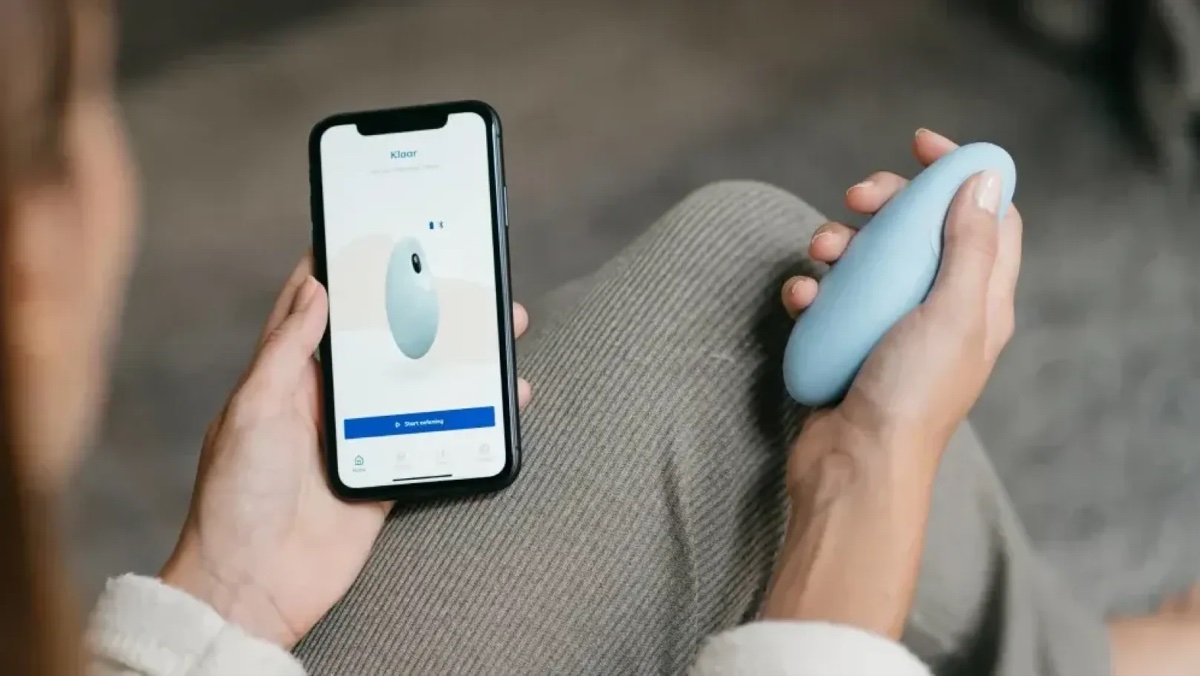
Before you compare meditation apps, settle the bigger question first: do you want an app at all, or a physical device you hold in your hand? Those are two different bets on how you’ll actually build the habit.
An app hands you a library: hundreds of guided sessions, sleep stories, and courses playing through your headphones. A device hands you a single tool that paces your breathing by touch or stimulates the nerve behind your calm response, mostly without a screen.
This guide breaks down what each one really does well, the honest cost math over a few years, and who should pick which. The short answer is that they solve overlapping problems in opposite ways, and the best pick depends on why you keep quitting.
The core difference: a content library vs a practice tool
An app delivers guidance through content. A voice, some music, a timer, a visual on the screen. It’s broad and cheap to start, and it plays at you whether or not you’re focused.
A device delivers guidance through your body. The Moonbird breathing trainer physically expands and shrinks in your palm so you breathe along by feel, eyes closed. The Pulsetto collar sends gentle pulses to the vagus nerve on your neck. Neither needs you to stare at anything.

That gap matters more than it sounds. Here’s the honest breakdown.
| What you’re comparing | Meditation apps | Meditation devices |
|---|---|---|
| How guidance reaches you | Audio and on-screen content | Touch, breathing pace, or nerve stimulation |
| Screen | You’re on your phone | Mostly screen-free once you start |
| Feedback | One-way; it plays for you | Live heart-rate data (Moonbird) or direct stimulation (Pulsetto) |
| What it covers | Meditation, sleep, focus, courses | Breathing and calming, one job |
| How you pay | Subscription, roughly $40 to $70 a year | One-time, roughly $150 to $270 |
Apps are a library. Devices are a tool. You can own both, and a lot of people should.
What meditation apps do best
Apps win on breadth and price of entry. Headspace and Calm each run about $69.99 a year, and Insight Timer has a genuinely large free tier with a paid Plus level around $39.99 a year. For that you get thousands of sessions, sleep content, beginner courses, and a range of teachers no single device tries to match.
The evidence is real, if modest. Randomized trials of app-based meditation show small but consistent reductions in anxiety and stress for people who stick with it. If you’re brand new to meditation and not sure it’ll click, an app is the low-risk way to find out.
Where apps struggle is the same place every subscription does: keeping you. The content plays whether you’re focused or scrolling in the back of your mind, and it’s easy to go passive. Poor long-term retention is the documented weak spot. The app also can’t tell you anything about your own body unless you pair it with a separate wearable.
What meditation devices do best
Devices win on focus and finality. Because you’re doing something physical, breathing to a pace in your hand or feeling a pulse on your neck, it’s harder to drift off mentally. And you pay once.
Moonbird runs about $150 for the device, or around $200 bundled with a year of premium, with no mandatory subscription to keep it working. Its app adds real-time heart-rate and heart-rate-variability feedback, so you can watch your body settle. A 2025 mixed-methods study of 36 highly stressed people found measurable drops in breathing rate during sessions, and participants preferred it to the device it was tested against. Worth stating plainly: that’s a small study, and its heart-rate-variability findings were mixed.
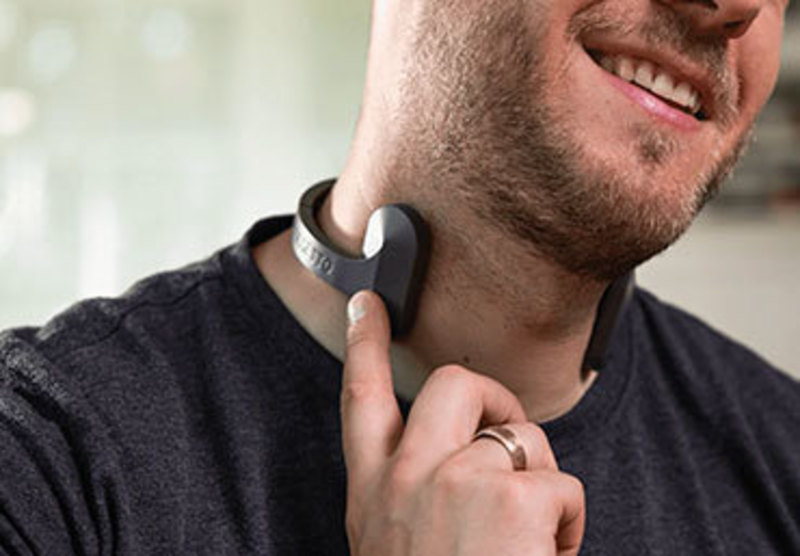
Pulsetto takes a different route at about $269: a neck collar that stimulates the vagus nerve in roughly four-minute sessions. A 2025 sham-controlled trial of 70 people found it cut anxiety and perceived stress more than a fake device, and it carries a 4.2-star average across more than 3,000 reviews, the biggest owner base in its category. Our Pulsetto vs Moonbird comparison digs into which suits which person.
The honest limits: devices cost more upfront, do one thing, and take a little practice. Pulsetto also needs conductive gel, a small recurring cost and the part owners grumble about most. None of these devices treats a medical condition, and no honest seller says otherwise.
Meditation devices vs apps: the real cost over time
This is the math most comparisons skip. A device costs more today; an app costs more forever. Here’s where they cross, at today’s prices.
| After | App at ~$70/yr | Moonbird ($199 once) | Pulsetto ($269 once) |
|---|---|---|---|
| Year 1 | $70 | $199 | $269 |
| Year 2 | $140 | $199 | $269 |
| Year 3 | $210 | $199 | $269 |
| Year 5 | $350 | $199 | $269 |
Against a $70-a-year app like Headspace or Calm, a $199 Moonbird pays for itself at about the three-year mark, and everything after that is free. Pulsetto crosses over closer to year four.
Two honest caveats. If you lean on a cheap or free app like Insight Timer, the app path stays cheaper for years, so the device only makes sense if you value the screen-free, tactile experience for its own sake. And a device is only a saving if you actually keep using it, the same “if” that sinks a subscription.
So which should you choose?
Pick an app if you’re a beginner on a budget, you want variety and sleep content, or you’re not yet sure meditation will stick. It’s the cheapest way to build the habit and see if it holds.
Pick a device if you keep bouncing off apps, you want less screen time, you want to feel your body respond, or your focus is specifically breathing and stress. Moonbird suits breath-pacing; Pulsetto suits people drawn to nerve stimulation for stress and sleep.
Honestly, the most useful setup for a lot of people is both: a device for the acute moments when you can’t focus on a voice, and an app for structured, sit-down practice. They’re not rivals so much as different tools for different minutes of your day.
If you’re leaning toward hardware, start with the full Moonbird review and Pulsetto review, or see how the whole category stacks up in our best sleep gadgets roundup. For the ambience layer that pairs with either, a slow-burning Spirual incense waterfall turns lighting incense into something you actually watch. More calm-tech coverage lives in the sleep hub.