
The cabin door thunks shut, the engines spool up, and your body decides this is the moment to panic: heart pounding, hands cold, a voice in your head narrating every worst case. You know, rationally, that flying is safe. Your nervous system hasn’t got the memo.
Here’s the good news. Flight anxiety responds to a handful of specific, well-studied moves you can run right there in seat 24C. This guide covers how to calm down fast, ranked roughly by how quickly each one works, starting with the fastest reset there is.
Calm flight anxiety fast with the physiological sigh
If you do one thing, do this. The physiological sigh is a breathing pattern that calms your body in under two minutes, and it’s the most evidence-backed quick fix on this list.
The how is simple. Take a normal inhale through your nose, then add a second short sip of air on top to fully inflate your lungs. Then let it all out in one slow, long exhale through your mouth. Repeat for a few rounds, though relief often lands after two or three.
Why it works comes down to your vagus nerve. The long exhale activates the parasympathetic branch of your nervous system, the “rest and digest” side, which slows your heart rate. Stanford psychiatrist David Spiegel has explained that exhaling this way switches on that system and calms the body. The double inhale reinflates the tiny air sacs in your lungs and helps you offload carbon dioxide, so you feel less air-hungry.
It’s not folk wisdom. A 2023 Stanford study in Cell Reports Medicine put 111 people through five minutes a day of different practices, and cyclic sighing beat box breathing and even mindfulness meditation for lowering anxiety and lifting mood. The effect showed up after a single session. That’s about as close to a free, instant calming button as the body has.
Keep going with a slower breathing rhythm
Once the sigh takes the edge off, settle into a steadier pace to stay calm for the rest of taxi and takeoff. A few patterns work, and they share one thing: a longer exhale than inhale.
Slow, even breathing at about six breaths a minute is the sweet spot. Inhale for a count of five, exhale for five, no straining. Research on paced breathing shows this rhythm maximizes heart-rate variability, a marker of the calm, in-control state you’re chasing.
If counting helps you focus, try 4-7-8 breathing: inhale through the nose for four, hold for seven, exhale through the mouth for eight. Cleveland Clinic suggests a few cycles at a time. Box breathing, the four-in, four-hold, four-out, four-hold pattern, works too, though the equal counts make it a touch less calming than the long-exhale patterns.
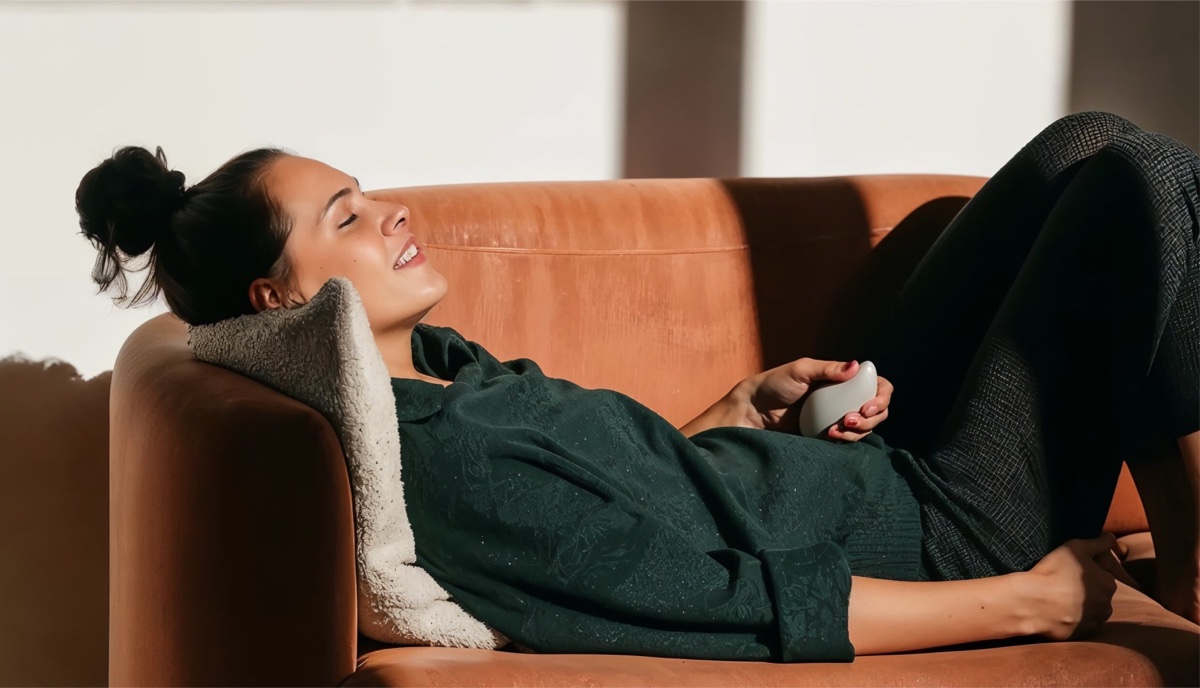
A paced-breathing device like the Moonbird exists precisely because keeping the rhythm is hard when you’re rattled. It expands and contracts in your hand to pace your breath so you don’t have to count. You absolutely don’t need hardware to breathe slowly, but a physical cue can make it easier in a noisy cabin.
Ground yourself with the 5-4-3-2-1 technique
When your mind is spiraling into what-ifs, grounding drags it back to the present. The 5-4-3-2-1 method uses your senses to interrupt the fear loop.
Name five things you can see. Four you can touch, like the armrest, your seatbelt, your feet on the floor. Three you can hear. Two you can smell. One you can taste.
It sounds almost too simple to work. But forcing your attention onto the concrete world around you pulls it off the catastrophic story in your head, and that’s usually enough to bring the panic down a notch within a couple of minutes.
Talk yourself down with the actual numbers
Fear feeds on vague dread, so feed it facts instead. Flying is, by a wide margin, the safest way to travel, and knowing the real numbers is a genuine calming tool.
The airline industry flew 40.6 million flights in 2024, with an accident rate of about one per 880,000 flights, according to the IATA safety report. Put another way, an average person would have to fly every single day for roughly 49,000 years to be involved in one fatal accident. Commercial aviation keeps getting safer, not less safe.
Then there’s turbulence, the part that spikes most people’s fear. The reframe that matters: turbulence is uncomfortable, not dangerous.
A modern airliner is built to take far more stress than any bump you’ll feel, and pilots routinely change altitude or steer around rough air using weather radar. The plane isn’t going to fall out of the sky because the seatbelt sign came on.
Honestly, once I started thinking of turbulence as a bad road rather than a threat, half the fear drained out of it.
Set yourself up before you even board
A calmer flight starts on the ground. A few choices stack the deck in your favor before the doors close.
Pick your seat with your anxiety in mind. Seats over the wing and toward the front ride the smoothest. An aisle seat helps if confinement bothers you; a window seat helps if you’d rather control what you look at.
Skip the caffeine and the pre-flight drink. Coffee amps up the same jittery physical signals your brain reads as fear, and alcohol tends to make anxiety worse once it fades. Drink water instead, and go into the flight rested.
Line up a distraction before you sit down. Download a gripping show, a playlist, or a podcast in advance so your attention has somewhere to go during takeoff. A guided-breathing app can give your focus a job too.
Can a calming device help you settle?
For some people, a physical calming aid takes the pressure off doing the technique perfectly under stress. Two are worth knowing about, with one honest caveat: these are aids that make proven techniques easier, not treatments or cures for anxiety.
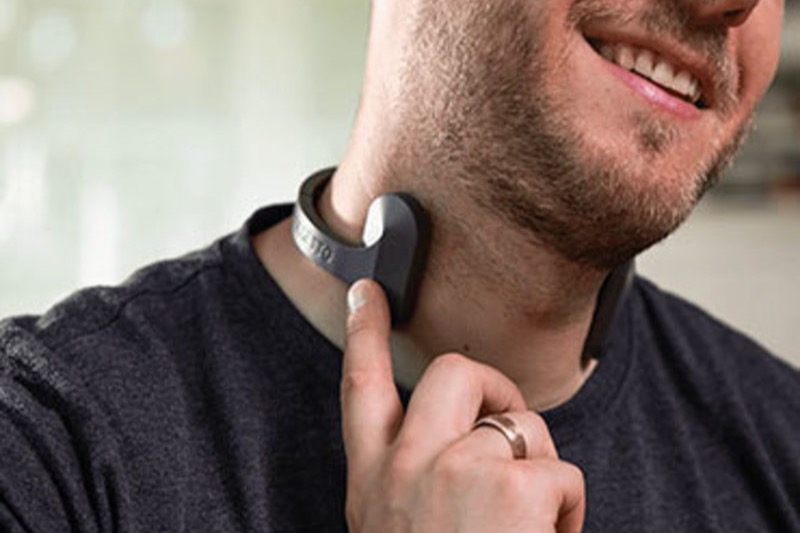
The Moonbird guides your breathing to that slow, six-a-minute rhythm by pacing your hand, which helps when nerves make counting impossible. A Pulsetto takes a different route: it’s a neck-worn wearable that sends gentle pulses to stimulate the vagus nerve, the same calming pathway your long exhale targets.
Early research on this kind of stimulation is promising but small, with modest effects, so treat either device as a relaxation aid rather than a fix.
If you like a physical prompt, either can help. If you’d rather travel light, the physiological sigh does the same parasympathetic job for free. Our Moonbird vs Pulsetto comparison breaks down which approach suits which person, and the best sleep gadgets of 2026 roundup covers wind-down tools that carry over to travel.
When it’s more than nerves
There’s a line between ordinary flying nerves and aerophobia, a genuine specific phobia. If your fear lasts six months or more, makes you actively avoid flying, or disrupts your work and life, it’s worth treating properly rather than white-knuckling every trip.
The good news is that the treatments work. Cognitive behavioral therapy and exposure therapy are the most effective, and virtual-reality exposure therapy is among them. Fear-of-flying courses, some run by airlines, combine those skills with aviation education. The Anxiety and Depression Association of America keeps a directory of specialists.
Reaching for real help isn’t a failure. It’s the move that actually fixes the problem, the same way a plush insole won’t fix a broken bone.
The one move to remember
If you forget everything else, remember the breath. When the fear hits, do a physiological sigh: two inhales, one long exhale, repeat. It’s the fastest, most portable, best-studied tool you’ve got, and it works in a cramped seat with the engines roaring.
Stack the rest around it. Ground yourself with your senses, lean on the real safety numbers, choose a smooth seat, and skip the coffee. Do that, and the next flight becomes something you get through calmly, instead of something you dread. For longer trips, our jet lag recovery tips cover landing at your best, and the travel hub has more gear and guides for anxious flyers.