
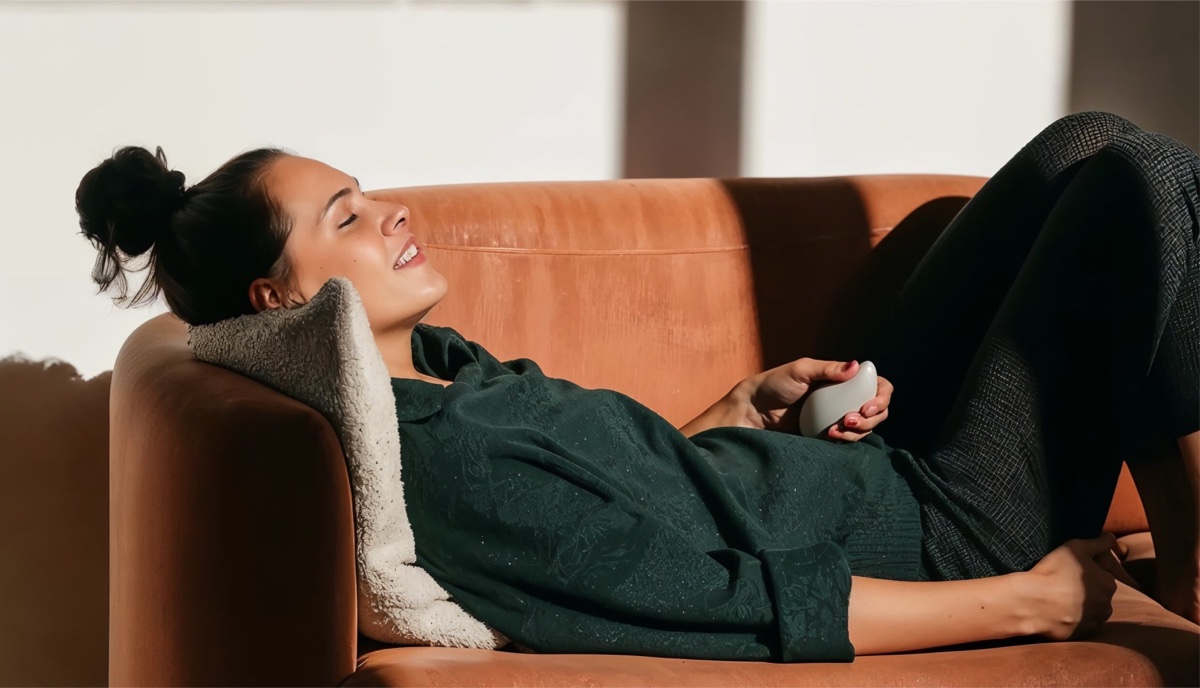
You’ve boarded a red-eye determined to land rested, and six hours later you’re still wide awake, doing math on how little sleep you’ll run on tomorrow. Sleeping on a plane is hard for real reasons, and most of them are fixable once you know what you’re fighting.
The cabin is working against you. The air is thin, the seat is upright, the temperature swings, and your nervous system is quietly wired from the rush of travel. Beat those one by one and you can actually sleep.
This guide covers how to sleep on a plane the practical way: the seat and kit that matter, the habits that help, and a drug-free wind-down routine for the part nobody explains, calming a racing mind in a cramped seat. No melatonin required, though we’ll cover that too.
First, why plane sleep is so broken
It helps to know what you’re up against, because the fixes make more sense once you do.
Airliner cabins are pressurized to no more than about 8,000 feet of altitude, so there’s less oxygen in the air than at sea level. That sounds minor, but it matters most while you sleep.
In one peer-reviewed simulated-flight study, sleepers’ blood oxygen fell to around 88%, versus about 96% in a ground-level sleep lab, and they spent most of their sleeping time below the level doctors treat as low. The result was lighter, more broken sleep, with less deep and REM sleep than the same people got on the ground.
Add a cold cabin, constant low-frequency noise, bright light, an upright posture and pre-flight nerves, and it’s no wonder you struggle. The tips below chip away at each of those.
Choose the right seat
Your seat decides most of the night before you even board. If sleep is the goal, pick deliberately.
Go for a window seat. You get a wall to lean on, control over the shade, and nobody climbing over you to reach the aisle. Aim for a spot over or just ahead of the wing, where the ride is smoother and quieter, and steer clear of the galley and lavatories, where light and foot traffic never stop.
Avoid the very back rows near the restrooms, and skip the bulkhead if you want to stretch your legs forward. A little seat-map homework at booking pays off more than any gadget.
Build a sleep kit that fits a carry-on
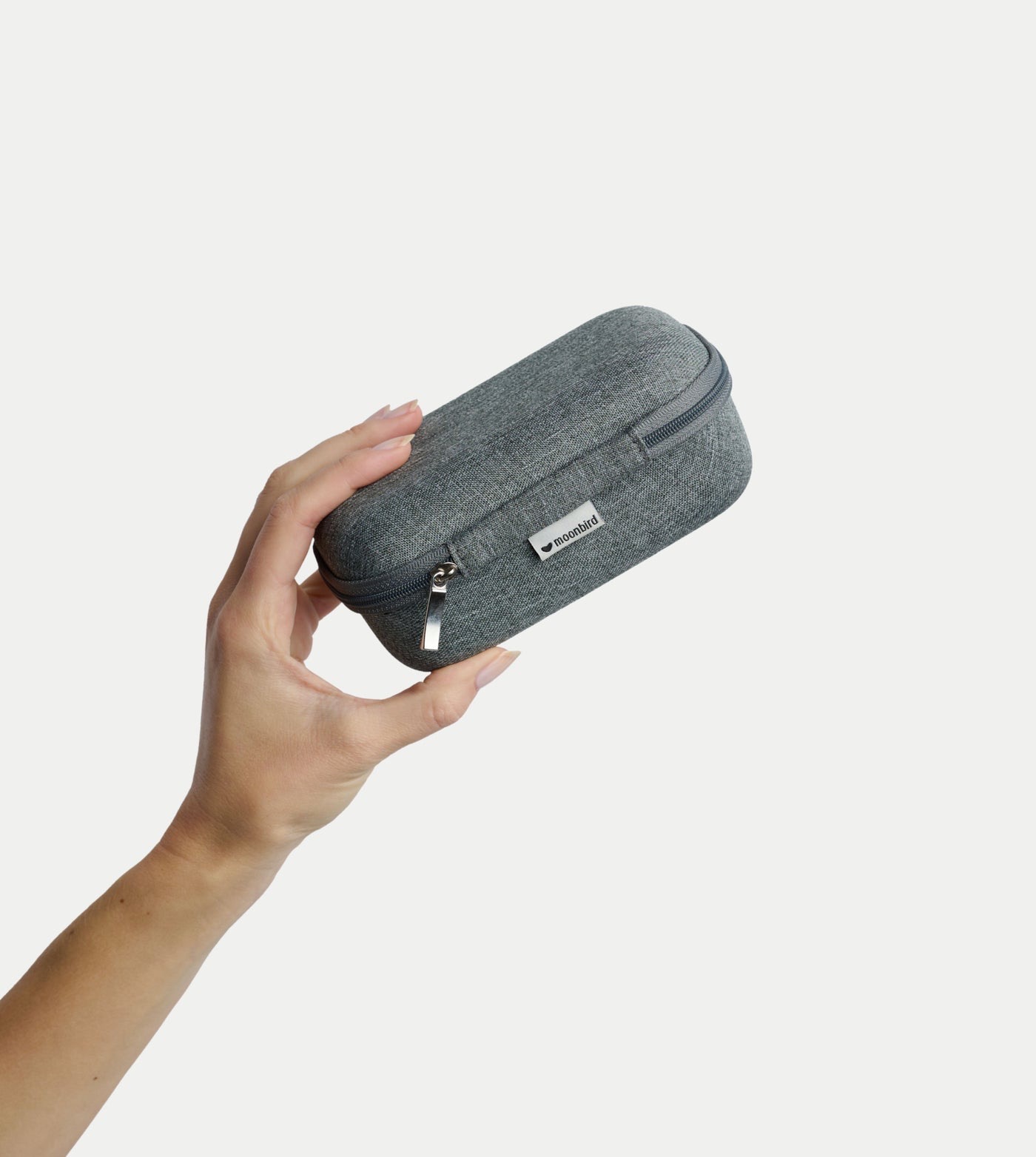
A few small things do the heavy lifting, and they all fit in a personal item.
A support pillow that keeps your head from dropping forward is the highest-impact item, far more than the classic U-shape most people pack. Add an eye mask to kill the cabin and window light, and noise-cancelling headphones or foam earplugs to flatten the engine drone and cabin chatter.
Cabins run cold and the temperature swings, so bring a layer, a large scarf or blanket, and socks for warm feet. A rolled blanket behind your lower back adds lumbar support a plane seat never gives you, and a packable travel seat cushion for long flights takes the pressure off your tailbone on the hauls where the seat pad gives out. That’s the whole kit, and none of it is expensive.
Short on room for all of it? Compressing your clothes frees up space fast, and our Aerless review covers rechargeable vacuum bags that shrink a week of clothes down to a carry-on you can still zip.
Time your food, drinks and light
What you put in your body in the hours before sleep matters as much as the seat.
Skip the alcohol. It feels sedating, but it fragments the back half of your sleep and worsens the dehydration and low oxygen the cabin already causes. Cut caffeine well before you want to sleep, too.
Eat a proper meal a couple of hours before boarding rather than picking at the late tray service, since a heavy meal right before sleep sits badly.
Drink water across the flight to fight the dry air, but front-load it so you’re not up for the bathroom every hour. And put the screens away before you try to sleep, because their light tells your brain it’s daytime.
The part nobody explains: winding down a racing mind
Here’s the tip that ranking guides mention in a single line and then abandon, even though it’s the one that decides whether you actually fall asleep.
You can do everything right, dark mask, warm layer, quiet cabin, and still lie there wired, because your nervous system is stuck in travel-alert mode. The fix is slow, paced breathing, especially long, unhurried exhales. Extending the exhale nudges your body toward its rest-and-digest state, which slows your heart rate and lowers the arousal that’s keeping you awake.
Two simple patterns work well. Box breathing runs a steady in-for-four, hold-for-four, out-for-four, hold-for-four. The 4-7-8 method stretches the exhale further: inhale for four, hold for seven, exhale for eight. Either one, run for a few minutes with your eyes closed, does more to settle you than any pillow.
The catch is that a tired, anxious brain is terrible at keeping count. That’s exactly where a paced-breathing tool earns its place.
Let a device pace your breathing
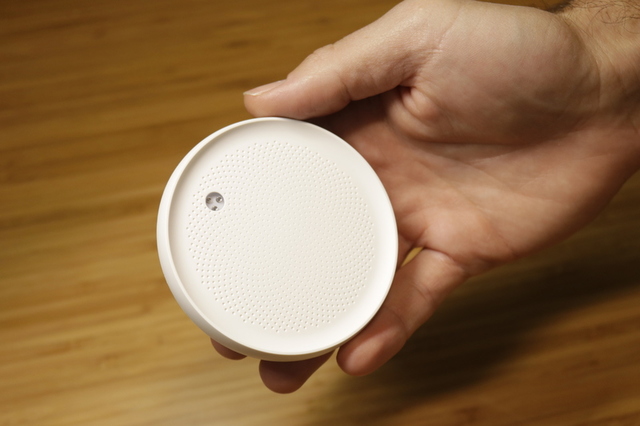
A breathing device removes the mental work of counting so you can just follow along, which is genuinely helpful when you’re too wired to concentrate.
The Moonbird is the one that actually suits a plane seat. It’s a palm-sized handheld that physically expands and contracts in your hand: you breathe in as it grows and out as it shrinks, following a slow rhythm with no counting, no screen and no sound.
Because it works by touch, you can use it with your eye mask on in a dark cabin, which is arguably its best-case setting. It won’t knock you out, but it makes the breathing tip doable when your head won’t cooperate. Our Moonbird review covers how it works and who it suits.
Dodow is the honest companion here, but save it for the hotel, not the seat. It’s a bedside puck that projects an expanding and contracting light onto the ceiling to pace your breathing down toward sleep.
That setup needs a dark room and a surface to project onto, so it’s impractical in a lit cabin and the light would bother your neighbors. Where it shines is beating jet lag on arrival, re-establishing a bedtime routine in a strange hotel room, which our Dodow review gets into.
Recline, settle, and don’t force it
Once your body is warm and your breathing has slowed, set your posture and let sleep come.
Recline as far as the airline allows and get your head supported and neutral so it can’t bob forward. A slightly reclined, well-supported position is far easier on your body than sitting bolt upright, even if you can’t get anywhere near flat.
If sleep doesn’t come, don’t fight it. Keep your eyes closed, keep the slow breathing going, and let rest do some of the job even if you don’t fully drop off. Chasing sleep harder just raises the arousal you’re trying to lower.
The honest bottom line
Sleeping on a plane will never match your own bed, because the thin air and cramped seat are real obstacles you can’t fully remove. But you can stack the deck: a window seat, a proper support pillow, an eye mask and earplugs, no alcohol, and a slow-breathing wind-down to switch off a racing mind.
Get those right and you’ll sleep more than the passenger next to you who’s on their third gin. For the rest of the trip, our jet lag recovery tips handle the days after you land, our guide to flight anxiety and how to calm down fast covers the nervous flyer’s version of all this, and the best sleep gadgets of 2026 roundup gathers the gear that helps you wind down anywhere. If a language barrier waits at the other end, the best translation earbuds of 2026 can help you actually talk to people once you land.