
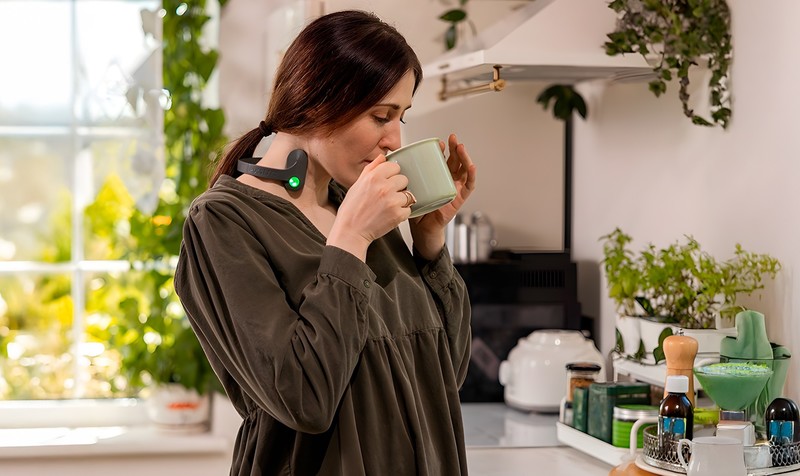
The “7 minute vagus nerve reset” is all over your feed, usually attached to a promise that a few minutes of breathing and humming can flip your body out of stress mode. The good news is the underlying techniques are real, and free.
The less exciting news is that “7 minutes” is a label creators put on a bundle of old calming exercises, not a tested medical protocol.
This guide explains what the reset actually is, walks you through a routine you can do tonight, and gives you an honest read on how well it works and where a powered device fits.
What the 7 minute vagus nerve reset actually is
It’s a short, self-guided sequence of exercises that stimulate the vagus nerve, the long nerve running from your brainstem down through your neck and chest that helps switch your body from “fight or flight” into “rest and digest.” The usual ingredients are slow breathing, humming, gentle eye movements, gargling and brief cold exposure, stacked into roughly seven minutes.
No single group owns the phrase. Health systems like the Cleveland Clinic publish nearly identical exercise lists, just without the countdown branding. The seven-minute version simply strings the same moves into one timed block so you actually do them.
The 7 minute reset, step by step
Here’s a simple version you can follow with a timer. Sit or lie somewhere quiet, and move through the blocks without rushing. The whole point is the long, slow exhale, so don’t force the pace.
Minutes 1 to 2, long-exhale breathing. Breathe in through your nose for four seconds, then out for six. Cleveland Clinic recommends exactly this longer-exhale pattern, because the extended out-breath is what signals safety to the vagus nerve. Keep it smooth for two full minutes.
Minute 3, humming or “om.” Make a low, drawn-out humming sound on each exhale. The vagus nerve connects to your vocal cords and throat, so the vibration is doing real work, and long “om” style tones are on Cleveland Clinic’s list too.
Minute 4, gentle eye movements. Keep your head still and look slowly to one side, hold for a slow count, then the other. Many people notice a spontaneous sigh or yawn, which is a small sign your system is downshifting.
Minute 5, gargling. Take a mouthful of water and gargle firmly for 20 to 30 seconds. It’s slightly ridiculous, and it creates a strong vibration deep in the throat that engages the same pathway as humming.
Minute 6, cold on the face. Splash cold water on your face, or press a cool, damp cloth over your cheeks and forehead. Cold contact around the eyes triggers a reflex that slows your heart rate. Keep it brief and gentle.
Minute 7, settle and notice. Return to easy breathing and sit still. This last minute lets the calmer state land instead of jumping straight back to your phone.
That’s it. None of it needs equipment, and you can shorten or reorder the blocks to taste.
Does the 7 minute vagus nerve reset actually work?
For most people, a session takes the edge off, and the reason is physiological, not magic. A longer exhale, humming, gargling and cold exposure all nudge the same “rest and digest” pathway, and Cleveland Clinic (medically reviewed by neurologist Emad Estemalik, MD) recommends those exact techniques for calming the nervous system.
What the science doesn’t back is the exact number. There’s no trial showing that precisely seven minutes “resets” anything, so read the countdown as a handy routine length rather than a clinical dose.
Honestly, the timer is the most useful part. The exercises have been around for years, and the thing most of us fail at is actually doing them, so a tidy seven-minute block you can repeat is worth more than the neuroscience gloss around it.
Two fair caveats. Sitting quietly for seven minutes is calming on its own, so some of the effect is simply the pause. And a minority of people feel very little from breathwork alone, which is exactly where powered options come in.
When you’d rather a device do the work
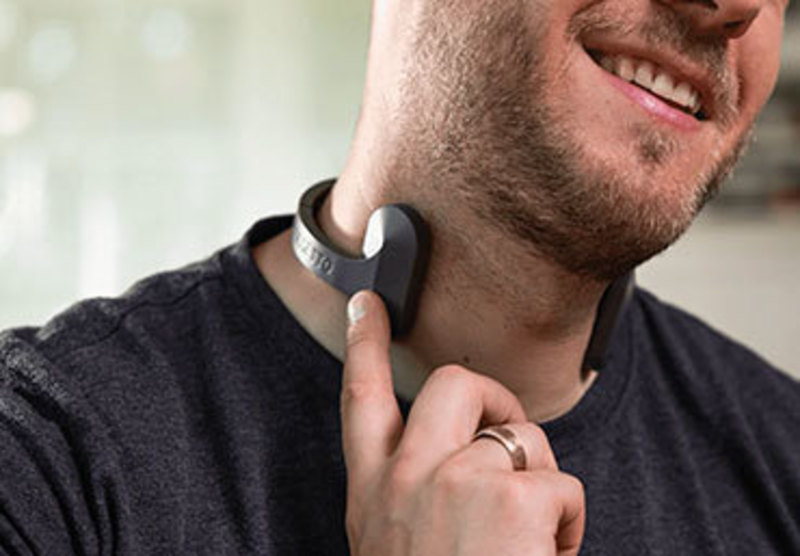
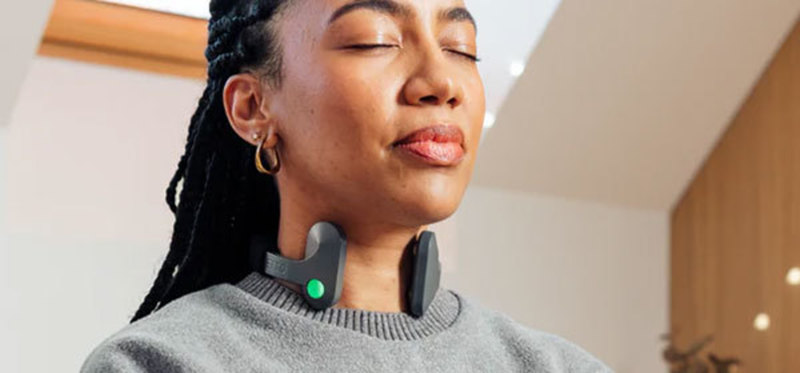
If you like the idea but never remember to do the routine, a wearable takes the practice out of it. The Pulsetto vagus nerve stimulator is a soft neck collar that delivers gentle electrical pulses over a 4 to 10 minute session, roughly the same timescale as the reset above, with nothing to remember beyond pressing start.
The evidence here is a step up from a TikTok trend. A 2025 sham-controlled study of the Pulsetto found more alpha-wave activity and lower blood pressure after real sessions than after fake ones, and across 3,000-plus Trustpilot reviews it averages 4.2 stars, the largest review base of any consumer device in its category.
It isn’t magic either, and it isn’t free. Our full Pulsetto review covers the two real annoyances, the conductive gel and the app upsells, before you spend around $269. If you’d rather stay hands-on first, our guide to stimulating the vagus nerve naturally goes deeper on the free techniques.
The honest bottom line
The 7 minute vagus nerve reset is a real routine built from legitimate calming exercises, dressed up with a catchy number. Try it free first, most nights it’s enough to slow you down before bed.
If breathwork alone doesn’t get you there, or you just won’t keep it up, that’s the case for hardware.
See how the field compares in our best vagus nerve stimulator roundup, and check who should skip these devices in our safety guide. Still deciding? Weigh the evidence in do vagus nerve stimulators really work. More sleep and stress coverage lives in our sleep hub.