
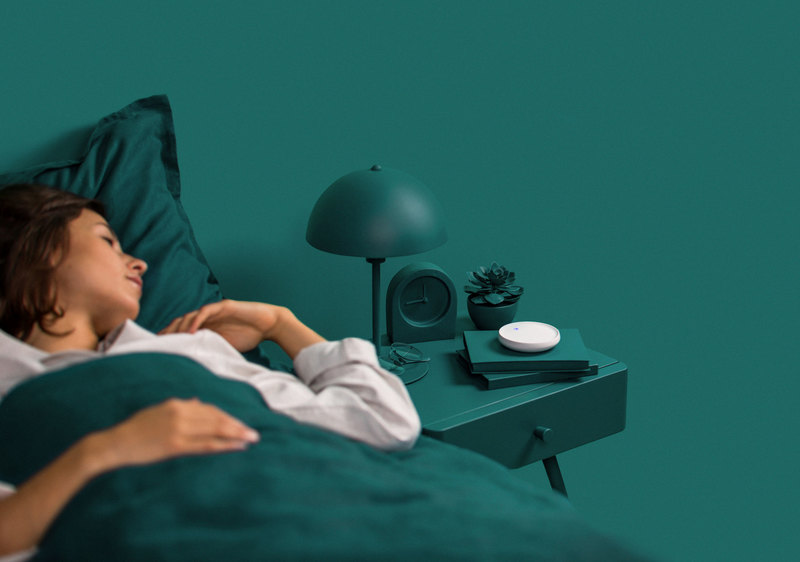
“The forbidden hour of sleep” isn’t in any sleep-medicine textbook, but almost everyone has lived through it. It’s that stretch around 3am when you wake up wide-eyed, your mind switches on before your body wants it to, and getting back to sleep suddenly feels like a job.
There’s a physiological reason it happens, and there’s a specific handful of things that make it worse. This guide covers both, and points at the fixes that actually work in the moment.
Why 3am became “the forbidden hour”
Nothing mystical is happening at 3am. What’s happening is that after roughly five hours of sleep, your body has finished most of its deepest, slow-wave sleep and shifted into a phase dominated by lighter, dream-heavy REM cycles. Cleveland Clinic and the Sleep Foundation both note that around this point in the night, you’re much easier to rouse.
If you fell asleep between 10pm and midnight, that lighter window lands right around 2am to 4am. Wake in it and your body treats you as awake, so a full bladder, a warm room, a spiking stress thought, or a partner moving can pull you all the way out of sleep. That’s the “forbidden hour” pattern, dressed up as a time.
The hour is a description, not a diagnosis. What actually matters is where the wake-up sits in your sleep cycle, which is why a night-shift worker’s “forbidden hour” might be 11am. The clock number is a coincidence.
The stack of things that turn a light-sleep window into a wake-up
You can’t stop the light-sleep window. You can stop the things that reliably wake you inside it. A few of the biggest, drawn from sleep-medicine guidance and what actually keeps recurring in the research:
Alcohol before bed. Alcohol makes you fall asleep faster and then wrecks the second half of the night. It suppresses REM early, then rebounds later, which is why “one glass” often shows up as a 3am wake-up.
Blood-sugar dips. A late-evening spike (dessert, sugary snack) can drop you into a small dip around the same window, triggering a stress-hormone response that snaps you awake.
Stress and cortisol. Your body naturally starts ramping cortisol toward morning. If you’re chronically stressed, that ramp starts earlier and hits harder, and the “wide-awake mind at 3am” is what it feels like from the inside.
A warm or bright room. Core body temperature dips overnight; a stuffy room fights that. Even a small streak of blue light from a charger or a smoke alarm can nudge you fully awake in the light phase.
A partner or pet. In the deep-sleep phase you barely notice movement. In the light-sleep phase you notice everything.
None of these on their own would wake you at midnight. All of them are amplified inside the forbidden hour.
The one thing that works right now, in the wake-up itself
Once you’re awake at 3am, the goal isn’t to force sleep. It’s to calm your nervous system enough for sleep to come back on its own. The single most reliable tool for that is slow, paced breathing at about six breaths a minute, which activates the parasympathetic “rest and digest” system and quiets the racing-mind response that keeps you up.
You can do it unaided: breathe in for four seconds, out for six, and repeat. The catch is that a racing mind is exactly the mind that won’t stick to a count. This is where a small device that paces breathing for you shines, because your only job is to follow it.
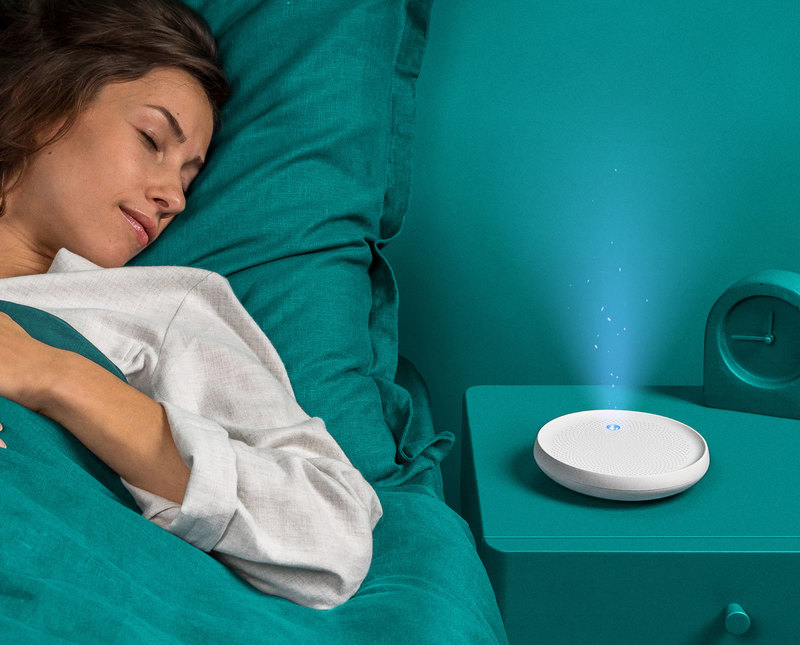
The Dodow is the classic version of this. It projects a soft blue halo onto the ceiling that expands as you breathe in and contracts as you breathe out, slowly winding you down from 11 breaths a minute to six. It’s a wellness light, not a medical device, and it doesn’t claim to cure insomnia, but for the specific problem of a racing mind in the middle of the night, paced-breathing is an evidence-backed technique and Dodow is one of the lowest-friction ways to run it.
Whether you use a device or count your own breaths, the rest of the wake-up protocol is worth doing together: keep the lights off, don’t check the clock, and don’t reach for your phone. If you’re still awake after about twenty minutes, get up, sit in dim light doing something dull, and go back when you feel sleepy. That’s the standard sleep-medicine advice, and it protects your brain’s association between bed and sleep.
What to do upstream so 3am doesn’t win
Fixing the wake-up itself is only half the job. The other half is not walking into the forbidden hour with your nervous system already primed to lose. A short list of what’s actually worth doing:
Keep a consistent bedtime. Your body’s light-sleep window is anchored to when you fell asleep. Vary your bedtime by hours and you vary where 3am lands in your cycle, which makes the wake-up unpredictable and harder to plan around.
Cut alcohol in the four hours before bed. This is the single biggest lever most people never pull. If you cut it, the 3am wake-up often just stops.
Keep the room cool and dark. Around 65 degrees Fahrenheit is the sleep-medicine sweet spot. Cover glowing electronics or move them out of the room.
Give yourself a proper wind-down. A 30-minute buffer between screens and sleep, phone across the room. If you want a structured version, the ideas in how to fall asleep faster tonight cost nothing to try.
None of these are exotic. They just do the boring work of not stacking the deck against you.
When the forbidden hour is really insomnia
Occasional 3am wake-ups happen to everyone. It becomes middle-of-the-night insomnia when the wake-ups hit three or more nights a week for a month or longer and you’re exhausted the next day. That pattern earns a doctor’s visit, not more herbal tea. Cognitive behavioral therapy for insomnia (CBT-I) is the first-line evidence-backed treatment, and it works well for exactly this pattern.
Same for wake-ups that come with gasping, choking, or daytime crashes. Those aren’t the forbidden hour, they’re a signal to rule out sleep apnea with a proper evaluation.
For everyone else, the forbidden hour is a light-sleep window that a few boring habits and one calm breathing routine can usually beat.
The bottom line
The “forbidden hour of sleep” is a nickname for a real physiological window: the light, REM-heavy phase around 3am where wake-ups happen easily and getting back to sleep feels hard. The fix is a small stack of upstream habits (bedtime, alcohol, cool dark room) plus one in-the-moment tool that calms your nervous system without asking your racing mind to do the work.
If you want a device to run the breathing for you, the Dodow review covers who it works for, what it costs, and the honest catch (it’s a back-sleeper’s device). If you’re curious whether the mechanism itself is real, does Dodow actually work walks through the evidence. And if you want to see the wider field of tools that can quiet the same wake-up, our best sleep gadgets roundup and the Moonbird review cover what else earns a spot on the nightstand.