

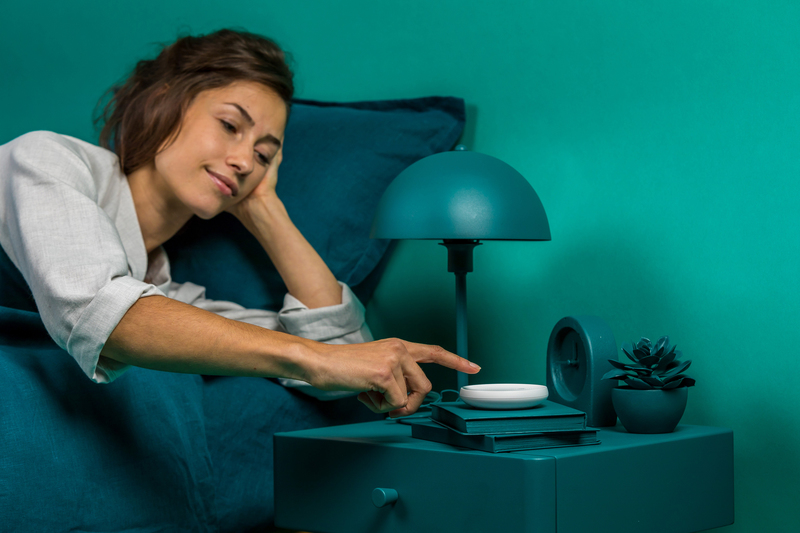
Both of these gadgets do the same trick, slowing your breathing until your body gives up and lets you sleep, and they cost wildly different amounts to pull it off. That price gap is really the whole decision.
One is a $199 pod you hold in your hand. The other is a $59 light that sits on your nightstand and glows at the ceiling. Neither asks you to count, and neither runs an app you have to babysit at midnight.
So in a Moonbird vs Dodow matchup, which one actually settles you down, and which is worth the extra money? We read hundreds of owner reviews, both makers’ claims, and the independent coverage, then weighed the credible feedback over the marketing.
The short answer: they chase the same calm from opposite ends of the price range, and one has the evidence to back it up.
Moonbird vs Dodow at a glance
| Feature | Moonbird | Dodow |
|---|---|---|
| Price | $199, often around $149.99 | About $59 |
| How it works | Handheld tactile breathing pacer | Light projected on the ceiling |
| Ongoing cost | None for core use | None, no app at all |
| Biofeedback | Live heart rate and HRV in app | None |
| Sleep position | Any, works eyes-closed | Back sleepers with a clear ceiling |
| Evidence | 2025 peer-reviewed study | Maker's own user surveys |
| Owner rating | 4.3 / 5 (~800 Trustpilot) | ~4.0 to 4.1 / 5 (Amazon aggregate) |
| Guarantee | 30-day money-back, 2-yr warranty | 100-night money-back |
| Our score | 9.8 / 10 | 9.5 / 10 |
Two roads to six breaths a minute
Both devices are built on the same piece of physiology: breathe at roughly six breaths a minute and your nervous system shifts toward its rest state. That part isn’t in dispute. What differs is how each one gets you there.
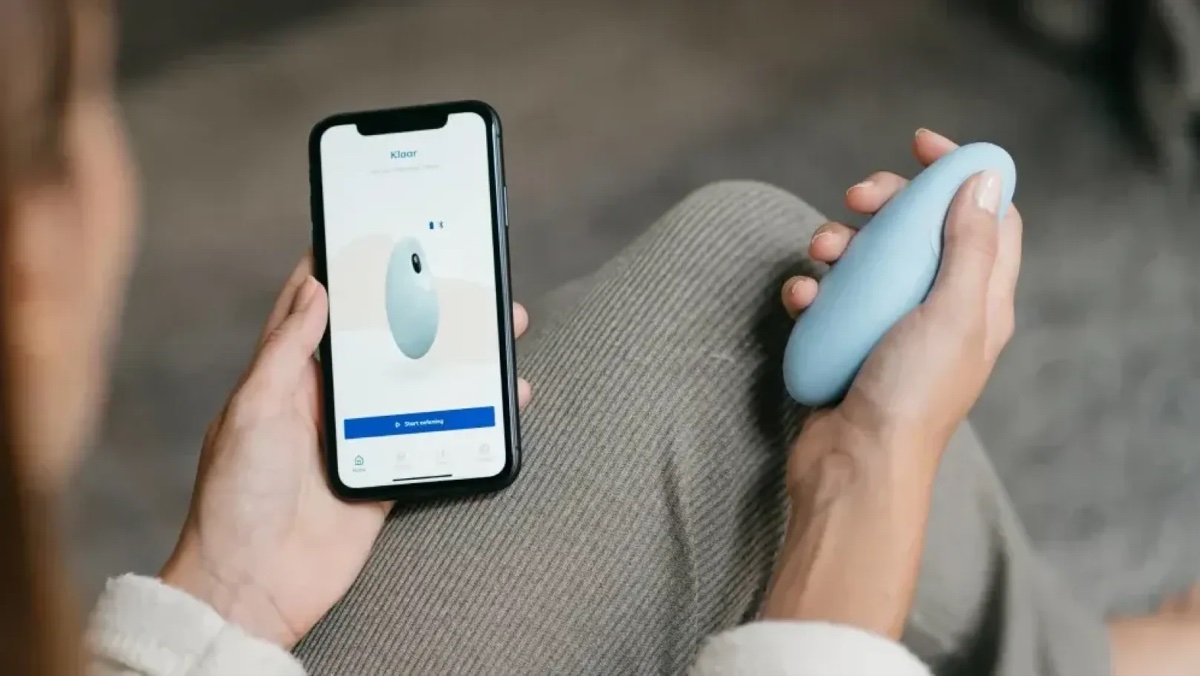
The Moonbird, a handheld breathing pacer from the Belgian company of the same name, works through touch. It’s a smooth, palm-sized pod that physically swells and shrinks, and you breathe in as it grows and out as it falls.
A thumb sensor reads your heart rate and HRV live in the app, so you watch your body downshift in real time.
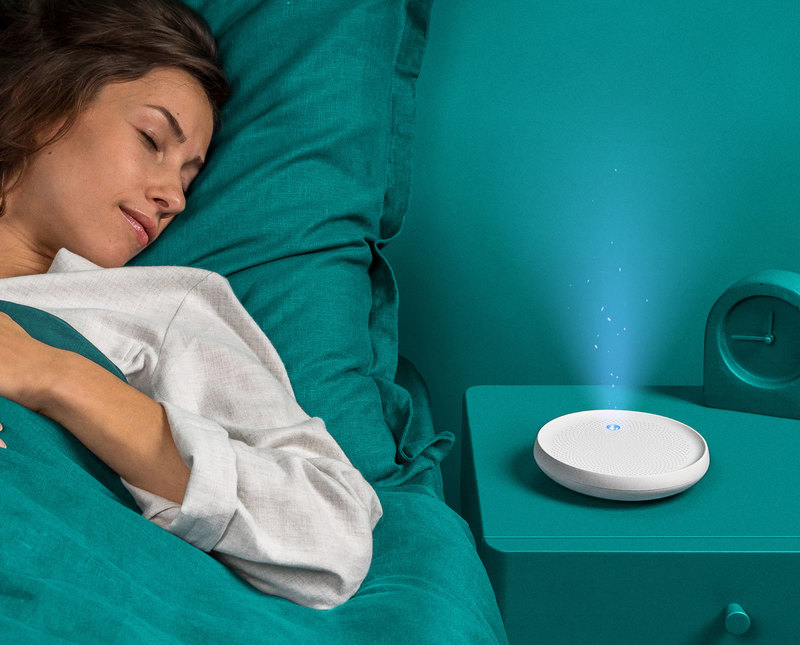
The Dodow, from the French maker LivLab, works through light. Tap the disc on your nightstand and it casts a soft glow on the ceiling that grows and shrinks.
You sync your breathing to it, and the rhythm slows from 11 breaths a minute down to 6 over the session. Tap once for eight minutes, twice for twenty, and it switches itself off.
The practical split is hands-on versus hands-free. Moonbird puts the pacer in your palm and gives you data. Dodow keeps your hands free and asks only that you watch the ceiling.
Round by round
Price and value
Round winner: DodowThis one isn’t close. Dodow is about $59, and that’s the whole cost. No app, no subscription, nothing to renew.
Moonbird lists at $199 and often shows around $149.99. You’re paying for the sensor, the app, and the tactile hardware, which are real additions, but they’re additions Dodow buyers happily skip.
If the only question is “cheapest way to try paced breathing for sleep,” Dodow wins it outright.
Setup and nightly effort
Round winner: DodowDodow asks almost nothing of you. Set it on the nightstand once, then tap it and watch the ceiling. Nothing to hold, nothing to charge (it runs on three AAA batteries in the box), no phone involved.
Moonbird is barely more work, but it is more work: you pick it up, and if you want the biofeedback you open the app. Lovely, but it’s a step Dodow doesn’t have.
For pure low-effort, tap-and-drift ease, Dodow is the smoother bedtime ritual.
The evidence behind each
Round winner: Moonbird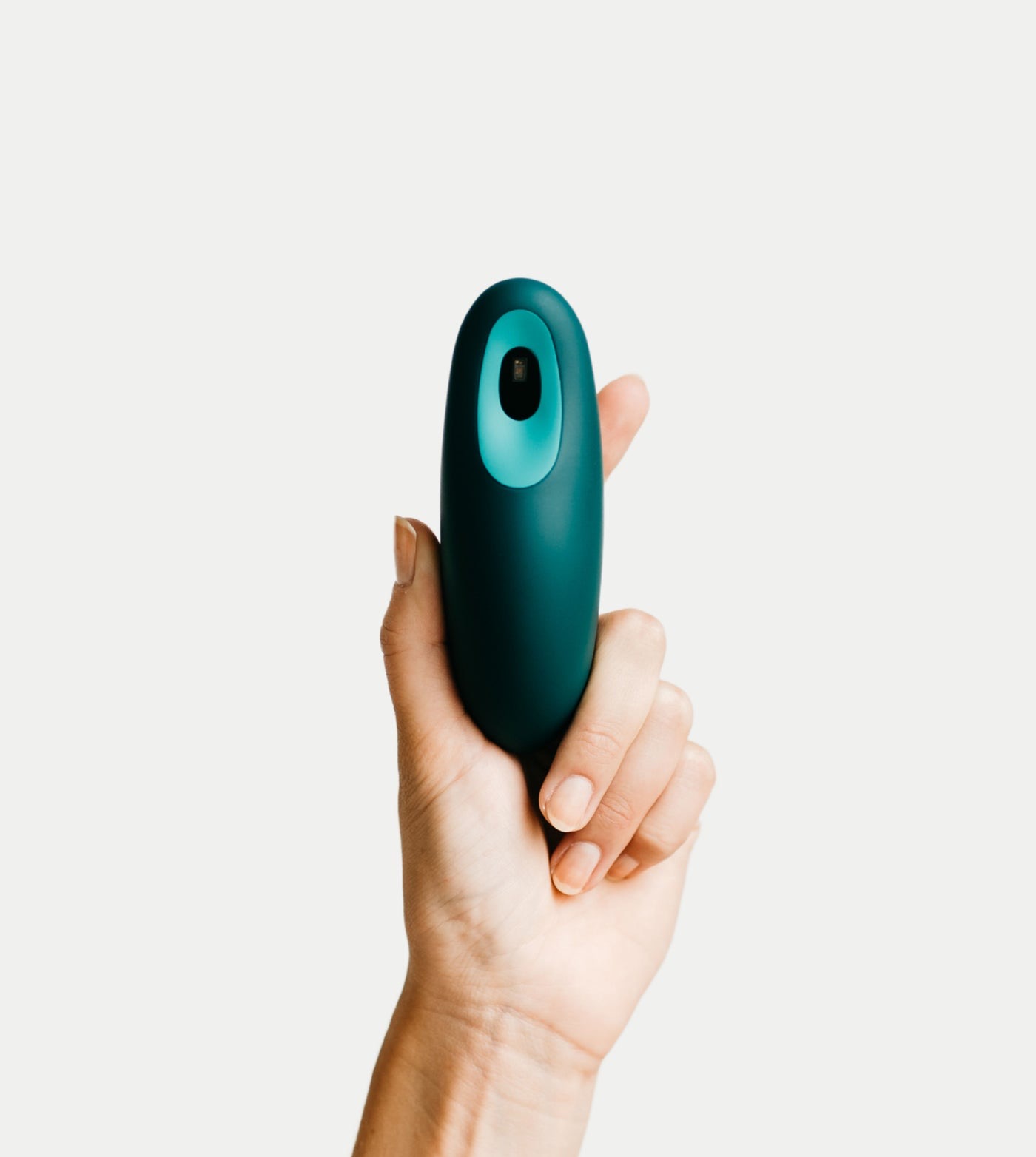
Here’s where Moonbird pulls ahead. A 2025 study in the International Journal of Clinical and Health Psychology put 36 highly stressed adults on Moonbird and a rival device while wired to EEG and ECG.
Breathing slowed with use, and the effect held on after sessions more strongly with Moonbird, which most participants preferred.
Dodow’s headline numbers, like “75% fall asleep faster,” come from the maker’s own user surveys, not independent research. The underlying idea (slow breathing calms you) is well established, but Dodow itself hasn’t been put through the same lab test.
Be precise about what that buys you. Moonbird has one small study behind its specific device; that’s still more than Dodow has. On evidence, Moonbird takes it.
Biofeedback and the data you see
Round winner: MoonbirdThis round is almost a walkover. Moonbird’s app surfaces your live heart rate and HRV through the thumb sensor, so you actually see the breathing working as it happens, and it charts your sessions over time.
Dodow has no data layer at all. That’s by design, part of why it’s cheap and screen-free, but if watching your body settle is what keeps you coming back, Dodow can’t offer it.
For anyone motivated by numbers, Moonbird is the clear pick.
Which sleeper each one suits
Round winner: Moonbird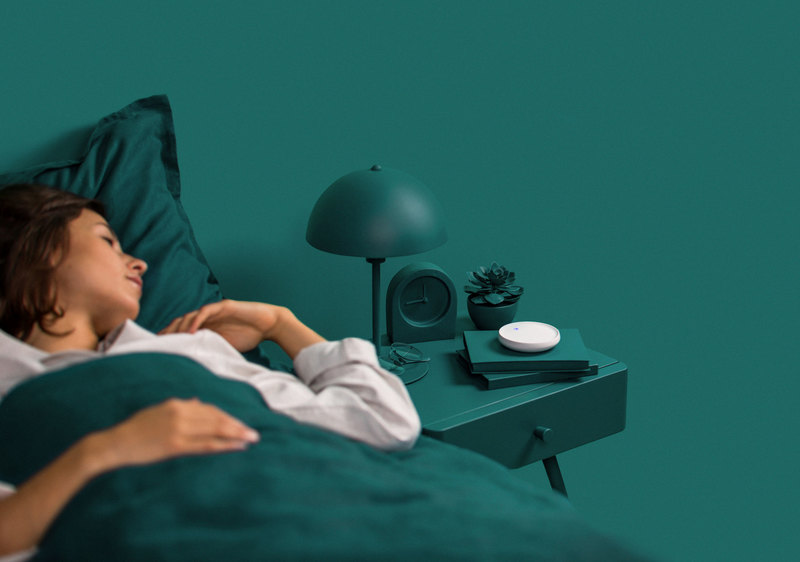
Dodow has one real limit: it needs a clear ceiling in your eyeline, so it’s built for back sleepers. Turn onto your side and the light is gone.
A few owners with high ceilings or a light-sensitive partner find the glow doesn’t suit their room either.
Moonbird doesn’t care how you lie. It works eyes-closed in any position, and it’s small enough to travel, so the calm goes where you do rather than staying pinned to one nightstand.
Because it fits more people and more rooms, Moonbird wins the everyday-use round.
What owners say
“At first, I was skeptical about the product. How could such a small device relieve stress or even make you feel better and be less anxious? Well, it does, really!”
The ratings tell a consistent story. Moonbird averages 4.3 out of 5 across roughly 800 Trustpilot reviews, with a steady run of converted skeptics.
Dodow’s aggregate sits around 4.0 to 4.1 out of 5 across a much larger Amazon base, and the pattern there is clear too: it clicks for most people who stick with it, and does little for a real minority.
That miss rate is exactly why Dodow’s 100-night trial matters.
The honest scorecard
What we liked
- Moonbird: a 2025 peer-reviewed study, live HRV biofeedback, and it works in any sleep position
- Moonbird: no subscription for the core experience, and it travels anywhere
- Dodow: the same paced-breathing calm for about a third of the price, with no app to manage
- Dodow: a 100-night money-back trial makes finding out whether it works nearly risk-free
What we didn't
- Only available online
Who should buy which
Choose the Moonbird if you want the stronger evidence, live biofeedback, a device that works in any position, and something small enough to bring on a trip. It’s the premium pick and our winner for most people.
Our full Moonbird review goes deeper, and the Moonbird vs Pulsetto matchup covers the vagus-nerve angle if that’s your route to calm.
Choose Dodow if you sleep on your back, want the cheapest credible way to try paced breathing, and like the idea of a hands-free light with nothing to charge beyond a battery swap.
Our Dodow review covers who it helps and who it won’t, and the guide on how Dodow works walks through the light and the six-breaths rhythm. Both land in our best sleep gadgets of 2026 roundup.
One reminder either way: these calm and support, they don’t cure. Pair them with steady sleep habits, and if sleeplessness is genuinely disrupting your life, that’s worth raising with a professional.
Check today's Moonbird price